3-mercaptopyruvate sulfurtransferase (MST) (EC 2.8.1.2)
1_MASPQ 6_ LCRAL 11_ VSAQW 16_ VAEAL 21_ RAPRA 26_ GQPLQ 31_ LLDAS 36_ WYLPK 41_ LGRDA 46_ RREFE 51_ ERHIP 56_ GAAFF 61_ DIDQC 66_ SDRTS 71_ PYDHM 76_ LPGAE 81_ HFAEY 86_ AGRLG 91_ VGAAT 96_ HVVIY 101_ DASDQ 106_ GLYSA 111_ PRVWW 116_ MFRAF 121_ GHHAV 126_ SLLDG 131_ GLRHW 136_ LRQNL 141_ PLSSG 146_ KSQPA 151_ PAEFR 156_ AQLDP 161_ AFIKT 166_ YEDIK 171_ ENLES 176_ RRFQV 181_ VDSRA 186_ TGRFR 191_ GTEPE 196_ PRDGI 201_ EPGHI 206_ PGTVN 211_ IPFTD 216_ FLSQE 221_ GLEKS 226_ PEEIR 231_ HLFQE 236_ KKVDL 241_ SKPLV 246_ ATCGS 251_ GVTAC 256_ HVALG 261_ AYLCG 266_ KPDVP 271_ IYDGS 276_ WVEWY 281_ MRARP 286_ EDVIS 291_EGRGK
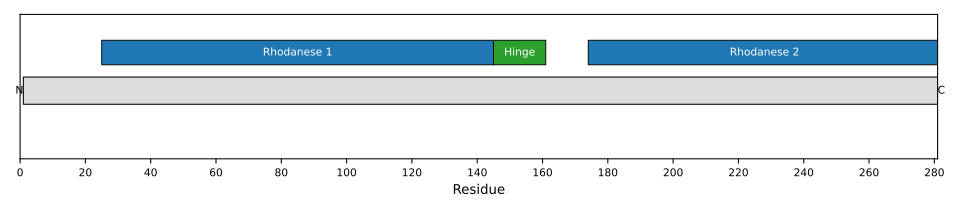
1: Transfer of a sulfur ion to cyanide or to other thiol compounds. Also has weak rhodanese activity. Detoxifies cyanide and is required for thiosulfate biosynthesis. Acts as an antioxidant. In combination with cysteine aminotransferase (CAT), contributes to the catabolism of cysteine and is an important producer of hydrogen sulfide in the brain, retina and vascular endothelial cells. Hydrogen sulfide H(2)S is an important synaptic modulator, signaling molecule, smooth muscle contractor and neuroprotectant. Its production by the 3MST/CAT pathway is regulated by calcium ions