CD27 antigen (CD27L receptor) (T-cell activation antigen CD27) (T14) (Tumor necrosis factor receptor superfamily member 7) (CD antigen CD27)
1_MARPH 6_ PWWLC 11_ VLGTL 16_ VGLSA 21_ TPAPK 26_ SCPER 31_ HYWAQ 36_ GKLCC 41_ QMCEP 46_ GTFLV 51_ KDCDQ 56_ HRKAA 61_ QCDPC 66_ IPGVS 71_ FSPDH 76_ HTRPH 81_ CESCR 86_ HCNSG 91_ LLVRN 96_ CTITA 101_ NAECA 106_ CRNGW 111_ QCRDK 116_ ECTEC 121_ DPLPN 126_ PSLTA 131_ RSSQA 136_ LSPHP 141_ QPTHL 146_ PYVSE 151_ MLEAR 156_ TAGHM 161_ QTLAD 166_ FRQLP 171_ ARTLS 176_ THWPP 181_ QRSLC 186_ SSDFI 191_ RILVI 196_ FSGMF 201_ LVFTL 206_ AGALF 211_ LHQRR 216_ KYRSN 221_ KGESP 226_ VEPAE 231_ PCHYS 236_ CPREE 241_ EGSTI 246_ PIQED 251_YRKPE
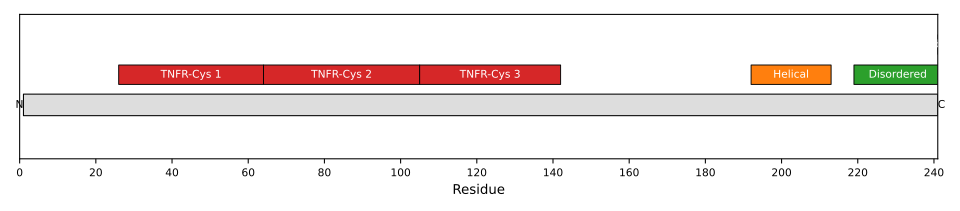
1: Costimulatory immune-checkpoint receptor expressed at the surface of T-cells, NK-cells and B-cells which binds to and is activated by its ligand CD70/CD27L expressed by B-cells (PubMed:28011863). The CD70-CD27 signaling pathway mediates antigen-specific T-cell activation and expansion which in turn provides immune surveillance of B-cells (PubMed:28011863). Mechanistically, CD70 ligation activates the TRAF2-PTPN6 axis that subsequently inhibits LCK phosphorylation to promote phenotypic and transcriptional adaptations of T-cell memory (PubMed:38354704). In addition, activation by CD70 on early progenitor cells provides a negative feedback signal to leukocyte differentiation during immune activation and thus modulates hematopoiesis (By similarity). Negatively regulates the function of Th2 lymphocytes in the adipose tissue (By similarity)