5-hydroxytryptamine receptor 1B (5-HT-1B) (5-HT1B) (S12) (Serotonin 1D beta receptor) (5-HT-1D-beta) (Serotonin receptor 1B)
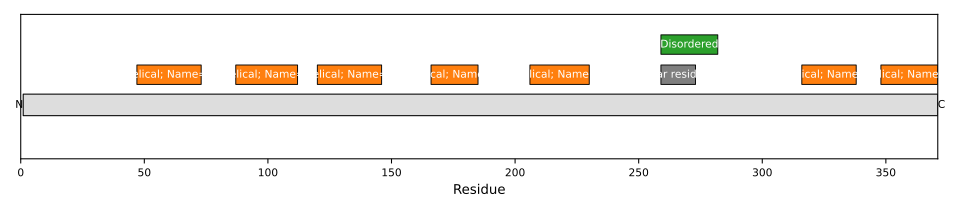
1_MEEPG 6_ AQCAP 11_ PPPAG 16_ SETWV 21_ PQANL 26_ SSAPS 31_ QNCSA 36_ KDYIY 41_ QDSIS 46_ LPWKV 51_ LLVML 56_ LALIT 61_ LATTL 66_ SNAFV 71_ IATVY 76_ RTRKL 81_ HTPAN 86_ YLIAS 91_ LAVTD 96_ LLVSI 101_ LVMPI 106_ STMYT 111_ VTGRW 116_ TLGQV 121_ VCDFW 126_ LSSDI 131_ TCCTA 136_ SILHL 141_ CVIAL 146_ DRYWA 151_ ITDAV 156_ EYSAK 161_ RTPKR 166_ AAVMI 171_ ALVWV 176_ FSISI 181_ SLPPF 186_ FWRQA 191_ KAEEE 196_ VSECV 201_ VNTDH 206_ ILYTV 211_ YSTVG 216_ AFYFP 221_ TLLLI 226_ ALYGR 231_ IYVEA 236_ RSRIL 241_ KQTPN 246_ RTGKR 251_ LTRAQ 256_ LITDS 261_ PGSTS 266_ SVTSI 271_ NSRVP 276_ DVPSE 281_ SGSPV 286_ YVNQV 291_ KVRVS 296_ DALLE 301_ KKKLM 306_ AARER 311_ KATKT 316_ LGIIL 321_ GAFIV 326_ CWLPF 331_ FIISL 336_ VMPIC 341_ KDACW 346_ FHLAI 351_ FDFFT 356_ WLGYL 361_ NSLIN 366_ PIIYT 371_ MSNED 376_ FKQAF 381_HKLIR
1: G-protein coupled receptor for 5-hydroxytryptamine (serotonin) (PubMed:10452531, PubMed:1315531, PubMed:1328844, PubMed:1348246, PubMed:1351684, PubMed:1559993, PubMed:1565658, PubMed:1610347, PubMed:23519210, PubMed:23519215, PubMed:29925951, PubMed:8218242). Also functions as a receptor for ergot alkaloid derivatives, various anxiolytic and antidepressant drugs and other psychoactive substances, such as lysergic acid diethylamide (LSD) (PubMed:23519210, PubMed:23519215, PubMed:29925951). Ligand binding causes a conformation change that triggers signaling via guanine nucleotide-binding proteins (G proteins) and modulates the activity of downstream effectors, such as adenylate cyclase (PubMed:10452531, PubMed:1315531, PubMed:1328844, PubMed:1348246, PubMed:1351684, PubMed:1559993, PubMed:1565658, PubMed:1610347, PubMed:23519210, PubMed:23519215, PubMed:29925951, PubMed:8218242). HTR1B is coupled to G(i)/G(o) G alpha proteins and mediates inhibitory neurotransmission by inhibiting adenylate cyclase activity (PubMed:29925951, PubMed:35610220). Arrestin family members inhibit signaling via G proteins and mediate activation of alternative signaling pathways (PubMed:29925951). Regulates the release of 5-hydroxytryptamine, dopamine and acetylcholine in the brain, and thereby affects neural activity, nociceptive processing, pain perception, mood and behavior (PubMed:18476671, PubMed:20945968). Besides, plays a role in vasoconstriction of cerebral arteries (PubMed:15853772)