5-hydroxytryptamine receptor 2C (5-HT-2C) (5-HT2C) (5-HTR2C) (5-hydroxytryptamine receptor 1C) (5-HT-1C) (5-HT1C) (Serotonin receptor 2C)
1_MVNLR 6_ NAVHS 11_ FLVHL 16_ IGLLV 21_ WQSDI 26_ SVSPV 31_ AAIVT 36_ DIFNT 41_ SDGGR 46_ FKFPD 51_ GVQNW 56_ PALSI 61_ VIIII 66_ MTIGG 71_ NILVI 76_ MAVSM 81_ EKKLH 86_ NATNY 91_ FLMSL 96_ AIADM 101_ LVGLL 106_ VMPLS 111_ LLAIL 116_ YDYVW 121_ PLPRY 126_ LCPVW 131_ ISLDV 136_ LFSTA 141_ SIMHL 146_ CAISL 151_ DRYVA 156_ IRNPI 161_ EHSRF 166_ NSRTK 171_ AIMKI 176_ AIVWA 181_ ISIGV 186_ SVPIP 191_ VIGLR 196_ DEEKV 201_ FVNNT 206_ TCVLN 211_ DPNFV 216_ LIGSF 221_ VAFFI 226_ PLTIM 231_ VITYC 236_ LTIYV 241_ LRRQA 246_ LMLLH 251_ GHTEE 256_ PPGLS 261_ LDFLK 266_ CCKRN 271_ TAEEE 276_ NSANP 281_ NQDQN 286_ ARRRK 291_ KKERR 296_ PRGTM 301_ QAINN 306_ ERKAS 311_ KVLGI 316_ VFFVF 321_ LIMWC 326_ PFFIT 331_ NILSV 336_ LCEKS 341_ CNQKL 346_ MEKLL 351_ NVFVW 356_ IGYVC 361_ SGINP 366_ LVYTL 371_ FNKIY 376_ RRAFS 381_ NYLRC 386_ NYKVE 391_ KKPPV 396_ RQIPR 401_ VAATA 406_ LSGRE 411_ LNVNI 416_ YRHTN 421_ EPVIE 426_ KASDN 431_ EPGIE 436_ MQVEN 441_ LELPV 446_ NPSSV 451_VSERI
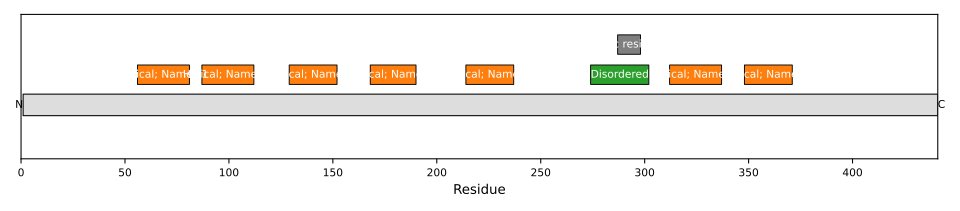
1: G-protein coupled receptor for 5-hydroxytryptamine (serotonin) (PubMed:12970106, PubMed:18703043, PubMed:19057895, PubMed:29398112, PubMed:7895773). Also functions as a receptor for various drugs and psychoactive substances, including ergot alkaloid derivatives, 1-2,5,-dimethoxy-4-iodophenyl-2-aminopropane (DOI) and lysergic acid diethylamide (LSD) (PubMed:19057895, PubMed:29398112). Ligand binding causes a conformation change that triggers signaling via guanine nucleotide-binding proteins (G proteins) and modulates the activity of downstream effectors (PubMed:18703043, PubMed:29398112). HTR2C is coupled to G(q)/G(11) G alpha proteins and activates phospholipase C-beta, releasing diacylglycerol (DAG) and inositol 1,4,5-trisphosphate (IP3) second messengers that modulate the activity of phosphatidylinositol 3-kinase and promote the release of Ca(2+) ions from intracellular stores, respectively (PubMed:18703043, PubMed:29398112). Beta-arrestin family members inhibit signaling via G proteins and mediate activation of alternative signaling pathways (PubMed:29398112). Regulates neuronal activity via the activation of short transient receptor potential calcium channels in the brain, and thereby modulates the activation of pro-opiomelanocortin neurons and the release of CRH that then regulates the release of corticosterone (By similarity). Plays a role in the regulation of appetite and eating behavior, responses to anxiogenic stimuli and stress (By similarity). Plays a role in insulin sensitivity and glucose homeostasis (By similarity)