Neuromedin-B receptor (NMB-R) (Epididymis tissue protein Li 185a) (Neuromedin-B-preferring bombesin receptor)
1_MPSKS 6_ LSNLS 11_ VTTGA 16_ NESGS 21_ VPEGW 26_ ERDFL 31_ PASDG 36_ TTTEL 41_ VIRCV 46_ IPSLY 51_ LLIIT 56_ VGLLG 61_ NIMLV 66_ KIFIT 71_ NSAMR 76_ SVPNI 81_ FISNL 86_ AAGDL 91_ LLLLT 96_ CVPVD 101_ ASRYF 106_ FDEWM 111_ FGKVG 116_ CKLIP 121_ VIQLT 126_ SVGVS 131_ VFTLT 136_ ALSAD 141_ RYRAI 146_ VNPMD 151_ MQTSG 156_ ALLRT 161_ CVKAM 166_ GIWVV 171_ SVLLA 176_ VPEAV 181_ FSEVA 186_ RISSL 191_ DNSSF 196_ TACIP 201_ YPQTD 206_ ELHPK 211_ IHSVL 216_ IFLVY 221_ FLIPL 226_ AIISI 231_ YYYHI 236_ AKTLI 241_ KSAHN 246_ LPGEY 251_ NEHTK 256_ KQMET 261_ RKRLA 266_ KIVLV 271_ FVGCF 276_ IFCWF 281_ PNHIL 286_ YMYRS 291_ FNYNE 296_ IDPSL 301_ GHMIV 306_ TLVAR 311_ VLSFG 316_ NSCVN 321_ PFALY 326_ LLSES 331_ FRRHF 336_ NSQLC 341_ CGRKS 346_ YQERG 351_ TSYLL 356_ SSSAV 361_ RMTSL 366_ KSNAK 371_ NMVTN 376_ SVLLN 381_GHSMK
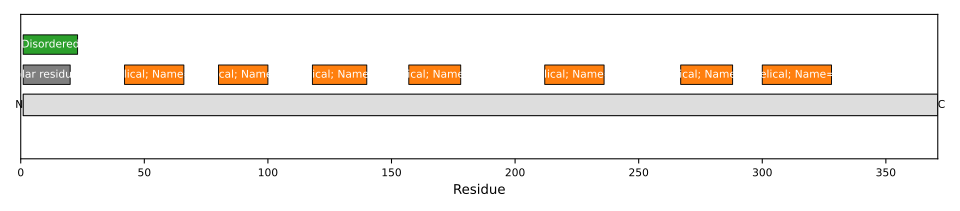
1: Receptor for neuromedin-B (PubMed:1655761). Contributes to the maintenance of basal sigh rate through signaling in the pre-Botzinger complex, a cluster of several thousand neurons in the ventrolateral medulla responsible for inspiration during respiratory activity (By similarity). Contributes to the induction of sneezing following exposure to chemical irritants or allergens which causes release of NMB by nasal sensory neurons and activation of NMBR-expressing neurons in the sneeze-evoking region of the brainstem (By similarity). These in turn activate neurons of the caudal ventral respiratory group, giving rise to the sneezing response (By similarity). Contributes to induction of acute itch, possibly through its activation on dorsal root ganglion neurons by the NMB peptide (By similarity). Plays a role in the innate immune response to influenza A virus infection by enhancing interferon alpha expression and reducing expression of IL6 (PubMed:31601264). Plays a role in CSF1-induced proliferation of osteoclast precursors by contributing to the positive regulation of the expression of the CSF1 receptor CSF1R (By similarity)