Peptidyl-prolyl cis-trans isomerase F, mitochondrial (PPIase F) (EC 5.2.1.8) (Cyclophilin D) (CyP-D) (CypD) (Cyclophilin F) (Mitochondrial cyclophilin) (CyP-M) (Rotamase F)
1_MLALR 6_ CGSRW 11_ LGLLS 16_ VPRSV 21_ PLRLP 26_ AARAC 31_ SKGSG 36_ DPSSS 41_ SSSGN 46_ PLVYL 51_ DVDAN 56_ GKPLG 61_ RVVLE 66_ LKADV 71_ VPKTA 76_ ENFRA 81_ LCTGE 86_ KGFGY 91_ KGSTF 96_ HRVIP 101_ SFMCQ 106_ AGDFT 111_ NHNGT 116_ GGKSI 121_ YGSRF 126_ PDENF 131_ TLKHV 136_ GPGVL 141_ SMANA 146_ GPNTN 151_ GSQFF 156_ ICTIK 161_ TDWLD 166_ GKHVV 171_ FGHVK 176_ EGMDV 181_ VKKIE 186_ SFGSK 191_ SGRTS 196_ KKIVI 201_TDCGQ
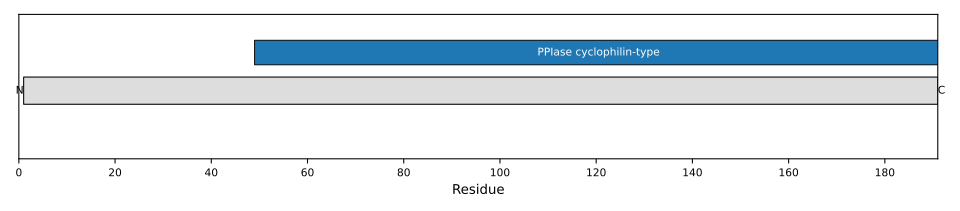
1: PPIase that catalyzes the cis-trans isomerization of proline imidic peptide bonds in oligopeptides and may therefore assist protein folding (PubMed:20676357). Involved in regulation of the mitochondrial permeability transition pore (mPTP) (PubMed:26387735). It is proposed that its association with the mPTP is masking a binding site for inhibiting inorganic phosphate (Pi) and promotes the open probability of the mPTP leading to apoptosis or necrosis; the requirement of the PPIase activity for this function is debated (PubMed:26387735). In cooperation with mitochondrial p53/TP53 is involved in activating oxidative stress-induced necrosis (PubMed:22726440). Involved in modulation of mitochondrial membrane F(1)F(0) ATP synthase activity and regulation of mitochondrial matrix adenine nucleotide levels (By similarity). Has anti-apoptotic activity independently of mPTP and in cooperation with BCL2 inhibits cytochrome c-dependent apoptosis (PubMed:19228691)