Tyrosine-protein kinase receptor UFO (EC 2.7.10.1) (AXL oncogene)
1_MAWRC 6_ PRMGR 11_ VPLAW 16_ CLALC 21_ GWACM 26_ APRGT 31_ QAEES 36_ PFVGN 41_ PGNIT 46_ GARGL 51_ TGTLR 56_ CQLQV 61_ QGEPP 66_ EVHWL 71_ RDGQI 76_ LELAD 81_ STQTQ 86_ VPLGE 91_ DEQDD 96_ WIVVS 101_ QLRIT 106_ SLQLS 111_ DTGQY 116_ QCLVF 121_ LGHQT 126_ FVSQP 131_ GYVGL 136_ EGLPY 141_ FLEEP 146_ EDRTV 151_ AANTP 156_ FNLSC 161_ QAQGP 166_ PEPVD 171_ LLWLQ 176_ DAVPL 181_ ATAPG 186_ HGPQR 191_ SLHVP 196_ GLNKT 201_ SSFSC 206_ EAHNA 211_ KGVTT 216_ SRTAT 221_ ITVLP 226_ QQPRN 231_ LHLVS 236_ RQPTE 241_ LEVAW 246_ TPGLS 251_ GIYPL 256_ THCTL 261_ QAVLS 266_ DDGMG 271_ IQAGE 276_ PDPPE 281_ EPLTS 286_ QASVP 291_ PHQLR 296_ LGSLH 301_ PHTPY 306_ HIRVA 311_ CTSSQ 316_ GPSSW 321_ THWLP 326_ VETPE 331_ GVPLG 336_ PPENI 341_ SATRN 346_ GSQAF 351_ VHWQE 356_ PRAPL 361_ QGTLL 366_ GYRLA 371_ YQGQD 376_ TPEVL 381_ MDIGL 386_ RQEVT 391_ LELQG 396_ DGSVS 401_ NLTVC 406_ VAAYT 411_ AAGDG 416_ PWSLP 421_ VPLEA 426_ WRPGQ 431_ AQPVH 436_ QLVKE 441_ PSTPA 446_ FSWPW 451_ WYVLL 456_ GAVVA 461_ AACVL 466_ ILALF 471_ LVHRR 476_ KKETR 481_ YGEVF 486_ EPTVE 491_ RGELV 496_ VRYRV 501_ RKSYS 506_ RRTTE 511_ ATLNS 516_ LGISE 521_ ELKEK 526_ LRDVM 531_ VDRHK 536_ VALGK 541_ TLGEG 546_ EFGAV 551_ MEGQL 556_ NQDDS 561_ ILKVA 566_ VKTMK 571_ IAICT 576_ RSELE 581_ DFLSE 586_ AVCMK 591_ EFDHP 596_ NVMRL 601_ IGVCF 606_ QGSER 611_ ESFPA 616_ PVVIL 621_ PFMKH 626_ GDLHS 631_ FLLYS 636_ RLGDQ 641_ PVYLP 646_ TQMLV 651_ KFMAD 656_ IASGM 661_ EYLST 666_ KRFIH 671_ RDLAA 676_ RNCML 681_ NENMS 686_ VCVAD 691_ FGLSK 696_ KIYNG 701_ DYYRQ 706_ GRIAK 711_ MPVKW 716_ IAIES 721_ LADRV 726_ YTSKS 731_ DVWSF 736_ GVTMW 741_ EIATR 746_ GQTPY 751_ PGVEN 756_ SEIYD 761_ YLRQG 766_ NRLKQ 771_ PADCL 776_ DGLYA 781_ LMSRC 786_ WELNP 791_ QDRPS 796_ FTELR 801_ EDLEN 806_ TLKAL 811_ PPAQE 816_ PDEIL 821_ YVNMD 826_ EGGGY 831_ PEPPG 836_ AAGGA 841_ DPPTQ 846_ PDPKD 851_ SCSCL 856_ TAAEV 861_ HPAGR 866_ YVLCP 871_ STTPS 876_ PAQPA 881_ DRGSP 886_AAPGQ
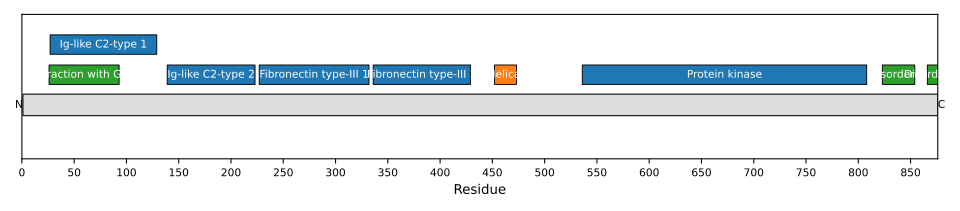
1: Receptor tyrosine kinase that transduces signals from the extracellular matrix into the cytoplasm by binding growth factor GAS6 and which is thus regulating many physiological processes including cell survival, cell proliferation, migration and differentiation. Ligand binding at the cell surface induces dimerization and autophosphorylation of AXL. Following activation by ligand, AXL binds and induces tyrosine phosphorylation of PI3-kinase subunits PIK3R1, PIK3R2 and PIK3R3; but also GRB2, PLCG1, LCK and PTPN11. Other downstream substrate candidates for AXL are CBL, NCK2, SOCS1 and TNS2. Recruitment of GRB2 and phosphatidylinositol 3 kinase regulatory subunits by AXL leads to the downstream activation of the AKT kinase. GAS6/AXL signaling plays a role in various processes such as endothelial cell survival during acidification by preventing apoptosis, optimal cytokine signaling during human natural killer cell development, hepatic regeneration, gonadotropin-releasing hormone neuron survival and migration, platelet activation, or regulation of thrombotic responses. Also plays an important role in inhibition of Toll-like receptors (TLRs)-mediated innate immune response
2: (Microbial infection) Acts as a receptor for lassa virus and lymphocytic choriomeningitis virus, possibly through GAS6 binding to phosphatidyl-serine at the surface of virion envelope
3: (Microbial infection) Acts as a receptor for Ebolavirus, possibly through GAS6 binding to phosphatidyl-serine at the surface of virion envelope
4: (Microbial infection) Promotes Zika virus entry in glial cells, Sertoli cells and astrocytes (PubMed:28076778, PubMed:29379210, PubMed:31311882). Additionally, Zika virus potentiates AXL kinase activity to antagonize type I interferon signaling and thereby promotes infection (PubMed:28076778). Interferon signaling inhibition occurs via an SOCS1-dependent mechanism (PubMed:29379210)