Pro-adrenomedullin [Cleaved into: Adrenomedullin (AM); Proadrenomedullin N-20 terminal peptide (ProAM N-terminal 20 peptide) (PAMP) (ProAM-N20)]
1_MKLVS 6_ VALMY 11_ LGSLA 16_ FLGAD 21_ TARLD 26_ VASEF 31_ RKKWN 36_ KWALS 41_ RGKRE 46_ LRMSS 51_ SYPTG 56_ LADVK 61_ AGPAQ 66_ TLIRP 71_ QDMKG 76_ ASRSP 81_ EDSSP 86_ DAARI 91_ RVKRY 96_ RQSMN 101_ NFQGL 106_ RSFGC 111_ RFGTC 116_ TVQKL 121_ AHQIY 126_ QFTDK 131_ DKDNV 136_ APRSK 141_ ISPQG 146_ YGRRR 151_ RRSLP 156_ EAGPG 161_ RTLVS 166_ SKPQA 171_ HGAPA 176_PPSGS
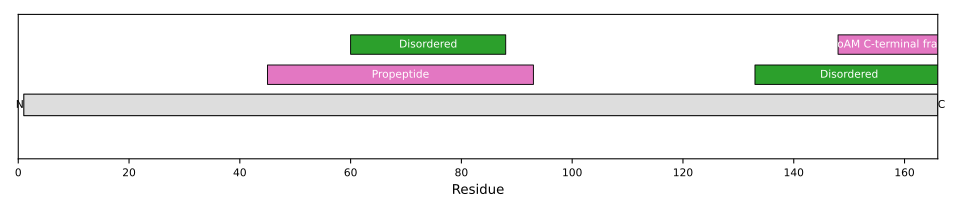
1: Adrenomedullin/ADM and proadrenomedullin N-20 terminal peptide/PAMP are peptide hormones that act as potent hypotensive and vasodilatator agents (PubMed:8387282, PubMed:9620797). Numerous actions have been reported most related to the physiologic control of fluid and electrolyte homeostasis. In the kidney, ADM is diuretic and natriuretic, and both ADM and PAMP inhibit aldosterone secretion by direct adrenal actions. In pituitary gland, both peptides at physiologically relevant doses inhibit basal ACTH secretion. Both peptides appear to act in brain and pituitary gland to facilitate the loss of plasma volume, actions which complement their hypotensive effects in blood vessels
2: ADM function is mediated by the CALCRL-RAMP2 and CALCRL-RAMP3 receptor complexes with ADM showing the highest potency for the CALCRL-RAMP2 complex