Apelin receptor (Angiotensin receptor-like 1) (G-protein coupled receptor APJ) (G-protein coupled receptor HG11)
1_MEEGG 6_ DFDNY 11_ YGADN 16_ QSECE 21_ YTDWK 26_ SSGAL 31_ IPAIY 36_ MLVFL 41_ LGTTG 46_ NGLVL 51_ WTVFR 56_ SSREK 61_ RRSAD 66_ IFIAS 71_ LAVAD 76_ LTFVV 81_ TLPLW 86_ ATYTY 91_ RDYDW 96_ PFGTF 101_ FCKLS 106_ SYLIF 111_ VNMYA 116_ SVFCL 121_ TGLSF 126_ DRYLA 131_ IVRPV 136_ ANARL 141_ RLRVS 146_ GAVAT 151_ AVLWV 156_ LAALL 161_ AMPVM 166_ VLRTT 171_ GDLEN 176_ TTKVQ 181_ CYMDY 186_ SMVAT 191_ VSSEW 196_ AWEVG 201_ LGVSS 206_ TTVGF 211_ VVPFT 216_ IMLTC 221_ YFFIA 226_ QTIAG 231_ HFRKE 236_ RIEGL 241_ RKRRR 246_ LLSII 251_ VVLVV 256_ TFALC 261_ WMPYH 266_ LVKTL 271_ YMLGS 276_ LLHWP 281_ CDFDL 286_ FLMNI 291_ FPYCT 296_ CISYV 301_ NSCLN 306_ PFLYA 311_ FFDPR 316_ FRQAC 321_ TSMLC 326_ CGQSR 331_ CAGTS 336_ HSSSG 341_ EKSAS 346_ YSSGH 351_ SQGPG 356_ PNMGK 361_ GGEQM 366_ HEKSI 371_PYSQE
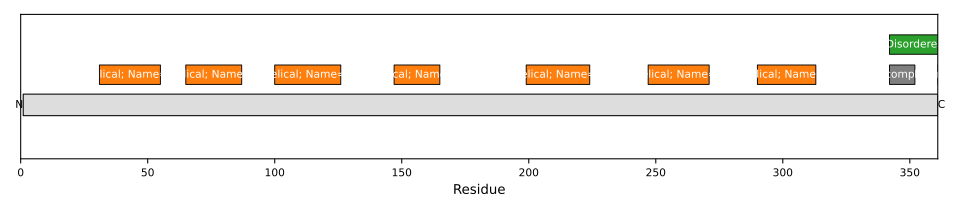
1: G protein-coupled receptor for peptide hormones apelin (APLN) and apelin receptor early endogenous ligand (APELA/ELA), that plays a role in the regulation of normal cardiovascular function and fluid homeostasis (PubMed:11090199, PubMed:22810587, PubMed:25639753, PubMed:28137936, PubMed:35817871, PubMed:38428423). When acting as apelin receptor, activates both G(i) protein pathway that inhibits adenylate cyclase activity, and the beta-arrestin pathway that promotes internalization of the receptor (PubMed:11090199, PubMed:25639753, PubMed:28137936, PubMed:35817871, PubMed:38428423). APLNR/APJ also functions as mechanoreceptor that is activated by pathological stimuli in a G-protein-independent fashion to induce beta-arrestin signaling, hence eliciting cardiac hypertrophy (PubMed:22810587, PubMed:38428423). However, the presence of apelin ligand blunts cardiac hypertrophic induction from APLNR/APJ on response to pathological stimuli (PubMed:22810587, PubMed:38428423). Plays a key role in early development such as gastrulation, blood vessels formation and heart morphogenesis by acting as a APELA receptor (By similarity). May promote angioblast migration toward the embryonic midline, i.e. the position of the future vessel formation, during vasculogenesis (By similarity). Promotes sinus venosus (SV)-derived endothelial cells migration into the developing heart to promote coronary blood vessel development (By similarity). Also plays a role in various processes in adults such as regulation of blood vessel formation, blood pressure, heart contractility and heart failure (PubMed:25639753, PubMed:28137936)
2: (Microbial infection) Alternative coreceptor with CD4 for HIV-1 infection; may be involved in the development of AIDS dementia (PubMed:11090199)