Phosphoenolpyruvate carboxykinase, cytosolic [GTP] (PEPCK-C) (EC 4.1.1.32) (Serine-protein kinase PCK1) (EC 2.7.11.-)
1_MPPQL 6_ QNGLN 11_ LSAKV 16_ VQGSL 21_ DSLPQ 26_ AVREF 31_ LENNA 36_ ELCQP 41_ DHIHI 46_ CDGSE 51_ EENGR 56_ LLGQM 61_ EEEGI 66_ LRRLK 71_ KYDNC 76_ WLALT 81_ DPRDV 86_ ARIES 91_ KTVIV 96_ TQEQR 101_ DTVPI 106_ PKTGL 111_ SQLGR 116_ WMSEE 121_ DFEKA 126_ FNARF 131_ PGCMK 136_ GRTMY 141_ VIPFS 146_ MGPLG 151_ SPLSK 156_ IGIEL 161_ TDSPY 166_ VVASM 171_ RIMTR 176_ MGTPV 181_ LEAVG 186_ DGEFV 191_ KCLHS 196_ VGCPL 201_ PLQKP 206_ LVNNW 211_ PCNPE 216_ LTLIA 221_ HLPDR 226_ REIIS 231_ FGSGY 236_ GGNSL 241_ LGKKC 246_ FALRM 251_ ASRLA 256_ KEEGW 261_ LAEHM 266_ LILGI 271_ TNPEG 276_ EKKYL 281_ AAAFP 286_ SACGK 291_ TNLAM 296_ MNPSL 301_ PGWKV 306_ ECVGD 311_ DIAWM 316_ KFDAQ 321_ GHLRA 326_ INPEN 331_ GFFGV 336_ APGTS 341_ VKTNP 346_ NAIKT 351_ IQKNT 356_ IFTNV 361_ AETSD 366_ GGVYW 371_ EGIDE 376_ PLASG 381_ VTITS 386_ WKNKE 391_ WSSED 396_ GEPCA 401_ HPNSR 406_ FCTPA 411_ SQCPI 416_ IDAAW 421_ ESPEG 426_ VPIEG 431_ IIFGG 436_ RRPAG 441_ VPLVY 446_ EALSW 451_ QHGVF 456_ VGAAM 461_ RSEAT 466_ AAAEH 471_ KGKII 476_ MHDPF 481_ AMRPF 486_ FGYNF 491_ GKYLA 496_ HWLSM 501_ AQHPA 506_ AKLPK 511_ IFHVN 516_ WFRKD 521_ KEGKF 526_ LWPGF 531_ GENSR 536_ VLEWM 541_ FNRID 546_ GKAST 551_ KLTPI 556_ GYIPK 561_ EDALN 566_ LKGLG 571_ HINMM 576_ ELFSI 581_ SKEFW 586_ EKEVE 591_ DIEKY 596_ LEDQV 601_ NADLP 606_ CEIER 611_ EILAL 616_KQRIS
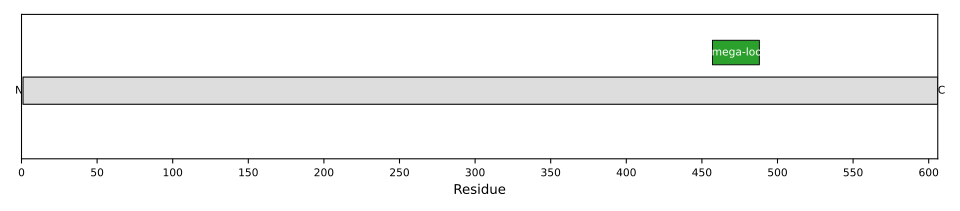
1: Cytosolic phosphoenolpyruvate carboxykinase that catalyzes the reversible decarboxylation and phosphorylation of oxaloacetate (OAA) and acts as the rate-limiting enzyme in gluconeogenesis (PubMed:24863970, PubMed:26971250, PubMed:28216384, PubMed:30193097). Regulates cataplerosis and anaplerosis, the processes that control the levels of metabolic intermediates in the citric acid cycle (PubMed:24863970, PubMed:26971250, PubMed:28216384, PubMed:30193097). At low glucose levels, it catalyzes the cataplerotic conversion of oxaloacetate to phosphoenolpyruvate (PEP), the rate-limiting step in the metabolic pathway that produces glucose from lactate and other precursors derived from the citric acid cycle (PubMed:30193097). At high glucose levels, it catalyzes the anaplerotic conversion of phosphoenolpyruvate to oxaloacetate (PubMed:30193097). Acts as a regulator of formation and maintenance of memory CD8(+) T-cells: up-regulated in these cells, where it generates phosphoenolpyruvate, via gluconeogenesis (By similarity). The resultant phosphoenolpyruvate flows to glycogen and pentose phosphate pathway, which is essential for memory CD8(+) T-cells homeostasis (By similarity). In addition to the phosphoenolpyruvate carboxykinase activity, also acts as a protein kinase when phosphorylated at Ser-90: phosphorylation at Ser-90 by AKT1 reduces the binding affinity to oxaloacetate and promotes an atypical serine protein kinase activity using GTP as donor (PubMed:32322062). The protein kinase activity regulates lipogenesis: upon phosphorylation at Ser-90, translocates to the endoplasmic reticulum and catalyzes phosphorylation of INSIG proteins (INSIG1 and INSIG2), thereby disrupting the interaction between INSIG proteins and SCAP and promoting nuclear translocation of SREBP proteins (SREBF1/SREBP1 or SREBF2/SREBP2) and subsequent transcription of downstream lipogenesis-related genes (PubMed:32322062)