RNA-binding motif protein, X chromosome (Glycoprotein p43) (Heterogeneous nuclear ribonucleoprotein G) (hnRNP G) [Cleaved into: RNA-binding motif protein, X chromosome, N-terminally processed]
1_MVEAD 6_ RPGKL 11_ FIGGL 16_ NTETN 21_ EKALE 26_ AVFGK 31_ YGRIV 36_ EVLLM 41_ KDRET 46_ NKSRG 51_ FAFVT 56_ FESPA 61_ DAKDA 66_ ARDMN 71_ GKSLD 76_ GKAIK 81_ VEQAT 86_ KPSFE 91_ SGRRG 96_ PPPPP 101_ RSRGP 106_ PRGLR 111_ GGRGG 116_ SGGTR 121_ GPPSR 126_ GGHMD 131_ DGGYS 136_ MNFNM 141_ SSSRG 146_ PLPVK 151_ RGPPP 156_ RSGGP 161_ PPKRS 166_ APSGP 171_ VRSSS 176_ GMGGR 181_ APVSR 186_ GRDSY 191_ GGPPR 196_ REPLP 201_ SRRDV 206_ YLSPR 211_ DDGYS 216_ TKDSY 221_ SSRDY 226_ PSSRD 231_ TRDYA 236_ PPPRD 241_ YTYRD 246_ YGHSS 251_ SRDDY 256_ PSRGY 261_ SDRDG 266_ YGRDR 271_ DYSDH 276_ PSGGS 281_ YRDSY 286_ ESYGN 291_ SRSAP 296_ PTRGP 301_ PPSYG 306_ GSSRY 311_ DDYSS 316_ SRDGY 321_ GGSRD 326_ SYSSS 331_ RSDLY 336_ SSGRD 341_ RVGRQ 346_ ERGLP 351_ PSMER 356_ GYPPP 361_ RDSYS 366_ SSSRG 371_ APRGG 376_ GRGGS 381_ RSDRG 386_GGRSR
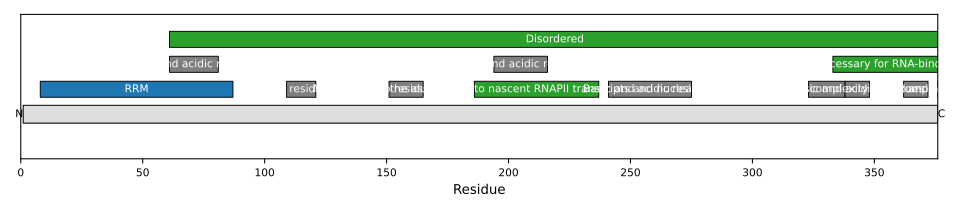
1: RNA-binding protein that plays several role in the regulation of pre- and post-transcriptional processes. Implicated in tissue-specific regulation of gene transcription and alternative splicing of several pre-mRNAs. Binds to and stimulates transcription from the tumor suppressor TXNIP gene promoter; may thus be involved in tumor suppression. When associated with SAFB, binds to and stimulates transcription from the SREBF1 promoter. Associates with nascent mRNAs transcribed by RNA polymerase II. Component of the supraspliceosome complex that regulates pre-mRNA alternative splice site selection. Can either activate or suppress exon inclusion; acts additively with TRA2B to promote exon 7 inclusion of the survival motor neuron SMN2. Represses the splicing of MAPT/Tau exon 10. Binds preferentially to single-stranded 5'-CC[A/C]-rich RNA sequence motifs localized in a single-stranded conformation; probably binds RNA as a homodimer. Binds non-specifically to pre-mRNAs. Also plays a role in the cytoplasmic TNFR1 trafficking pathways; promotes both the IL-1-beta-mediated inducible proteolytic cleavage of TNFR1 ectodomains and the release of TNFR1 exosome-like vesicles to the extracellular compartment