Interferon alpha-inducible protein 27, mitochondrial (p27) (Interferon alpha-induced 11.5 kDa protein) (Interferon-stimulated gene 12a protein) (ISG12(a)) (ISG12A)
1_MEASA 6_ LTSSA 11_ VTSVA 16_ KVVRV 21_ ASGSA 26_ VVLPL 31_ ARIAT 36_ VVIGG 41_ VVAMA 46_ AVPMV 51_ LSAMG 56_ FTAAG 61_ IASSS 66_ IAAKM 71_ MSAAA 76_ IANGG 81_ GVASG 86_ SLVAT 91_ LQSLG 96_ ATGLS 101_ GLTKF 106_ ILGSI 111_ GSAIA 116_AVIAR
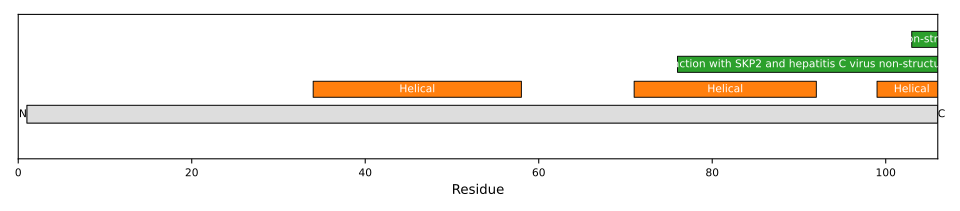
1: Probable adapter protein involved in different biological processes (PubMed:22427340, PubMed:27194766). Part of the signaling pathways that lead to apoptosis (PubMed:18330707, PubMed:24970806, PubMed:27673746). Involved in type-I interferon-induced apoptosis characterized by a rapid and robust release of cytochrome C from the mitochondria and activation of BAX and caspases 2, 3, 6, 8 and 9 (PubMed:18330707, PubMed:27673746). Also functions in TNFSF10-induced apoptosis (PubMed:24970806). May also have a function in the nucleus, where it may be involved in the interferon-induced negative regulation of the transcriptional activity of NR4A1, NR4A2 and NR4A3 through the enhancement of XPO1-mediated nuclear export of these nuclear receptors (PubMed:22427340). May thereby play a role in the vascular response to injury (By similarity). In the innate immune response, has an antiviral activity towards hepatitis C virus/HCV (PubMed:27194766, PubMed:27777077). May prevent the replication of the virus by recruiting both the hepatitis C virus non-structural protein 5A/NS5A and the ubiquitination machinery via SKP2, promoting the ubiquitin-mediated proteasomal degradation of NS5A (PubMed:27194766, PubMed:27777077). Also promotes virus-induced pyroptosis by activating CASP3 in the mitochondria after 'Lys-6'-linked ubiquitination by TRIM21 (PubMed:36426955)