Tyrosine-protein kinase ABL2 (EC 2.7.10.2) (Abelson murine leukemia viral oncogene homolog 2) (Abelson tyrosine-protein kinase 2) (Abelson-related gene protein) (Tyrosine-protein kinase ARG)
1_MGQQV 6_ GRVGE 11_ APGLQ 16_ QPQPR 21_ GIRGS 26_ SAARP 31_ SGRRR 36_ DPAGR 41_ TTETG 46_ FNIFT 51_ QHDHF 56_ ASCVE 61_ DGFEG 66_ DKTGG 71_ SSPEA 76_ LHRPY 81_ GCDVE 86_ PQALN 91_ EAIRW 96_ SSKEN 101_ LLGAT 106_ ESDPN 111_ LFVAL 116_ YDFVA 121_ SGDNT 126_ LSITK 131_ GEKLR 136_ VLGYN 141_ QNGEW 146_ SEVRS 151_ KNGQG 156_ WVPSN 161_ YITPV 166_ NSLEK 171_ HSWYH 176_ GPVSR 181_ SAAEY 186_ LLSSL 191_ INGSF 196_ LVRES 201_ ESSPG 206_ QLSIS 211_ LRYEG 216_ RVYHY 221_ RINTT 226_ ADGKV 231_ YVTAE 236_ SRFST 241_ LAELV 246_ HHHST 251_ VADGL 256_ VTTLH 261_ YPAPK 266_ CNKPT 271_ VYGVS 276_ PIHDK 281_ WEMER 286_ TDITM 291_ KHKLG 296_ GGQYG 301_ EVYVG 306_ VWKKY 311_ SLTVA 316_ VKTLK 321_ EDTME 326_ VEEFL 331_ KEAAV 336_ MKEIK 341_ HPNLV 346_ QLLGV 351_ CTLEP 356_ PFYIV 361_ TEYMP 366_ YGNLL 371_ DYLRE 376_ CNREE 381_ VTAVV 386_ LLYMA 391_ TQISS 396_ AMEYL 401_ EKKNF 406_ IHRDL 411_ AARNC 416_ LVGEN 421_ HVVKV 426_ ADFGL 431_ SRLMT 436_ GDTYT 441_ AHAGA 446_ KFPIK 451_ WTAPE 456_ SLAYN 461_ TFSIK 466_ SDVWA 471_ FGVLL 476_ WEIAT 481_ YGMSP 486_ YPGID 491_ LSQVY 496_ DLLEK 501_ GYRME 506_ QPEGC 511_ PPKVY 516_ ELMRA 521_ CWKWS 526_ PADRP 531_ SFAET 536_ HQAFE 541_ TMFHD 546_ SSISE 551_ EVAEE 556_ LGRAA 561_ SSSSV 566_ VPYLP 571_ RLPIL 576_ PSKTR 581_ TLKKQ 586_ VENKE 591_ NIEGA 596_ QDATE 601_ NSASS 606_ LAPGF 611_ IRGAQ 616_ ASSGS 621_ PALPR 626_ KQRDK 631_ SPSSL 636_ LEDAK 641_ ETCFT 646_ RDRKG 651_ GFFSS 656_ FMKKR 661_ NAPTP 666_ PKRSS 671_ SFREM 676_ ENQPH 681_ KKYEL 686_ TGNFS 691_ SVASL 696_ QHADG 701_ FSFTP 706_ AQQEA 711_ NLVPP 716_ KCYGG 721_ SFAQR 726_ NLCND 731_ DGGGG 736_ GGSGT 741_ AGGGW 746_ SGITG 751_ FFTPR 756_ LIKKT 761_ LGLRA 766_ GKPTA 771_ SDDTS 776_ KPFPR 781_ SNSTS 786_ SMSSG 791_ LPEQD 796_ RMAMT 801_ LPRNC 806_ QRSKL 811_ QLERT 816_ VSTSS 821_ QPEEN 826_ VDRAN 831_ DMLPK 836_ KSEES 841_ AAPSR 846_ ERPKA 851_ KLLPR 856_ GATAL 861_ PLRTP 866_ SGDLA 871_ ITEKD 876_ PPGVG 881_ VAGVA 886_ AAPKG 891_ KEKNG 896_ GARLG 901_ MAGVP 906_ EDGEQ 911_ PGWPS 916_ PAKAA 921_ PVLPT 926_ THNHK 931_ VPVLI 936_ SPTLK 941_ HTPAD 946_ VQLIG 951_ TDSQG 956_ NKFKL 961_ LSEHQ 966_ VTSSG 971_ DKDRP 976_ RRVKP 981_ KCAPP 986_ PPPVM 991_ RLLQH 996_ PSICS 1001_ DPTEE 1006_ PTALT 1011_ AGQST 1016_ SETQE 1021_ GGKKA 1026_ ALGAV 1031_ PISGK 1036_ AGRPV 1041_ MPPPQ 1046_ VPLPT 1051_ SSISP 1056_ AKMAN 1061_ GTAGT 1066_ KVALR 1071_ KTKQA 1076_ AEKIS 1081_ ADKIS 1086_ KEALL 1091_ ECADL 1096_ LSSAL 1101_ TEPVP 1106_ NSQLV 1111_ DTGHQ 1116_ LLDYC 1121_ SGYVD 1126_ CIPQT 1131_ RNKFA 1136_ FREAV 1141_ SKLEL 1146_ SLQEL 1151_ QVSSA 1156_ AAGVP 1161_ GTNPV 1166_ LNNLL 1171_ SCVQE 1176_ISDVV
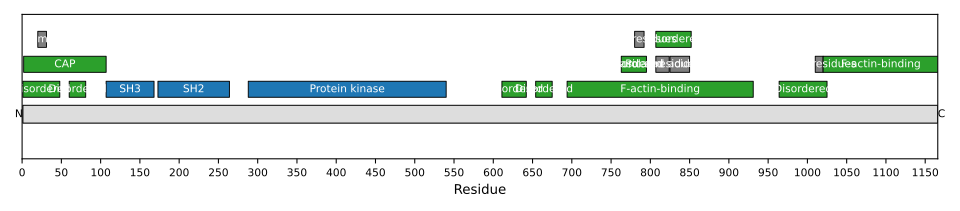
1: Non-receptor tyrosine-protein kinase that plays an ABL1-overlapping role in key processes linked to cell growth and survival such as cytoskeleton remodeling in response to extracellular stimuli, cell motility and adhesion and receptor endocytosis. Coordinates actin remodeling through tyrosine phosphorylation of proteins controlling cytoskeleton dynamics like MYH10 (involved in movement); CTTN (involved in signaling); or TUBA1 and TUBB (microtubule subunits). Binds directly F-actin and regulates actin cytoskeletal structure through its F-actin-bundling activity. Involved in the regulation of cell adhesion and motility through phosphorylation of key regulators of these processes such as CRK, CRKL, DOK1 or ARHGAP35. Adhesion-dependent phosphorylation of ARHGAP35 promotes its association with RASA1, resulting in recruitment of ARHGAP35 to the cell periphery where it inhibits RHO. Phosphorylates multiple receptor tyrosine kinases like PDGFRB and other substrates which are involved in endocytosis regulation such as RIN1. In brain, may regulate neurotransmission by phosphorylating proteins at the synapse. ABL2 also acts as a regulator of multiple pathological signaling cascades during infection. Pathogens can highjack ABL2 kinase signaling to reorganize the host actin cytoskeleton for multiple purposes, like facilitating intracellular movement and host cell exit. Finally, functions as its own regulator through autocatalytic activity as well as through phosphorylation of its inhibitor, ABI1. Positively regulates chemokine-mediated T-cell migration, polarization, and homing to lymph nodes and immune-challenged tissues, potentially via activation of NEDD9/HEF1 and RAP1 (By similarity)