G-protein coupled receptor 3 (ACCA orphan receptor)
1_MMWGA 6_ GSPLA 11_ WLSAG 16_ SGNVN 21_ VSSVG 26_ PAEGP 31_ TGPAA 36_ PLPSP 41_ KAWDV 46_ VLCIS 51_ GTLVS 56_ CENAL 61_ VVAII 66_ VGTPA 71_ FRAPM 76_ FLLVG 81_ SLAVA 86_ DLLAG 91_ LGLVL 96_ HFAAV 101_ FCIGS 106_ AEMSL 111_ VLVGV 116_ LAMAF 121_ TASIG 126_ SLLAI 131_ TVDRY 136_ LSLYN 141_ ALTYY 146_ SETTV 151_ TRTYV 156_ MLALV 161_ WGGAL 166_ GLGLL 171_ PVLAW 176_ NCLDG 181_ LTTCG 186_ VVYPL 191_ SKNHL 196_ VVLAI 201_ AFFMV 206_ FGIML 211_ QLYAQ 216_ ICRIV 221_ CRHAQ 226_ QIALQ 231_ RHLLP 236_ ASHYV 241_ ATRKG 246_ IATLA 251_ VVLGA 256_ FAACW 261_ LPFTV 266_ YCLLG 271_ DAHSP 276_ PLYTY 281_ LTLLP 286_ ATYNS 291_ MINPI 296_ IYAFR 301_ NQDVQ 306_ KVLWA 311_ VCCCC 316_ SSSKI 321_PFRSR
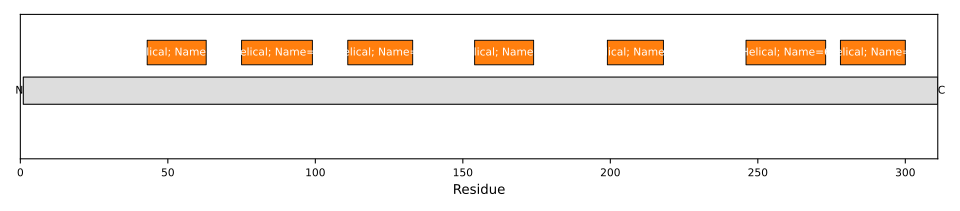
1: Constitutively active G-protein coupled receptor that maintains high 3'-5'-cyclic adenosine monophosphate (cAMP) levels that a plays a role in serveral processes including meiotic arrest in oocytes or neuronal development via activation of numerous intracellular signaling pathways. Acts as an essential activator of thermogenic adipocytes and drives thermogenesis via its intrinsic G(s)-coupling activity without the requirement of a ligand (PubMed:34048700). Has a potential role in modulating a number of brain functions, including behavioral responses to stress (By similarity), amyloid-beta peptide generation in neurons (By similarity). Stimulates neurite outgrowth in cerebellar granular neurons modulated via PKA, ERK, and most strongly PI3K-mediated signaling pathways (By similarity)