CX3C chemokine receptor 1 (C-X3-C CKR-1) (CX3CR1) (Beta chemokine receptor-like 1) (CMK-BRL-1) (CMK-BRL1) (Fractalkine receptor) (G-protein coupled receptor 13) (V28)
1_MDQFP 6_ ESVTE 11_ NFEYD 16_ DLAEA 21_ CYIGD 26_ IVVFG 31_ TVFLS 36_ IFYSV 41_ IFAIG 46_ LVGNL 51_ LVVFA 56_ LTNSK 61_ KPKSV 66_ TDIYL 71_ LNLAL 76_ SDLLF 81_ VATLP 86_ FWTHY 91_ LINEK 96_ GLHNA 101_ MCKFT 106_ TAFFF 111_ IGFFG 116_ SIFFI 121_ TVISI 126_ DRYLA 131_ IVLAA 136_ NSMNN 141_ RTVQH 146_ GVTIS 151_ LGVWA 156_ AAILV 161_ AAPQF 166_ MFTKQ 171_ KENEC 176_ LGDYP 181_ EVLQE 186_ IWPVL 191_ RNVET 196_ NFLGF 201_ LLPLL 206_ IMSYC 211_ YFRII 216_ QTLFS 221_ CKNHK 226_ KAKAI 231_ KLILL 236_ VVIVF 241_ FLFWT 246_ PYNVM 251_ IFLET 256_ LKLYD 261_ FFPSC 266_ DMRKD 271_ LRLAL 276_ SVTET 281_ VAFSH 286_ CCLNP 291_ LIYAF 296_ AGEKF 301_ RRYLY 306_ HLYGK 311_ CLAVL 316_ CGRSV 321_ HVDFS 326_ SSESQ 331_ RSRHG 336_ SVLSS 341_ NFTYH 346_TSDGD
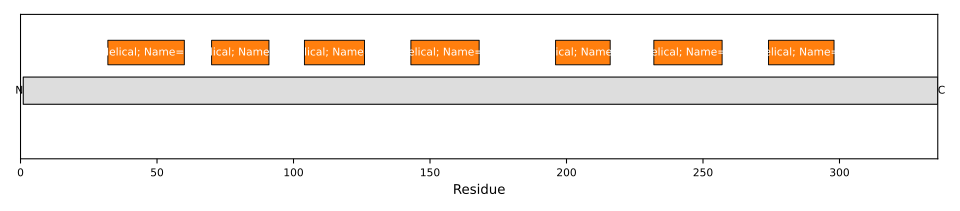
1: Receptor for the C-X3-C chemokine fractalkine (CX3CL1) present on many early leukocyte cells; CX3CR1-CX3CL1 signaling exerts distinct functions in different tissue compartments, such as immune response, inflammation, cell adhesion and chemotaxis (PubMed:12055230, PubMed:23125415, PubMed:9390561, PubMed:9782118). CX3CR1-CX3CL1 signaling mediates cell migratory functions (By similarity). Responsible for the recruitment of natural killer (NK) cells to inflamed tissues (By similarity). Acts as a regulator of inflammation process leading to atherogenesis by mediating macrophage and monocyte recruitment to inflamed atherosclerotic plaques, promoting cell survival (By similarity). Involved in airway inflammation by promoting interleukin 2-producing T helper (Th2) cell survival in inflamed lung (By similarity). Involved in the migration of circulating monocytes to non-inflamed tissues, where they differentiate into macrophages and dendritic cells (By similarity). Acts as a negative regulator of angiogenesis, probably by promoting macrophage chemotaxis (PubMed:14581400, PubMed:18971423). Plays a key role in brain microglia by regulating inflammatory response in the central nervous system (CNS) and regulating synapse maturation (By similarity). Required to restrain the microglial inflammatory response in the CNS and the resulting parenchymal damage in response to pathological stimuli (By similarity). Involved in brain development by participating in synaptic pruning, a natural process during which brain microglia eliminates extra synapses during postnatal development (By similarity). Synaptic pruning by microglia is required to promote the maturation of circuit connectivity during brain development (By similarity). Acts as an important regulator of the gut microbiota by controlling immunity to intestinal bacteria and fungi (By similarity). Expressed in lamina propria dendritic cells in the small intestine, which form transepithelial dendrites capable of taking up bacteria in order to provide defense against pathogenic bacteria (By similarity). Required to initiate innate and adaptive immune responses against dissemination of commensal fungi (mycobiota) component of the gut: expressed in mononuclear phagocytes (MNPs) and acts by promoting induction of antifungal IgG antibodies response to confer protection against disseminated C.albicans or C.auris infection (PubMed:29326275). Also acts as a receptor for C-C motif chemokine CCL26, inducing cell chemotaxis (PubMed:20974991)
2: (Microbial infection) Acts as a coreceptor with CD4 for HIV-1 virus envelope protein
3: (Microbial infection) Acts as a coreceptor with CD4 for HIV-1 virus envelope protein (PubMed:14607932). May have more potent HIV-1 coreceptothr activity than isoform 1 (PubMed:14607932)
4: (Microbial infection) Acts as a coreceptor with CD4 for HIV-1 virus envelope protein (PubMed:14607932). May have more potent HIV-1 coreceptor activity than isoform 1 (PubMed:14607932)