Cathelicidin antimicrobial peptide (18 kDa cationic antimicrobial protein) (CAP-18) (hCAP-18) [Cleaved into: Antibacterial peptide FALL-39 (FALL-39 peptide antibiotic); Antibacterial peptide LL-37]
1_MKTQR 6_ DGHSL 11_ GRWSL 16_ VLLLL 21_ GLVMP 26_ LAIIA 31_ QVLSY 36_ KEAVL 41_ RAIDG 46_ INQRS 51_ SDANL 56_ YRLLD 61_ LDPRP 66_ TMDGD 71_ PDTPK 76_ PVSFT 81_ VKETV 86_ CPRTT 91_ QQSPE 96_ DCDFK 101_ KDGLV 106_ KRCMG 111_ TVTLN 116_ QARGS 121_ FDISC 126_ DKDNK 131_ RFALL 136_ GDFFR 141_ KSKEK 146_ IGKEF 151_ KRIVQ 156_ RIKDF 161_LRNLV
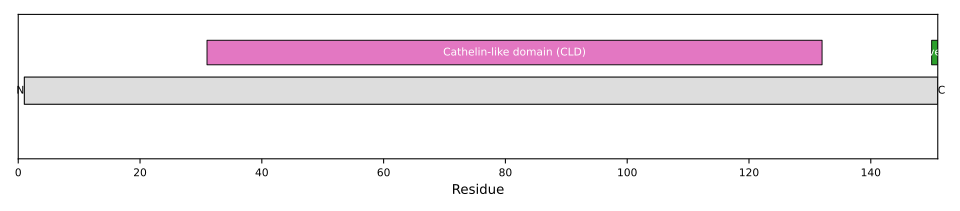
1: Antimicrobial protein that is an integral component of the innate immune system (PubMed:14978112, PubMed:16637646, PubMed:18818205, PubMed:22879591, PubMed:9736536). Binds to bacterial lipopolysaccharides (LPS) (PubMed:16637646, PubMed:18818205). Acts via neutrophil N-formyl peptide receptors to enhance the release of CXCL2 (PubMed:22879591). Postsecretory processing generates multiple cathelicidin antimicrobial peptides with various lengths which act as a topical antimicrobial defense in sweat on skin (PubMed:14978112). The unprocessed precursor form, cathelicidin antimicrobial peptide, inhibits the growth of Gram-negative E.coli and E.aerogenes with efficiencies comparable to that of the mature peptide LL-37 (in vitro) (PubMed:9736536)
2: Antimicrobial peptide that is an integral component of the innate immune system (PubMed:10417311, PubMed:15778390, PubMed:16637646, PubMed:18818205, PubMed:22879591, PubMed:32753597, PubMed:33060695, PubMed:34708076, PubMed:8681941, PubMed:9736536). Binds to bacterial lipopolysaccharides (LPS) (PubMed:10417311, PubMed:16637646, PubMed:18818205, PubMed:33060695, PubMed:9736536). Causes membrane permeabilization by forming transmembrane pores (in vitro) (PubMed:22879591, PubMed:32753597, PubMed:33060695). Causes lysis of E.coli (PubMed:10417311). Exhibits antimicrobial activity against Gram-negative bacteria such as P.aeruginosa, S.typhimurium, E.aerogenes, E.coli and P.syringae, Gram-positive bacteria such as L.monocytogenes, S.epidermidis, S.pyogenes and S.aureus, as well as vancomycin-resistant enterococci (in vitro) (PubMed:10417311, PubMed:32753597, PubMed:8681941, PubMed:9736536). Exhibits antimicrobial activity against methicillin-resistant S.aureus, P.mirabilis, and C.albicans in low-salt media, but not in media containing 100 mM NaCl (in vitro) (PubMed:9736536). Forms chiral supramolecular assemblies with quinolone signal (PQS) molecules of P.aeruginosa, which may lead to interference of bacterial quorum signaling and perturbance of bacterial biofilm formation (PubMed:34708076). May form supramolecular fiber-like assemblies on bacterial membranes (PubMed:29133814). Induces cytokine and chemokine production as well as TNF/TNFA and CSF2/GMCSF production in normal human keratinocytes (PubMed:15778390). Exhibits hemolytic activity against red blood cells (PubMed:10417311)
3: Exhibits antimicrobial activity against E.coli and B.megaterium (in vitro)
4: Acts synergistically with peptides KS-30 and KR-31, killing bacteria such as S.aureus, E.coli and C.albicans at lower concentrations when present together, and maintains activity at increased salt condition (PubMed:14978112). Does not have the ability to stimulate CXCL8/IL8 release from keratinocytes (PubMed:14978112)
5: Poorly active (MIC > 150 uM) against E.coli strain K12 (PubMed:14978112). Is able to induce the pro-inflammatory cytokine TNF/TNFA or the chemokine CCL2/MCP1 (PubMed:14978112)
6: Moderately antibacterial
7: Moderately antibacterial (PubMed:14978112). Acts synergistically with peptides KR-20 and KR-31, killing bacteria such as S.aureus, E.coli and C.albicans at lower concentrations when present together, and maintain activity at increased salt condition (PubMed:14978112). Does not have the ability to stimulate CXCL8/IL8 release from keratinocytes (PubMed:14978112)
8: Acts synergistically with peptides KS-30 and KR-31, killing bacteria such as S.aureus, E.coli and C.albicans at lower concentrations when present together, and maintain activity at increased salt condition (PubMed:14978112). Does not have the ability to stimulate CXCL8/IL8 release from keratinocytes (PubMed:14978112)
9: Inhibits the growth of E.coli and B.megaterium and exhibits hemolytic activity against human red blood cells