Phospholipase A and acyltransferase 3 (EC 2.3.1.-) (EC 3.1.1.32) (EC 3.1.1.4) (Adipose-specific phospholipase A2) (AdPLA) (Group XVI phospholipase A1/A2) (H-rev 107 protein homolog) (H-REV107) (HREV107-1) (HRAS-like suppressor 1) (HRAS-like suppressor 3) (HRSL3) (HREV107-3) (Renal carcinoma antigen NY-REN-65)
1_MRAPI 6_ PEPKP 11_ GDLIE 16_ IFRPF 21_ YRHWA 26_ IYVGD 31_ GYVVH 36_ LAPPS 41_ EVAGA 46_ GAASV 51_ MSALT 56_ DKAIV 61_ KKELL 66_ YDVAG 71_ SDKYQ 76_ VNNKH 81_ DDKYS 86_ PLPCS 91_ KIIQR 96_ AEELV 101_ GQEVL 106_ YKLTS 111_ ENCEH 116_ FVNEL 121_ RYGVA 126_ RSDQV 131_ RDVII 136_ AASVA 141_ GMGLA 146_ AMSLI 151_ GVMFS 156_RNKRQ
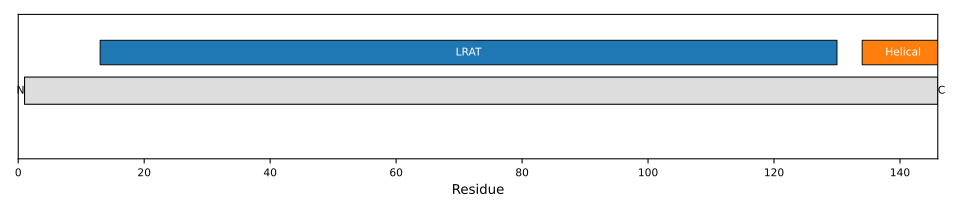
1: Exhibits both phospholipase A1/2 and acyltransferase activities (PubMed:19047760, PubMed:19615464, PubMed:22605381, PubMed:22825852, PubMed:26503625). Shows phospholipase A1 (PLA1) and A2 (PLA2) activity, catalyzing the calcium-independent release of fatty acids from the sn-1 or sn-2 position of glycerophospholipids (PubMed:19047760, PubMed:19615464, PubMed:22605381, PubMed:22825852, PubMed:22923616). For most substrates, PLA1 activity is much higher than PLA2 activity (PubMed:19615464). Shows O-acyltransferase activity,catalyzing the transfer of a fatty acyl group from glycerophospholipid to the hydroxyl group of lysophospholipid (PubMed:19615464). Shows N-acyltransferase activity, catalyzing the calcium-independent transfer of a fatty acyl group at the sn-1 position of phosphatidylcholine (PC) and other glycerophospholipids to the primary amine of phosphatidylethanolamine (PE), forming N-acylphosphatidylethanolamine (NAPE), which serves as precursor for N-acylethanolamines (NAEs) (PubMed:19047760, PubMed:19615464, PubMed:22605381, PubMed:22825852). Exhibits high N-acyltransferase activity and low phospholipase A1/2 activity (PubMed:22825852). Required for complete organelle rupture and degradation that occur during eye lens terminal differentiation, when fiber cells that compose the lens degrade all membrane-bound organelles in order to provide lens with transparency to allow the passage of light. Organelle membrane degradation is probably catalyzed by the phospholipase activity (By similarity)
2: (Microbial infection) Acts as a host factor for picornaviruses: required during early infection to promote viral genome release into the cytoplasm (PubMed:28077878). May act as a cellular sensor of membrane damage at sites of virus entry, which relocalizes to sites of membrane rupture upon virus unfection (PubMed:28077878). Facilitates safe passage of the RNA away from LGALS8, enabling viral genome translation by host ribosome (PubMed:28077878). May also be involved in initiating pore formation, increasing pore size or in maintaining pores for genome delivery (PubMed:28077878). The lipid-modifying enzyme activity is required for this process (PubMed:28077878)