5'-AMP-activated protein kinase subunit gamma-1 (AMPK gamma1) (AMPK subunit gamma-1) (AMPKg)
1_METVI 6_ SSDSS 11_ PAVEN 16_ EHPQE 21_ TPESN 26_ NSVYT 31_ SFMKS 36_ HRCYD 41_ LIPTS 46_ SKLVV 51_ FDTSL 56_ QVKKA 61_ FFALV 66_ TNGVR 71_ AAPLW 76_ DSKKQ 81_ SFVGM 86_ LTITD 91_ FINIL 96_ HRYYK 101_ SALVQ 106_ IYELE 111_ EHKIE 116_ TWREV 121_ YLQDS 126_ FKPLV 131_ CISPN 136_ ASLFD 141_ AVSSL 146_ IRNKI 151_ HRLPV 156_ IDPES 161_ GNTLY 166_ ILTHK 171_ RILKF 176_ LKLFI 181_ TEFPK 186_ PEFMS 191_ KSLEE 196_ LQIGT 201_ YANIA 206_ MVRTT 211_ TPVYV 216_ ALGIF 221_ VQHRV 226_ SALPV 231_ VDEKG 236_ RVVDI 241_ YSKFD 246_ VINLA 251_ AEKTY 256_ NNLDV 261_ SVTKA 266_ LQHRS 271_ HYFEG 276_ VLKCY 281_ LHETL 286_ ETIIN 291_ RLVEA 296_ EVHRL 301_ VVVDE 306_ NDVVK 311_ GIVSL 316_ SDILQ 321_ ALVLT 326_GGEKK
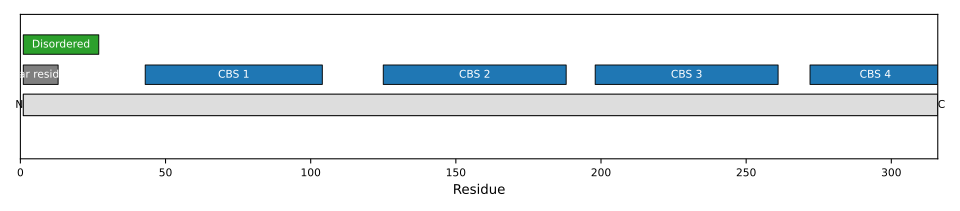
1: AMP/ATP-binding subunit of AMP-activated protein kinase (AMPK), an energy sensor protein kinase that plays a key role in regulating cellular energy metabolism (PubMed:21680840, PubMed:24563466). In response to reduction of intracellular ATP levels, AMPK activates energy-producing pathways and inhibits energy-consuming processes: inhibits protein, carbohydrate and lipid biosynthesis, as well as cell growth and proliferation (PubMed:21680840, PubMed:24563466). AMPK acts via direct phosphorylation of metabolic enzymes, and by longer-term effects via phosphorylation of transcription regulators (PubMed:21680840, PubMed:24563466). Also acts as a regulator of cellular polarity by remodeling the actin cytoskeleton; probably by indirectly activating myosin (PubMed:21680840, PubMed:24563466). Gamma non-catalytic subunit mediates binding to AMP, ADP and ATP, leading to activate or inhibit AMPK: AMP-binding results in allosteric activation of alpha catalytic subunit (PRKAA1 or PRKAA2) both by inducing phosphorylation and preventing dephosphorylation of catalytic subunits (PubMed:21680840, PubMed:24563466). ADP also stimulates phosphorylation, without stimulating already phosphorylated catalytic subunit (PubMed:21680840, PubMed:24563466). ATP promotes dephosphorylation of catalytic subunit, rendering the AMPK enzyme inactive (PubMed:21680840, PubMed:24563466)