Ephrin type-B receptor 3 (EC 2.7.10.1) (EPH-like tyrosine kinase 2) (EPH-like kinase 2) (Embryonic kinase 2) (EK2) (hEK2) (Tyrosine-protein kinase TYRO6)
1_MARAR 6_ PPPPP 11_ SPPPG 16_ LLPLL 21_ PPLLL 26_ LPLLL 31_ LPAGC 36_ RALEE 41_ TLMDT 46_ KWVTS 51_ ELAWT 56_ SHPES 61_ GWEEV 66_ SGYDE 71_ AMNPI 76_ RTYQV 81_ CNVRE 86_ SSQNN 91_ WLRTG 96_ FIWRR 101_ DVQRV 106_ YVELK 111_ FTVRD 116_ CNSIP 121_ NIPGS 126_ CKETF 131_ NLFYY 136_ EADSD 141_ VASAS 146_ SPFWM 151_ ENPYV 156_ KVDTI 161_ APDES 166_ FSRLD 171_ AGRVN 176_ TKVRS 181_ FGPLS 186_ KAGFY 191_ LAFQD 196_ QGACM 201_ SLISV 206_ RAFYK 211_ KCAST 216_ TAGFA 221_ LFPET 226_ LTGAE 231_ PTSLV 236_ IAPGT 241_ CIPNA 246_ VEVSV 251_ PLKLY 256_ CNGDG 261_ EWMVP 266_ VGACT 271_ CATGH 276_ EPAAK 281_ ESQCR 286_ PCPPG 291_ SYKAK 296_ QGEGP 301_ CLPCP 306_ PNSRT 311_ TSPAA 316_ SICTC 321_ HNNFY 326_ RADSD 331_ SADSA 336_ CTTVP 341_ SPPRG 346_ VISNV 351_ NETSL 356_ ILEWS 361_ EPRDL 366_ GGRDD 371_ LLYNV 376_ ICKKC 381_ HGAGG 386_ ASACS 391_ RCDDN 396_ VEFVP 401_ RQLGL 406_ TERRV 411_ HISHL 416_ LAHTR 421_ YTFEV 426_ QAVNG 431_ VSGKS 436_ PLPPR 441_ YAAVN 446_ ITTNQ 451_ AAPSE 456_ VPTLR 461_ LHSSS 466_ GSSLT 471_ LSWAP 476_ PERPN 481_ GVILD 486_ YEMKY 491_ FEKSE 496_ GIAST 501_ VTSQM 506_ NSVQL 511_ DGLRP 516_ DARYV 521_ VQVRA 526_ RTVAG 531_ YGQYS 536_ RPAEF 541_ ETTSE 546_ RGSGA 551_ QQLQE 556_ QLPLI 561_ VGSAT 566_ AGLVF 571_ VVAVV 576_ VIAIV 581_ CLRKQ 586_ RHGSD 591_ SEYTE 596_ KLQQY 601_ IAPGM 606_ KVYID 611_ PFTYE 616_ DPNEA 621_ VREFA 626_ KEIDV 631_ SCVKI 636_ EEVIG 641_ AGEFG 646_ EVCRG 651_ RLKQP 656_ GRREV 661_ FVAIK 666_ TLKVG 671_ YTERQ 676_ RRDFL 681_ SEASI 686_ MGQFD 691_ HPNII 696_ RLEGV 701_ VTKSR 706_ PVMIL 711_ TEFME 716_ NCALD 721_ SFLRL 726_ NDGQF 731_ TVIQL 736_ VGMLR 741_ GIAAG 746_ MKYLS 751_ EMNYV 756_ HRDLA 761_ ARNIL 766_ VNSNL 771_ VCKVS 776_ DFGLS 781_ RFLED 786_ DPSDP 791_ TYTSS 796_ LGGKI 801_ PIRWT 806_ APEAI 811_ AYRKF 816_ TSASD 821_ VWSYG 826_ IVMWE 831_ VMSYG 836_ ERPYW 841_ DMSNQ 846_ DVINA 851_ VEQDY 856_ RLPPP 861_ MDCPT 866_ ALHQL 871_ MLDCW 876_ VRDRN 881_ LRPKF 886_ SQIVN 891_ TLDKL 896_ IRNAA 901_ SLKVI 906_ ASAQS 911_ GMSQP 916_ LLDRT 921_ VPDYT 926_ TFTTV 931_ GDWLD 936_ AIKMG 941_ RYKES 946_ FVSAG 951_ FASFD 956_ LVAQM 961_ TAEDL 966_ LRIGV 971_ TLAGH 976_ QKKIL 981_ SSIQD 986_ MRLQM 991_NQTLP
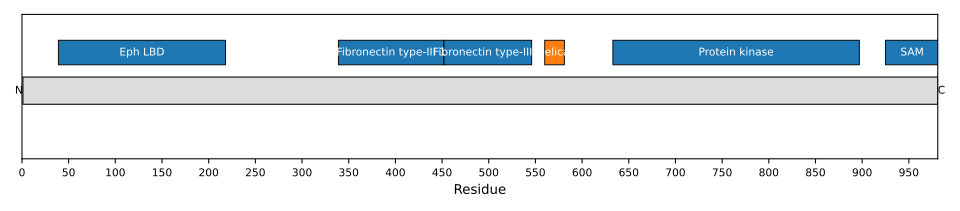
1: Receptor tyrosine kinase which binds promiscuously transmembrane ephrin-B family ligands residing on adjacent cells, leading to contact-dependent bidirectional signaling into neighboring cells. The signaling pathway downstream of the receptor is referred to as forward signaling while the signaling pathway downstream of the ephrin ligand is referred to as reverse signaling. Generally has an overlapping and redundant function with EPHB2. Like EPHB2, functions in axon guidance during development regulating for instance the neurons forming the corpus callosum and the anterior commissure, 2 major interhemispheric connections between the temporal lobes of the cerebral cortex. In addition to its role in axon guidance also plays an important redundant role with other ephrin-B receptors in development and maturation of dendritic spines and the formation of excitatory synapses. Controls other aspects of development through regulation of cell migration and positioning. This includes angiogenesis, palate development and thymic epithelium development for instance. Forward and reverse signaling through the EFNB2/EPHB3 complex also regulate migration and adhesion of cells that tubularize the urethra and septate the cloaca. Finally, plays an important role in intestinal epithelium differentiation segregating progenitor from differentiated cells in the crypt