Ephrin type-B receptor 1 (EC 2.7.10.1) (ELK) (EPH tyrosine kinase 2) (EPH-like kinase 6) (EK6) (hEK6) (Neuronally-expressed EPH-related tyrosine kinase) (NET) (Tyrosine-protein kinase receptor EPH-2)
1_MALDY 6_ LLLLL 11_ LASAV 16_ AAMEE 21_ TLMDT 26_ RTATA 31_ ELGWT 36_ ANPAS 41_ GWEEV 46_ SGYDE 51_ NLNTI 56_ RTYQV 61_ CNVFE 66_ PNQNN 71_ WLLTT 76_ FINRR 81_ GAHRI 86_ YTEMR 91_ FTVRD 96_ CSSLP 101_ NVPGS 106_ CKETF 111_ NLYYY 116_ ETDSV 121_ IATKK 126_ SAFWS 131_ EAPYL 136_ KVDTI 141_ AADES 146_ FSQVD 151_ FGGRL 156_ MKVNT 161_ EVRSF 166_ GPLTR 171_ NGFYL 176_ AFQDY 181_ GACMS 186_ LLSVR 191_ VFFKK 196_ CPSIV 201_ QNFAV 206_ FPETM 211_ TGAES 216_ TSLVI 221_ ARGTC 226_ IPNAE 231_ EVDVP 236_ IKLYC 241_ NGDGE 246_ WMVPI 251_ GRCTC 256_ KPGYE 261_ PENSV 266_ ACKAC 271_ PAGTF 276_ KASQE 281_ AEGCS 286_ HCPSN 291_ SRSPA 296_ EASPI 301_ CTCRT 306_ GYYRA 311_ DFDPP 316_ EVACT 321_ SVPSG 326_ PRNVI 331_ SIVNE 336_ TSIIL 341_ EWHPP 346_ RETGG 351_ RDDVT 356_ YNIIC 361_ KKCRA 366_ DRRSC 371_ SRCDD 376_ NVEFV 381_ PRQLG 386_ LTECR 391_ VSISS 396_ LWAHT 401_ PYTFD 406_ IQAIN 411_ GVSSK 416_ SPFPP 421_ QHVSV 426_ NITTN 431_ QAAPS 436_ TVPIM 441_ HQVSA 446_ TMRSI 451_ TLSWP 456_ QPEQP 461_ NGIIL 466_ DYEIR 471_ YYEKE 476_ HNEFN 481_ SSMAR 486_ SQTNT 491_ ARIDG 496_ LRPGM 501_ VYVVQ 506_ VRART 511_ VAGYG 516_ KFSGK 521_ MCFQT 526_ LTDDD 531_ YKSEL 536_ REQLP 541_ LIAGS 546_ AAAGV 551_ VFVVS 556_ LVAIS 561_ IVCSR 566_ KRAYS 571_ KEAVY 576_ SDKLQ 581_ HYSTG 586_ RGSPG 591_ MKIYI 596_ DPFTY 601_ EDPNE 606_ AVREF 611_ AKEID 616_ VSFVK 621_ IEEVI 626_ GAGEF 631_ GEVYK 636_ GRLKL 641_ PGKRE 646_ IYVAI 651_ KTLKA 656_ GYSEK 661_ QRRDF 666_ LSEAS 671_ IMGQF 676_ DHPNI 681_ IRLEG 686_ VVTKS 691_ RPVMI 696_ ITEFM 701_ ENGAL 706_ DSFLR 711_ QNDGQ 716_ FTVIQ 721_ LVGML 726_ RGIAA 731_ GMKYL 736_ AEMNY 741_ VHRDL 746_ AARNI 751_ LVNSN 756_ LVCKV 761_ SDFGL 766_ SRYLQ 771_ DDTSD 776_ PTYTS 781_ SLGGK 786_ IPVRW 791_ TAPEA 796_ IAYRK 801_ FTSAS 806_ DVWSY 811_ GIVMW 816_ EVMSF 821_ GERPY 826_ WDMSN 831_ QDVIN 836_ AIEQD 841_ YRLPP 846_ PMDCP 851_ AALHQ 856_ LMLDC 861_ WQKDR 866_ NSRPR 871_ FAEIV 876_ NTLDK 881_ MIRNP 886_ ASLKT 891_ VATIT 896_ AVPSQ 901_ PLLDR 906_ SIPDF 911_ TAFTT 916_ VDDWL 921_ SAIKM 926_ VQYRD 931_ SFLTA 936_ GFTSL 941_ QLVTQ 946_ MTSED 951_ LLRIG 956_ ITLAG 961_ HQKKI 966_ LNSIH 971_ SMRVQ 976_ISQSP
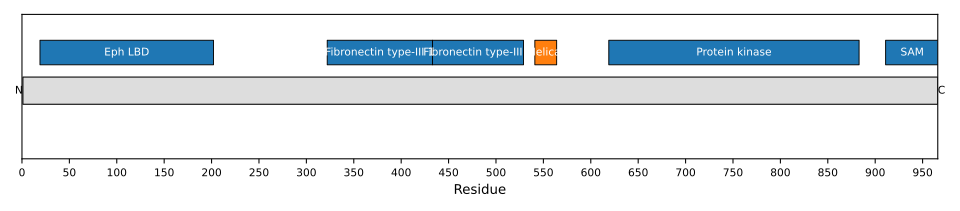
1: Receptor tyrosine kinase which binds promiscuously transmembrane ephrin-B family ligands residing on adjacent cells, leading to contact-dependent bidirectional signaling into neighboring cells. The signaling pathway downstream of the receptor is referred to as forward signaling while the signaling pathway downstream of the ephrin ligand is referred to as reverse signaling. Cognate/functional ephrin ligands for this receptor include EFNB1, EFNB2 and EFNB3. During nervous system development, regulates retinal axon guidance redirecting ipsilaterally ventrotemporal retinal ganglion cells axons at the optic chiasm midline. This probably requires repulsive interaction with EFNB2. In the adult nervous system together with EFNB3, regulates chemotaxis, proliferation and polarity of the hippocampus neural progenitors. In addition to its role in axon guidance also plays an important redundant role with other ephrin-B receptors in development and maturation of dendritic spines and synapse formation. May also regulate angiogenesis. More generally, may play a role in targeted cell migration and adhesion. Upon activation by EFNB1 and probably other ephrin-B ligands activates the MAPK/ERK and the JNK signaling cascades to regulate cell migration and adhesion respectively. Involved in the maintenance of the pool of satellite cells (muscle stem cells) by promoting their self-renewal and reducing their activation and differentiation (By similarity)