GTP-binding protein RAD (RAD1) (Ras associated with diabetes)
1_MTLNG 6_ GGSGA 11_ GGSRG 16_ GGQER 21_ ERRRG 26_ STPWG 31_ PAPPL 36_ HRRSM 41_ PVDER 46_ DLQAA 51_ LTPGA 56_ LTAAA 61_ AGTGT 66_ QGPRL 71_ DWPED 76_ SEDSL 81_ SSGGS 86_ DSDES 91_ VYKVL 96_ LLGAP 101_ GVGKS 106_ ALARI 111_ FGGVE 116_ DGPEA 121_ EAAGH 126_ TYDRS 131_ IVVDG 136_ EEASL 141_ MVYDI 146_ WEQDG 151_ GRWLP 156_ GHCMA 161_ MGDAY 166_ VIVYS 171_ VTDKG 176_ SFEKA 181_ SELRV 186_ QLRRA 191_ RQTDD 196_ VPIIL 201_ VGNKS 206_ DLVRS 211_ REVSV 216_ DEGRA 221_ CAVVF 226_ DCKFI 231_ ETSAA 236_ LHHNV 241_ QALFE 246_ GVVRQ 251_ IRLRR 256_ DSKEA 261_ NARRQ 266_ AGTRR 271_ RESLG 276_ KKAKR 281_ FLGRI 286_ VARNS 291_ RKMAF 296_ RAKSK 301_SCHDL
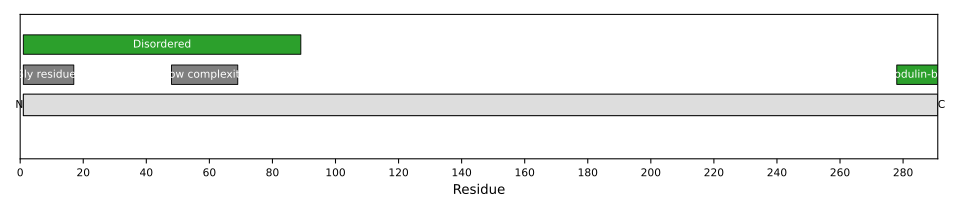
1: May regulate basal voltage-dependent L-type Ca(2+) currents and be required for beta-adrenergic augmentation of Ca(2+) influx in cardiomyocytes, thereby regulating increases in heart rate and contractile force (By similarity). May play an important role in cardiac antiarrhythmia via the strong suppression of voltage-gated L-type Ca(2+) currents (By similarity). Regulates voltage-dependent L-type calcium channel subunit alpha-1C trafficking to the cell membrane (By similarity). Inhibits cardiac hypertrophy through the calmodulin-dependent kinase II (CaMKII) pathway (PubMed:18056528). Inhibits phosphorylation and activation of CAMK2D (PubMed:18056528)