Serine/threonine-protein kinase SIK1 (EC 2.7.11.1) (Salt-inducible kinase 1) (SIK-1) (Serine/threonine-protein kinase SNF1-like kinase 1) (Serine/threonine-protein kinase SNF1LK)
1_MVIMS 6_ EFSAD 11_ PAGQG 16_ QGQQK 21_ PLRVG 26_ FYDIE 31_ RTLGK 36_ GNFAV 41_ VKLAR 46_ HRVTK 51_ TQVAI 56_ KIIDK 61_ TRLDS 66_ SNLEK 71_ IYREV 76_ QLMKL 81_ LNHPH 86_ IIKLY 91_ QVMET 96_ KDMLY 101_ IVTEF 106_ AKNGE 111_ MFDYL 116_ TSNGH 121_ LSENE 126_ ARKKF 131_ WQILS 136_ AVEYC 141_ HDHHI 146_ VHRDL 151_ KTENL 156_ LLDGN 161_ MDIKL 166_ ADFGF 171_ GNFYK 176_ SGEPL 181_ STWCG 186_ SPPYA 191_ APEVF 196_ EGKEY 201_ EGPQL 206_ DIWSL 211_ GVVLY 216_ VLVCG 221_ SLPFD 226_ GPNLP 231_ TLRQR 236_ VLEGR 241_ FRIPF 246_ FMSQD 251_ CESLI 256_ RRMLV 261_ VDPAR 266_ RITIA 271_ QIRQH 276_ RWMRA 281_ EPCLP 286_ GPACP 291_ AFSAH 296_ SYTSN 301_ LGDYD 306_ EQALG 311_ IMQTL 316_ GVDRQ 321_ RTVES 326_ LQNSS 331_ YNHFA 336_ AIYYL 341_ LLERL 346_ KEYRN 351_ AQCAR 356_ PGPAR 361_ QPRPR 366_ SSDLS 371_ GLEVP 376_ QEGLS 381_ TDPFR 386_ PALLC 391_ PQPQT 396_ LVQSV 401_ LQAEM 406_ DCELQ 411_ SSLQW 416_ PLFFP 421_ VDASC 426_ SGVFR 431_ PRPVS 436_ PSSLL 441_ DTAIS 446_ EEARQ 451_ GPGLE 456_ EEQDT 461_ QESLP 466_ SSTGR 471_ RHTLA 476_ EVSTR 481_ LSPLT 486_ APCIV 491_ VSPST 496_ TASPA 501_ EGTSS 506_ DSCLT 511_ FSASK 516_ SPAGL 521_ SGTPA 526_ TQGLL 531_ GACSP 536_ VRLAS 541_ PFLGS 546_ QSATP 551_ VLQAQ 556_ GGLGG 561_ AVLLP 566_ VSFQE 571_ GRRAS 576_ DTSLT 581_ QGLKA 586_ FRQQL 591_ RKTTR 596_ TKGFL 601_ GLNKI 606_ KGLAR 611_ QVCQA 616_ PASRA 621_ SRGGL 626_ SPFHA 631_ PAQSP 636_ GLHGG 641_ AAGSR 646_ EGWSL 651_ LEEVL 656_ EQQRL 661_ LQLQH 666_ HPAAA 671_ PGCSQ 676_ APQPA 681_ PAPFV 686_ IAPCD 691_ GPGAA 696_ PLPST 701_ LLTSG 706_ LPLLP 711_ PPLLQ 716_ TGASP 721_ VASAA 726_ QLLDT 731_ HLHIG 736_ TGPTA 741_ LPAVP 746_ PPRLA 751_ RLAPG 756_ CEPLG 761_ LLQGD 766_ CEMED 771_ LMPCS 776_LGTFV
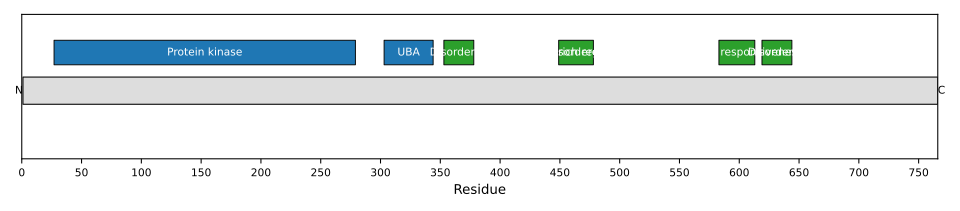
1: Serine/threonine-protein kinase involved in various processes such as cell cycle regulation, gluconeogenesis and lipogenesis regulation, muscle growth and differentiation and tumor suppression. Phosphorylates HDAC4, HDAC5, PPME1, SREBF1, CRTC1/TORC1. Inhibits CREB activity by phosphorylating and inhibiting activity of TORCs, the CREB-specific coactivators, like CRTC2/TORC2 and CRTC3/TORC3 in response to cAMP signaling (PubMed:29211348). Acts as a tumor suppressor and plays a key role in p53/TP53-dependent anoikis, a type of apoptosis triggered by cell detachment: required for phosphorylation of p53/TP53 in response to loss of adhesion and is able to suppress metastasis. Part of a sodium-sensing signaling network, probably by mediating phosphorylation of PPME1: following increases in intracellular sodium, SIK1 is activated by CaMK1 and phosphorylates PPME1 subunit of protein phosphatase 2A (PP2A), leading to dephosphorylation of sodium/potassium-transporting ATPase ATP1A1 and subsequent increase activity of ATP1A1. Acts as a regulator of muscle cells by phosphorylating and inhibiting class II histone deacetylases HDAC4 and HDAC5, leading to promote expression of MEF2 target genes in myocytes. Also required during cardiomyogenesis by regulating the exit of cardiomyoblasts from the cell cycle via down-regulation of CDKN1C/p57Kip2. Acts as a regulator of hepatic gluconeogenesis by phosphorylating and repressing the CREB-specific coactivators CRTC1/TORC1 and CRTC2/TORC2, leading to inhibit CREB activity. Also regulates hepatic lipogenesis by phosphorylating and inhibiting SREBF1. In concert with CRTC1/TORC1, regulates the light-induced entrainment of the circadian clock by attenuating PER1 induction; represses CREB-mediated transcription of PER1 by phosphorylating and deactivating CRTC1/TORC1 (By similarity)