Taste receptor type 2 member 43 (T2R43) (Taste receptor type 2 member 52) (T2R52)
1_MITFL 6_ PIIFS 11_ SLVVV 16_ TFVIG 21_ NFANG 26_ FIALV 31_ NSIEW 36_ FKRQK 41_ ISFAD 46_ QILTA 51_ LAVSR 56_ VGLLW 61_ VLLLN 66_ WYSTV 71_ LNPAF 76_ NSVEV 81_ RTTAY 86_ NIWAV 91_ INHFS 96_ NWLAT 101_ TLSIF 106_ YLLKI 111_ ANFSN 116_ FIFLH 121_ LKRRV 126_ KSVIL 131_ VMLLG 136_ PLLFL 141_ ACHLF 146_ VINMN 151_ EIVRT 156_ KEFEG 161_ NMTWK 166_ IKLKS 171_ AMYFS 176_ NMTVT 181_ MVANL 186_ VPFTL 191_ TLLSF 196_ MLLIC 201_ SLCKH 206_ LKKMQ 211_ LHGKG 216_ SQDPS 221_ TKVHI 226_ KALQT 231_ VISFL 236_ LLCAI 241_ YFLSI 246_ MISVW 251_ SFGSL 256_ ENKPV 261_ FMFCK 266_ AIRFS 271_ YPSIH 276_ PFILI 281_ WGNKK 286_ LKQTF 291_ LSVFW 296_ QMRYW 301_VKGEK
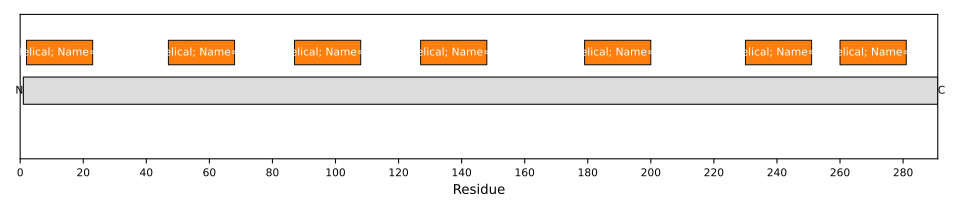
1: Gustducin-coupled receptor immplicated in the perception of bitter compounds in the oral cavity and the gastrointestinal tract. Signals through PLCB2 and the calcium-regulated cation channel TRPM5. Activated by the sulfonyl amide sweeteners saccharin and acesulfame K. In airway epithelial cells, binding of bitter compounds increases the intracellular calcium ion concentration and stimulates ciliary beat frequency. May act as chemosensory receptors in airway epithelial cells to detect and eliminate potential noxious agents from the airways (By similarity)