HLA class II histocompatibility antigen, DR beta 3 chain (MHC class II antigen DRB3)
1_MVCLK 6_ LPGGS 11_ SLAAL 16_ TVTLM 21_ VLSSR 26_ LAFAG 31_ DTRPR 36_ FLELR 41_ KSECH 46_ FFNGT 51_ ERVRY 56_ LDRYF 61_ HNQEE 66_ FLRFD 71_ SDVGE 76_ YRAVT 81_ ELGRP 86_ VAESW 91_ NSQKD 96_ LLEQK 101_ RGRVD 106_ NYCRH 111_ NYGVG 116_ ESFTV 121_ QRRVH 126_ PQVTV 131_ YPAKT 136_ QPLQH 141_ HNLLV 146_ CSVSG 151_ FYPGS 156_ IEVRW 161_ FRNGQ 166_ EEKAG 171_ VVSTG 176_ LIQNG 181_ DWTFQ 186_ TLVML 191_ ETVPR 196_ SGEVY 201_ TCQVE 206_ HPSVT 211_ SALTV 216_ EWRAR 221_ SESAQ 226_ SKMLS 231_ GVGGF 236_ VLGLL 241_ FLGAG 246_ LFIYF 251_ RNQKG 256_ HSGLQ 261_PTGFL
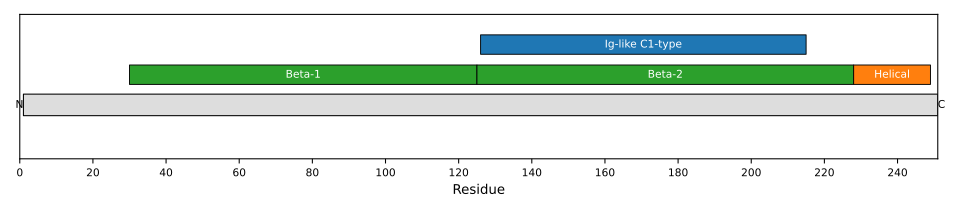
1: A beta chain of antigen-presenting major histocompatibility complex class II (MHCII) molecule. In complex with the alpha chain HLA-DRA, displays antigenic peptides on professional antigen presenting cells (APCs) for recognition by alpha-beta T cell receptor (TCR) on HLA-DRB3-restricted CD4-positive T cells. This guides antigen-specific T-helper effector functions, both antibody-mediated immune response and macrophage activation, to ultimately eliminate the infectious agents and transformed cells. Typically presents extracellular peptide antigens of 10 to 30 amino acids that arise from proteolysis of endocytosed antigens in lysosomes (PubMed:16148104, PubMed:19531622, PubMed:19830726, PubMed:20368442, PubMed:22929521, PubMed:23569328, PubMed:2463305, PubMed:2788702, PubMed:30282837, PubMed:31020640, PubMed:31308093, PubMed:31333679). In the tumor microenvironment, presents antigenic peptides that are primarily generated in tumor-resident APCs likely via phagocytosis of apoptotic tumor cells or macropinocytosis of secreted tumor proteins (By similarity). Presents peptides derived from intracellular proteins that are trapped in autolysosomes after macroautophagy, a mechanism especially relevant for T cell selection in the thymus and central immune tolerance (By similarity). The selection of the immunodominant epitopes follows two processing modes: 'bind first, cut/trim later' for pathogen-derived antigenic peptides and 'cut first, bind later' for autoantigens/self-peptides. The anchor residue at position 1 of the peptide N-terminus, usually a large hydrophobic residue, is essential for high affinity interaction with MHCII molecules (By similarity)
2: ALLELE DRB3*01:01: Exclusively presents several immunogenic epitopes derived from C.tetani neurotoxin tetX, playing a significant role in immune recognition and long-term protection (PubMed:19830726, PubMed:2463305, PubMed:2788702). Presents viral epitopes derived from HHV-6B U11, TRX2/U56 and U85 antigens to polyfunctional CD4-positive T cells with cytotoxic activity implicated in control of HHV-6B infection (PubMed:31020640)
3: ALLELE DRB3*02:02 Exclusively presents several immunogenic epitopes derived from C.tetani neurotoxin tetX, playing a significant role in immune recognition and long-term protection (PubMed:19830726, PubMed:2788702). Upon EBV infection, presents to CD4-positive T cells latent antigen EBNA2 (PRSPTVFYNIPPMPLPPSQL) and lytic antigen BZLF1 (LTAYHVSTAPTGSWF) peptides, driving oligoclonal expansion and selection of virus-specific memory T cell subsets with cytotoxic potential to directly eliminate virus-infected B cells (PubMed:23569328, PubMed:31308093). Presents viral epitopes derived from HHV-6B U11, gB/U39 and gH/U48 antigens to polyfunctional CD4-positive T cells with cytotoxic activity implicated in control of HHV-6B infection (PubMed:31020640). Plays a minor role in CD4-positive T cell immune response against Dengue virus by presenting conserved peptides from capsid and non-structural NS3 proteins (PubMed:31333679). Displays peptides derived from IAV matrix protein M, implying a role in protection against IAV infection (PubMed:19830726). In the context of tumor immunesurveillance, may present to T-helper 1 cells an immunogenic epitope derived from tumor-associated antigen WT1 (KRYFKLSHLQMHSRKH), likely providing for effective antitumor immunity in a wide range of solid and hematological malignancies (PubMed:22929521). Presents to Vbeta2-positive T-helper 1 cells specifically an immunodominant peptide derived from tumor antigen CTAG1A/NY-ESO-1(PGVLLKEFTVSGNILTIRLTAADHR) and confers protective memory response (PubMed:19531622, PubMed:20368442). In metastatic epithelial tumors, presents to intratumoral CD4-positive T cells a TP53 neoantigen (HYNYMCNSSCMGSMNRRPILTIITL) carrying G245S hotspot driver mutation and may mediate tumor regression (PubMed:30282837)
4: ALLELE DRB3*03:01: Presents a series of conserved peptides derived from the M.tuberculosis PPE family of proteins, in particular PPE29 and PPE33, known to be highly immunogenic (PubMed:32341563). Presents immunogenic epitopes derived from C.tetani neurotoxin tetX, playing a role in immune recognition and long-term protection (PubMed:2788702). Displays immunodominant viral peptides from HCV non-structural protein NS2, as part of a broad range T-helper response to resolve infection (PubMed:16148104)