Interferon-induced transmembrane protein 2 (Dispanin subfamily A member 2c) (DSPA2c) (Interferon-inducible protein 1-8D)
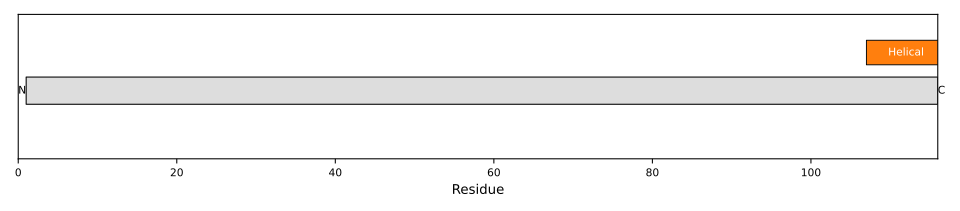
1_MNHIV 6_ QTFSP 11_ VNSGQ 16_ PPNYE 21_ MLKEE 26_ QEVAM 31_ LGVPH 36_ NPAPP 41_ MSTVI 46_ HIRSE 51_ TSVPD 56_ HVVWS 61_ LFNTL 66_ FMNTC 71_ CLGFI 76_ AFAYS 81_ VKSRD 86_ RKMVG 91_ DVTGA 96_ QAYAS 101_ TAKCL 106_ NIWAL 111_ ILGIF 116_ MTILL 121_ IIIPV 126_LVVQA
1: IFN-induced antiviral protein which inhibits the entry of viruses to the host cell cytoplasm, permitting endocytosis, but preventing subsequent viral fusion and release of viral contents into the cytosol (PubMed:26354436, PubMed:33563656). Active against multiple viruses, including influenza A virus, SARS coronaviruses (SARS-CoV and SARS-CoV-2), Marburg virus (MARV), Ebola virus (EBOV), Dengue virus (DNV), West Nile virus (WNV), human immunodeficiency virus type 1 (HIV-1), hepatitis C virus (HCV) and vesicular stomatitis virus (VSV) (PubMed:26354436, PubMed:33239446, PubMed:33270927, PubMed:33563656). Can inhibit: influenza virus hemagglutinin protein-mediated viral entry, MARV and EBOV GP1,2-mediated viral entry, SARS-CoV and SARS-CoV-2 S protein-mediated viral entry and VSV G protein-mediated viral entry (PubMed:33563656). Induces cell cycle arrest and mediates apoptosis by caspase activation and in p53-independent manner. In hepatocytes, IFITM proteins act in a coordinated manner to restrict HCV infection by targeting the endocytosed HCV virion for lysosomal degradation (PubMed:26354436). IFITM2 and IFITM3 display anti-HCV activity that may complement the anti-HCV activity of IFITM1 by inhibiting the late stages of HCV entry, possibly in a coordinated manner by trapping the virion in the endosomal pathway and targeting it for degradation at the lysosome (PubMed:26354436)