DNA-binding protein SATB1 (Special AT-rich sequence-binding protein 1)
1_MDHLN 6_ EATQG 11_ KEHSE 16_ MSNNV 21_ SDPKG 26_ PPAKI 31_ ARLEQ 36_ NGSPL 41_ GRGRL 46_ GSTGA 51_ KMQGV 56_ PLKHS 61_ GHLMK 66_ TNLRK 71_ GTMLP 76_ VFCVV 81_ EHYEN 86_ AIEYD 91_ CKEEH 96_ AEFVL 101_ VRKDM 106_ LFNQL 111_ IEMAL 116_ LSLGY 121_ SHSSA 126_ AQAKG 131_ LIQVG 136_ KWNPV 141_ PLSYV 146_ TDAPD 151_ ATVAD 156_ MLQDV 161_ YHVVT 166_ LKIQL 171_ HSCPK 176_ LEDLP 181_ PEQWS 186_ HTTVR 191_ NALKD 196_ LLKDM 201_ NQSSL 206_ AKECP 211_ LSQSM 216_ ISSIV 221_ NSTYY 226_ ANVSA 231_ AKCQE 236_ FGRWY 241_ KHFKK 246_ TKDMM 251_ VEMDS 256_ LSELS 261_ QQGAN 266_ HVNFG 271_ QQPVP 276_ GNTAE 281_ QPPSP 286_ AQLSH 291_ GSQPS 296_ VRTPL 301_ PNLHP 306_ GLVST 311_ PISPQ 316_ LVNQQ 321_ LVMAQ 326_ LLNQQ 331_ YAVNR 336_ LLAQQ 341_ SLNQQ 346_ YLNHP 351_ PPVSR 356_ SMNKP 361_ LEQQV 366_ STNTE 371_ VSSEI 376_ YQWVR 381_ DELKR 386_ AGISQ 391_ AVFAR 396_ VAFNR 401_ TQGLL 406_ SEILR 411_ KEEDP 416_ KTASQ 421_ SLLVN 426_ LRAMQ 431_ NFLQL 436_ PEAER 441_ DRIYQ 446_ DERER 451_ SLNAA 456_ SAMGP 461_ APLIS 466_ TPPSR 471_ PPQVK 476_ TATIA 481_ TERNG 486_ KPENN 491_ TMNIN 496_ ASIYD 501_ EIQQE 506_ MKRAK 511_ VSQAL 516_ FAKVA 521_ ATKSQ 526_ GWLCE 531_ LLRWK 536_ EDPSP 541_ ENRTL 546_ WENLS 551_ MIRRF 556_ LSLPQ 561_ PERDA 566_ IYEQE 571_ SNAVH 576_ HHGDR 581_ PPHII 586_ HVPAE 591_ QIQQQ 596_ QQQQQ 601_ QQQQQ 606_ QQAPP 611_ PPQPQ 616_ QQPQT 621_ GPRLP 626_ PRQPT 631_ VASPA 636_ ESDEE 641_ NRQKT 646_ RPRTK 651_ ISVEA 656_ LGILQ 661_ SFIQD 666_ VGLYP 671_ DEEAI 676_ QTLSA 681_ QLDLP 686_ KYTII 691_ KFFQN 696_ QRYYL 701_ KHHGK 706_ LKDNS 711_ GLEVD 716_ VAEYK 721_ EEELL 726_ KDLEE 731_ SVQDK 736_ NTNTL 741_ FSVKL 746_ EEELS 751_ VEGNT 756_DINTD
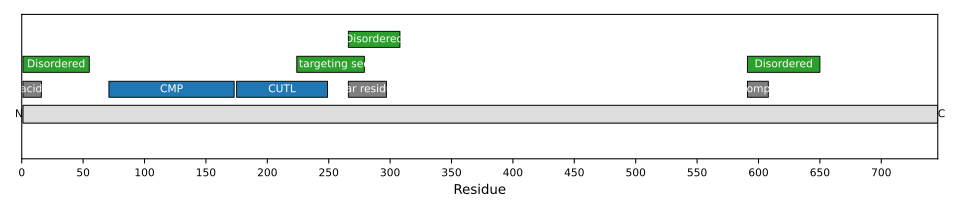
1: Crucial silencing factor contributing to the initiation of X inactivation mediated by Xist RNA that occurs during embryogenesis and in lymphoma (By similarity). Binds to DNA at special AT-rich sequences, the consensus SATB1-binding sequence (CSBS), at nuclear matrix- or scaffold-associated regions. Thought to recognize the sugar-phosphate structure of double-stranded DNA. Transcriptional repressor controlling nuclear and viral gene expression in a phosphorylated and acetylated status-dependent manner, by binding to matrix attachment regions (MARs) of DNA and inducing a local chromatin-loop remodeling. Acts as a docking site for several chromatin remodeling enzymes (e.g. PML at the MHC-I locus) and also by recruiting corepressors (HDACs) or coactivators (HATs) directly to promoters and enhancers. Modulates genes that are essential in the maturation of the immune T-cell CD8SP from thymocytes. Required for the switching of fetal globin species, and beta- and gamma-globin genes regulation during erythroid differentiation. Plays a role in chromatin organization and nuclear architecture during apoptosis. Interacts with the unique region (UR) of cytomegalovirus (CMV). Alu-like motifs and SATB1-binding sites provide a unique chromatin context which seems preferentially targeted by the HIV-1 integration machinery. Moreover, HIV-1 Tat may overcome SATB1-mediated repression of IL2 and IL2RA (interleukin) in T-cells by binding to the same domain than HDAC1. Delineates specific epigenetic modifications at target gene loci, directly up-regulating metastasis-associated genes while down-regulating tumor-suppressor genes. Reprograms chromatin organization and the transcription profiles of breast tumors to promote growth and metastasis. Promotes neuronal differentiation of neural stem/progenitor cells in the adult subventricular zone, possibly by positively regulating the expression of NEUROD1 (By similarity)