mRNA decay activator protein ZFP36L1 (Butyrate response factor 1) (EGF-response factor 1) (ERF-1) (TPA-induced sequence 11b) (Zinc finger protein 36, C3H1 type-like 1) (ZFP36-like 1)
1_MTTTL 6_ VSATI 11_ FDLSE 16_ VLCKG 21_ NKMLN 26_ YSAPS 31_ AGGCL 36_ LDRKA 41_ VGTPA 46_ GGGFP 51_ RRHSV 56_ TLPSS 61_ KFHQN 66_ QLLSS 71_ LKGEP 76_ APALS 81_ SRDSR 86_ FRDRS 91_ FSEGG 96_ ERLLP 101_ TQKQP 106_ GGGQV 111_ NSSRY 116_ KTELC 121_ RPFEE 126_ NGACK 131_ YGDKC 136_ QFAHG 141_ IHELR 146_ SLTRH 151_ PKYKT 156_ ELCRT 161_ FHTIG 166_ FCPYG 171_ PRCHF 176_ IHNAE 181_ ERRAL 186_ AGARD 191_ LSADR 196_ PRLQH 201_ SFSFA 206_ GFPSA 211_ AATAA 216_ ATGLL 221_ DSPTS 226_ ITPPP 231_ ILSAD 236_ DLLGS 241_ PTLPD 246_ GTNNP 251_ FAFSS 256_ QELAS 261_ LFAPS 266_ MGLPG 271_ GGSPT 276_ TFLFR 281_ PMSES 286_ PHMFD 291_ SPPSP 296_ QDSLS 301_ DQEGY 306_ LSSSS 311_ SSHSG 316_ SDSPT 321_ LDNSR 326_ RLPIF 331_SRLSI
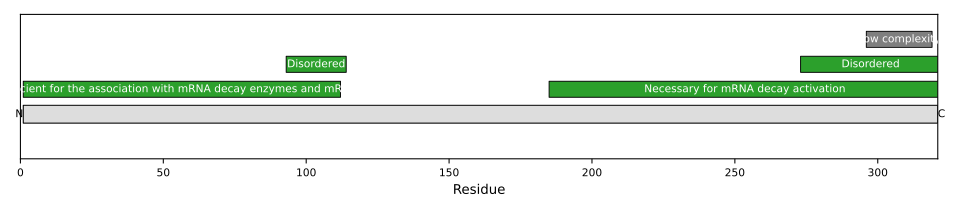
1: Zinc-finger RNA-binding protein that destabilizes several cytoplasmic AU-rich element (ARE)-containing mRNA transcripts by promoting their poly(A) tail removal or deadenylation, and hence provide a mechanism for attenuating protein synthesis (PubMed:12198173, PubMed:15467755, PubMed:15538381, PubMed:17030608, PubMed:19179481, PubMed:20702587, PubMed:24700863, PubMed:25014217, PubMed:25106868, PubMed:26542173). Acts as a 3'-untranslated region (UTR) ARE mRNA-binding adapter protein to communicate signaling events to the mRNA decay machinery (PubMed:15687258). Functions by recruiting the CCR4-NOT deadenylase complex and components of the cytoplasmic RNA decay machinery to the bound ARE-containing mRNAs, and hence promotes ARE-mediated mRNA deadenylation and decay processes (PubMed:15687258, PubMed:18326031, PubMed:25106868). Also induces the degradation of ARE-containing mRNAs even in absence of poly(A) tail (By similarity). Binds to 3'-UTR ARE of numerous mRNAs (PubMed:12198173, PubMed:15467755, PubMed:15538381, PubMed:17030608, PubMed:19179481, PubMed:20702587, PubMed:24700863, PubMed:25014217, PubMed:25106868, PubMed:26542173). Positively regulates early adipogenesis by promoting ARE-mediated mRNA decay of immediate early genes (IEGs) (By similarity). Promotes ARE-mediated mRNA decay of mineralocorticoid receptor NR3C2 mRNA in response to hypertonic stress (PubMed:24700863). Negatively regulates hematopoietic/erythroid cell differentiation by promoting ARE-mediated mRNA decay of the transcription factor STAT5B mRNA (PubMed:20702587). Positively regulates monocyte/macrophage cell differentiation by promoting ARE-mediated mRNA decay of the cyclin-dependent kinase CDK6 mRNA (PubMed:26542173). Promotes degradation of ARE-containing pluripotency-associated mRNAs in embryonic stem cells (ESCs), such as NANOG, through a fibroblast growth factor (FGF)-induced MAPK-dependent signaling pathway, and hence attenuates ESC self-renewal and positively regulates mesendoderm differentiation (By similarity). May play a role in mediating pro-apoptotic effects in malignant B-cells by promoting ARE-mediated mRNA decay of BCL2 mRNA (PubMed:25014217). In association with ZFP36L2 maintains quiescence on developing B lymphocytes by promoting ARE-mediated decay of several mRNAs encoding cell cycle regulators that help B cells progress through the cell cycle, and hence ensuring accurate variable-diversity-joining (VDJ) recombination and functional immune cell formation (By similarity). Together with ZFP36L2 is also necessary for thymocyte development and prevention of T-cell acute lymphoblastic leukemia (T-ALL) transformation by promoting ARE-mediated mRNA decay of the oncogenic transcription factor NOTCH1 mRNA (By similarity). Participates in the delivery of target ARE-mRNAs to processing bodies (PBs) (PubMed:17369404). In addition to its cytosolic mRNA-decay function, plays a role in the regulation of nuclear mRNA 3'-end processing; modulates mRNA 3'-end maturation efficiency of the DLL4 mRNA through binding with an ARE embedded in a weak noncanonical polyadenylation (poly(A)) signal in endothelial cells (PubMed:21832157). Also involved in the regulation of stress granule (SG) and P-body (PB) formation and fusion (PubMed:15967811). Plays a role in vasculogenesis and endocardial development (By similarity). Plays a role in the regulation of keratinocyte proliferation, differentiation and apoptosis (PubMed:27182009). Plays a role in myoblast cell differentiation (By similarity)