Apoptosis regulator BAX (Bcl-2-like protein 4) (Bcl2-L-4)
1_MDGSG 6_ EQPRG 11_ GGPTS 16_ SEQIM 21_ KTGAL 26_ LLQGF 31_ IQDRA 36_ GRMGG 41_ EAPEL 46_ ALDPV 51_ PQDAS 56_ TKKLS 61_ ECLKR 66_ IGDEL 71_ DSNME 76_ LQRMI 81_ AAVDT 86_ DSPRE 91_ VFFRV 96_ AADMF 101_ SDGNF 106_ NWGRV 111_ VALFY 116_ FASKL 121_ VLKAL 126_ CTKVP 131_ ELIRT 136_ IMGWT 141_ LDFLR 146_ ERLLG 151_ WIQDQ 156_ GGWDG 161_ LLSYF 166_ GTPTW 171_ QTVTI 176_ FVAGV 181_ LTASL 186_TIWKK
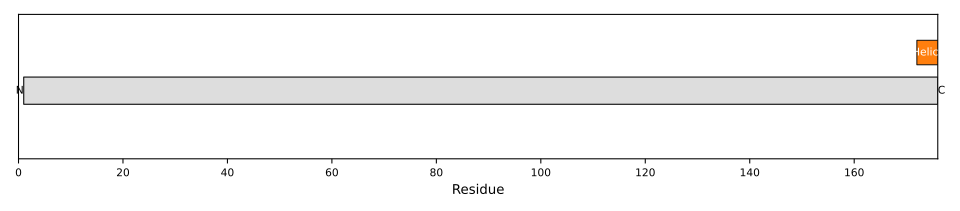
1: Plays a role in the mitochondrial apoptotic process (PubMed:10772918, PubMed:11060313, PubMed:16113678, PubMed:16199525, PubMed:18948948, PubMed:21199865, PubMed:21458670, PubMed:25609812, PubMed:36361894, PubMed:8358790, PubMed:8521816). Under normal conditions, BAX is largely cytosolic via constant retrotranslocation from mitochondria to the cytosol mediated by BCL2L1/Bcl-xL, which avoids accumulation of toxic BAX levels at the mitochondrial outer membrane (MOM) (PubMed:21458670). Under stress conditions, undergoes a conformation change that causes translocation to the mitochondrion membrane, leading to the release of cytochrome c that then triggers apoptosis (PubMed:10772918, PubMed:11060313, PubMed:16113678, PubMed:16199525, PubMed:18948948, PubMed:21199865, PubMed:21458670, PubMed:25609812, PubMed:8358790, PubMed:8521816). Promotes activation of CASP3, and thereby apoptosis (PubMed:10772918, PubMed:11060313, PubMed:16113678, PubMed:16199525, PubMed:18948948, PubMed:21199865, PubMed:21458670, PubMed:25609812, PubMed:8358790, PubMed:8521816)