cGMP-dependent protein kinase 1 (cGK 1) (cGK1) (EC 2.7.11.12) (cGMP-dependent protein kinase I) (cGKI)
1_MSELE 6_ EDFAK 11_ ILMLK 16_ EERIK 21_ ELEKR 26_ LSEKE 31_ EEIQE 36_ LKRKL 41_ HKCQS 46_ VLPVP 51_ STHIG 56_ PRTTR 61_ AQGIS 66_ AEPQT 71_ YRSFH 76_ DLRQA 81_ FRKFT 86_ KSERS 91_ KDLIK 96_ EAILD 101_ NDFMK 106_ NLELS 111_ QIQEI 116_ VDCMY 121_ PVEYG 126_ KDSCI 131_ IKEGD 136_ VGSLV 141_ YVMED 146_ GKVEV 151_ TKEGV 156_ KLCTM 161_ GPGKV 166_ FGELA 171_ ILYNC 176_ TRTAT 181_ VKTLV 186_ NVKLW 191_ AIDRQ 196_ CFQTI 201_ MMRTG 206_ LIKHT 211_ EYMEF 216_ LKSVP 221_ TFQSL 226_ PEEIL 231_ SKLAD 236_ VLEET 241_ HYENG 246_ EYIIR 251_ QGARG 256_ DTFFI 261_ ISKGT 266_ VNVTR 271_ EDSPS 276_ EDPVF 281_ LRTLG 286_ KGDWF 291_ GEKAL 296_ QGEDV 301_ RTANV 306_ IAAEA 311_ VTCLV 316_ IDRDS 321_ FKHLI 326_ GGLDD 331_ VSNKA 336_ YEDAE 341_ AKAKY 346_ EAEAA 351_ FFANL 356_ KLSDF 361_ NIIDT 366_ LGVGG 371_ FGRVE 376_ LVQLK 381_ SEESK 386_ TFAMK 391_ ILKKR 396_ HIVDT 401_ RQQEH 406_ IRSEK 411_ QIMQG 416_ AHSDF 421_ IVRLY 426_ RTFKD 431_ SKYLY 436_ MLMEA 441_ CLGGE 446_ LWTIL 451_ RDRGS 456_ FEDST 461_ TRFYT 466_ ACVVE 471_ AFAYL 476_ HSKGI 481_ IYRDL 486_ KPENL 491_ ILDHR 496_ GYAKL 501_ VDFGF 506_ AKKIG 511_ FGKKT 516_ WTFCG 521_ TPEYV 526_ APEII 531_ LNKGH 536_ DISAD 541_ YWSLG 546_ ILMYE 551_ LLTGS 556_ PPFSG 561_ PDPMK 566_ TYNII 571_ LRGID 576_ MIEFP 581_ KKIAK 586_ NAANL 591_ IKKLC 596_ RDNPS 601_ ERLGN 606_ LKNGV 611_ KDIQK 616_ HKWFE 621_ GFNWE 626_ GLRKG 631_ TLTPP 636_ IIPSV 641_ ASPTD 646_ TSNFD 651_ SFPED 656_ NDEPP 661_ PDDNS 666_GWDID
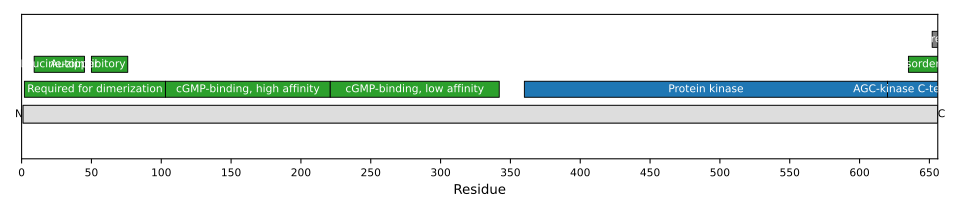
1: Serine/threonine protein kinase that acts as a key mediator of the nitric oxide (NO)/cGMP signaling pathway. GMP binding activates PRKG1, which phosphorylates serines and threonines on many cellular proteins. Numerous protein targets for PRKG1 phosphorylation are implicated in modulating cellular calcium, but the contribution of each of these targets may vary substantially among cell types. Proteins that are phosphorylated by PRKG1 regulate platelet activation and adhesion, smooth muscle contraction, cardiac function, gene expression, feedback of the NO-signaling pathway, and other processes involved in several aspects of the CNS like axon guidance, hippocampal and cerebellar learning, circadian rhythm and nociception. Smooth muscle relaxation is mediated through lowering of intracellular free calcium, by desensitization of contractile proteins to calcium, and by decrease in the contractile state of smooth muscle or in platelet activation. Regulates intracellular calcium levels via several pathways: phosphorylates IRAG1 and inhibits IP3-induced Ca(2+) release from intracellular stores, phosphorylation of KCNMA1 (BKCa) channels decreases intracellular Ca(2+) levels, which leads to increased opening of this channel. PRKG1 phosphorylates the canonical transient receptor potential channel (TRPC) family which inactivates the associated inward calcium current. Another mode of action of NO/cGMP/PKGI signaling involves PKGI-mediated inactivation of the Ras homolog gene family member A (RhoA). Phosphorylation of RHOA by PRKG1 blocks the action of this protein in myriad processes: regulation of RHOA translocation; decreasing contraction; controlling vesicle trafficking, reduction of myosin light chain phosphorylation resulting in vasorelaxation. Activation of PRKG1 by NO signaling also alters gene expression in a number of tissues. In smooth muscle cells, increased cGMP and PRKG1 activity influence expression of smooth muscle-specific contractile proteins, levels of proteins in the NO/cGMP signaling pathway, down-regulation of the matrix proteins osteopontin and thrombospondin-1 to limit smooth muscle cell migration and phenotype. Regulates vasodilator-stimulated phosphoprotein (VASP) functions in platelets and smooth muscle