Translocating chain-associated membrane protein 2
1_MAFRR 6_ RTKSY 11_ PLFSQ 16_ EFVIH 21_ NHADI 26_ GFCLV 31_ LCVLI 36_ GLMFE 41_ VTAKT 46_ AFLFI 51_ LPQYN 56_ ISVPT 61_ ADSET 66_ VHYHY 71_ GPKDL 76_ VTILF 81_ YIFIT 86_ IILHA 91_ VVQEY 96_ ILDKI 101_ SKRLH 106_ LSKVK 111_ HSKFN 116_ ESGQL 121_ VVFHF 126_ TSVIW 131_ CFYVV 136_ VTEGY 141_ LTNPR 146_ SLWED 151_ YPHVH 156_ LPFQV 161_ KFFYL 166_ CQLAY 171_ WLHAL 176_ PELYF 181_ QKVRK 186_ EEIPR 191_ QLQYI 196_ CLYLV 201_ HIAGA 206_ YLLNL 211_ SRLGL 216_ ILLLL 221_ QYSTE 226_ FLFHT 231_ ARLFY 236_ FADEN 241_ NEKLF 246_ SAWAA 251_ VFGVT 256_ RLFIL 261_ TLAVL 266_ AIGFG 271_ LARME 276_ NQAFD 281_ PEKGN 286_ FNTLF 291_ CRLCV 296_ LLLVC 301_ AAQAW 306_ LMWRF 311_ IHSQL 316_ RHWRE 321_ YWNEQ 326_ SAKRR 331_ VPATP 336_ RLPAR 341_ LIKRE 346_ SGYHE 351_ NGVVK 356_ AENGT 361_SPRTK
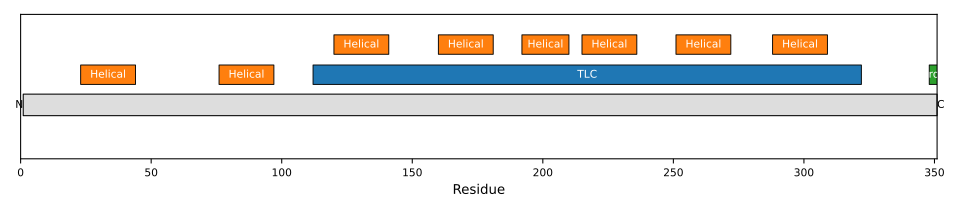
1: Necessary for collagen type I synthesis. May couple the activity of the ER Ca(2+) pump SERCA2B with the activity of the translocon. This coupling may increase the local Ca(2+) concentration at the site of collagen synthesis, and a high Ca(2+) concentration may be necessary for the function of molecular chaperones involved in collagen folding. Required for proper insertion of the first transmembrane helix N-terminus of TM4SF20 into the ER lumen, may act as a ceramide sensor for regulated alternative translocation (RAT) (PubMed:27499293)