Advanced glycosylation end product-specific receptor (Receptor for advanced glycosylation end products)
1_MAAGT 6_ AVGAW 11_ VLVLS 16_ LWGAV 21_ VGAQN 26_ ITARI 31_ GEPLV 36_ LKCKG 41_ APKKP 46_ PQRLE 51_ WKLNT 56_ GRTEA 61_ WKVLS 66_ PQGGG 71_ PWDSV 76_ ARVLP 81_ NGSLF 86_ LPAVG 91_ IQDEG 96_ IFRCQ 101_ AMNRN 106_ GKETK 111_ SNYRV 116_ RVYQI 121_ PGKPE 126_ IVDSA 131_ SELTA 136_ GVPNK 141_ VGTCV 146_ SEGSY 151_ PAGTL 156_ SWHLD 161_ GKPLV 166_ PNEKG 171_ VSVKE 176_ QTRRH 181_ PETGL 186_ FTLQS 191_ ELMVT 196_ PARGG 201_ DPRPT 206_ FSCSF 211_ SPGLP 216_ RHRAL 221_ RTAPI 226_ QPRVW 231_ EPVPL 236_ EEVQL 241_ VVEPE 246_ GGAVA 251_ PGGTV 256_ TLTCE 261_ VPAQP 266_ SPQIH 271_ WMKDG 276_ VPLPL 281_ PPSPV 286_ LILPE 291_ IGPQD 296_ QGTYS 301_ CVATH 306_ SSHGP 311_ QESRA 316_ VSISI 321_ IEPGE 326_ EGPTA 331_ GSVGG 336_ SGLGT 341_ LALAL 346_ GILGG 351_ LGTAA 356_ LLIGV 361_ ILWQR 366_ RQRRG 371_ EERKA 376_ PENQE 381_ EEEER 386_ AELNQ 391_ SEEPE 396_AGESS
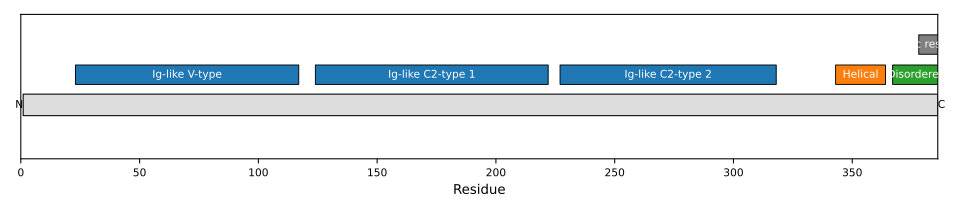
1: Cell surface pattern recognition receptor that senses endogenous stress signals with a broad ligand repertoire including advanced glycation end products, S100 proteins, high-mobility group box 1 protein/HMGB1, amyloid beta/APP oligomers, nucleic acids, histones, phospholipids and glycosaminoglycans (PubMed:27572515, PubMed:28515150, PubMed:34743181, PubMed:35974093, PubMed:24081950). Advanced glycosylation end products are nonenzymatically glycosylated proteins which accumulate in vascular tissue in aging and at an accelerated rate in diabetes (PubMed:21565706). These ligands accumulate at inflammatory sites during the pathogenesis of various diseases including diabetes, vascular complications, neurodegenerative disorders and cancers, and RAGE transduces their binding into pro-inflammatory responses. Upon ligand binding, uses TIRAP and MYD88 as adapters to transduce the signal ultimately leading to the induction of inflammatory cytokines IL6, IL8 and TNFalpha through activation of NF-kappa-B (PubMed:21829704, PubMed:33436632). Interaction with S100A12 on endothelium, mononuclear phagocytes, and lymphocytes triggers cellular activation, with generation of key pro-inflammatory mediators (PubMed:19386136). Interaction with S100B after myocardial infarction may play a role in myocyte apoptosis by activating ERK1/2 and p53/TP53 signaling (By similarity). Contributes to the translocation of amyloid-beta peptide (ABPP) across the cell membrane from the extracellular to the intracellular space in cortical neurons (PubMed:19906677). ABPP-initiated RAGE signaling, especially stimulation of p38 mitogen-activated protein kinase (MAPK), has the capacity to drive a transport system delivering ABPP as a complex with RAGE to the intraneuronal space. Participates in endothelial albumin transcytosis together with HMGB1 through the RAGE/SRC/Caveolin-1 pathway, leading to endothelial hyperpermeability (PubMed:27572515). Mediates the loading of HMGB1 in extracellular vesicles (EVs) that shuttle HMGB1 to hepatocytes by transferrin-mediated endocytosis and subsequently promote hepatocyte pyroptosis by activating the NLRP3 inflammasome (PubMed:34743181). Binds to DNA and promotes extracellular hypomethylated DNA (CpG DNA) uptake by cells via the endosomal route to activate inflammatory responses (PubMed:24081950, PubMed:28515150). Mediates phagocytosis by non-professional phagocytes (NPP) and this is enhanced by binding to ligands including RNA, DNA, HMGB1 and histones (PubMed:35974093). Promotes NPP-mediated phagocytosis of Saccharomyces cerevisiae spores by binding to RNA attached to the spore wall (PubMed:35974093). Also promotes NPP-mediated phagocytosis of apoptotic cells (PubMed:35974093). Following DNA damage, recruited to DNA double-strand break sites where it colocalizes with the MRN repair complex via interaction with double-strand break repair protein MRE11 (By similarity). Enhances the endonuclease activity of MRE11, promoting the end resection of damaged DNA (By similarity). Promotes DNA damage repair in trophoblasts which enhances trophoblast invasion and contributes to placental development and maintenance (PubMed:33918759). Protects cells from DNA replication stress by localizing to damaged replication forks where it stabilizes the MCM2-7 complex and promotes faithful progression of the replication fork (PubMed:36807739). Mediates the production of reactive oxygen species (ROS) in human endothelial cells (PubMed:25401185)