Programmed cell death protein 1 (Protein PD-1) (hPD-1) (CD antigen CD279)
1_MQIPQ 6_ APWPV 11_ VWAVL 16_ QLGWR 21_ PGWFL 26_ DSPDR 31_ PWNPP 36_ TFSPA 41_ LLVVT 46_ EGDNA 51_ TFTCS 56_ FSNTS 61_ ESFVL 66_ NWYRM 71_ SPSNQ 76_ TDKLA 81_ AFPED 86_ RSQPG 91_ QDCRF 96_ RVTQL 101_ PNGRD 106_ FHMSV 111_ VRARR 116_ NDSGT 121_ YLCGA 126_ ISLAP 131_ KAQIK 136_ ESLRA 141_ ELRVT 146_ ERRAE 151_ VPTAH 156_ PSPSP 161_ RPAGQ 166_ FQTLV 171_ VGVVG 176_ GLLGS 181_ LVLLV 186_ WVLAV 191_ ICSRA 196_ ARGTI 201_ GARRT 206_ GQPLK 211_ EDPSA 216_ VPVFS 221_ VDYGE 226_ LDFQW 231_ REKTP 236_ EPPVP 241_ CVPEQ 246_ TEYAT 251_ IVFPS 256_ GMGTS 261_ SPARR 266_ GSADG 271_ PRSAQ 276_ PLRPE 281_DGHCS
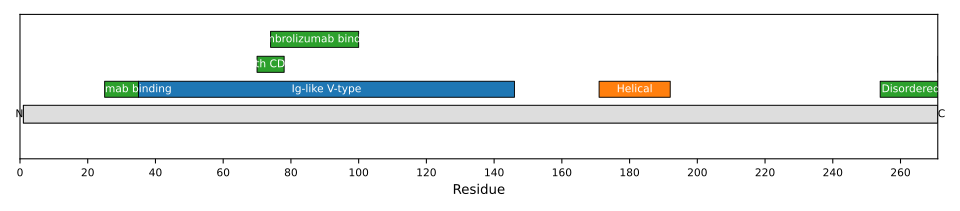
1: Inhibitory receptor on antigen activated T-cells that plays a critical role in induction and maintenance of immune tolerance to self (PubMed:21276005, PubMed:37208329). Delivers inhibitory signals upon binding to ligands CD274/PDCD1L1 and CD273/PDCD1LG2 (PubMed:21276005). Following T-cell receptor (TCR) engagement, PDCD1 associates with CD3-TCR in the immunological synapse and directly inhibits T-cell activation (By similarity). Suppresses T-cell activation through the recruitment of PTPN11/SHP-2: following ligand-binding, PDCD1 is phosphorylated within the ITSM motif, leading to the recruitment of the protein tyrosine phosphatase PTPN11/SHP-2 that mediates dephosphorylation of key TCR proximal signaling molecules, such as ZAP70, PRKCQ/PKCtheta and CD247/CD3zeta (By similarity)
2: The PDCD1-mediated inhibitory pathway is exploited by tumors to attenuate anti-tumor immunity and escape destruction by the immune system, thereby facilitating tumor survival (PubMed:28951311). The interaction with CD274/PDCD1L1 inhibits cytotoxic T lymphocytes (CTLs) effector function (PubMed:28951311). The blockage of the PDCD1-mediated pathway results in the reversal of the exhausted T-cell phenotype and the normalization of the anti-tumor response, providing a rationale for cancer immunotherapy (PubMed:22658127, PubMed:25034862, PubMed:25399552)