RNA-binding protein with serine-rich domain 1 (SR-related protein LDC2)
1_MDLSG 6_ VKKKS 11_ LLGVK 16_ ENNKK 21_ SSTRA 26_ PSPTK 31_ RKDRS 36_ DEKSK 41_ DRSKD 46_ KGATK 51_ ESSEK 56_ DRGRD 61_ KTRKR 66_ RSASS 71_ GSSST 76_ RSRSS 81_ STSSS 86_ GSSTS 91_ TGSSS 96_ GSSSS 101_ SASSR 106_ SGSSS 111_ TSRSS 116_ SSSSS 121_ SGSPS 126_ PSRRR 131_ HDNRR 136_ RSRSK 141_ SKPPK 146_ RDEKE 151_ RKRRS 156_ PSPKP 161_ TKVHI 166_ GRLTR 171_ NVTKD 176_ HIMEI 181_ FSTYG 186_ KIKMI 191_ DMPVE 196_ RMHPH 201_ LSKGY 206_ AYVEF 211_ ENPDE 216_ AEKAL 221_ KHMDG 226_ GQIDG 231_ QEITA 236_ TAVLA 241_ PWPRP 246_ PPRRF 251_ SPPRR 256_ MLPPP 261_ PMWRR 266_ SPPRM 271_ RRRSR 276_ SPRRR 281_ SPVRR 286_ RSRSP 291_ GRRRH 296_RSRSS
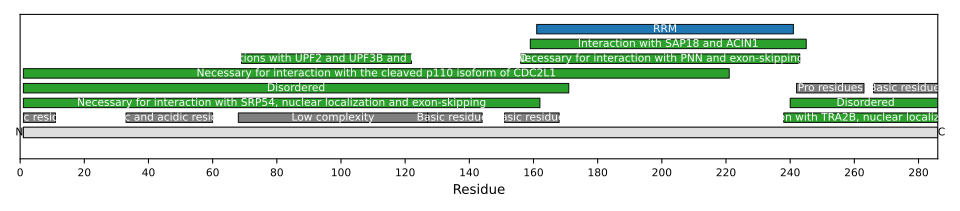
1: Part of pre- and post-splicing multiprotein mRNP complexes. Auxiliary component of the splicing-dependent multiprotein exon junction complex (EJC) deposited at splice junction on mRNAs. The EJC is a dynamic structure consisting of core proteins and several peripheral nuclear and cytoplasmic associated factors that join the complex only transiently either during EJC assembly or during subsequent mRNA metabolism. Component of the ASAP and PSAP complexes which bind RNA in a sequence-independent manner and are proposed to be recruited to the EJC prior to or during the splicing process and to regulate specific excision of introns in specific transcription subsets. The ASAP complex can inhibit RNA processing during in vitro splicing reactions. The ASAP complex promotes apoptosis and is disassembled after induction of apoptosis. Enhances the formation of the ATP-dependent A complex of the spliceosome. Involved in both constitutive splicing and, in association with SRP54 and TRA2B/SFRS10, in distinctive modulation of alternative splicing in a substrate-dependent manner. Involved in the splicing modulation of BCL2L1/Bcl-X (and probably other apoptotic genes); specifically inhibits formation of proapoptotic isoforms such as Bcl-X(S); the activity is different from the established EJC assembly and function. Participates in mRNA 3'-end cleavage. Involved in UPF2-dependent nonsense-mediated decay (NMD) of mRNAs containing premature stop codons. Also mediates increase of mRNA abundance and translational efficiency. Binds spliced mRNA 20-25 nt upstream of exon-exon junctions