NF-kappa-B inhibitor beta (NF-kappa-BIB) (I-kappa-B-beta) (IkB-B) (IkB-beta) (IkappaBbeta) (Thyroid receptor-interacting protein 9) (TR-interacting protein 9) (TRIP-9)
1_MAGVA 6_ CLGKA 11_ ADADE 16_ WCDSG 21_ LGSLG 26_ PDAAA 31_ PGGPG 36_ LGAEL 41_ GPGLS 46_ WAPLV 51_ FGYVT 56_ EDGDT 61_ ALHLA 66_ VIHQH 71_ EPFLD 76_ FLLGF 81_ SAGTE 86_ YMDLQ 91_ NDLGQ 96_ TALHL 101_ AAILG 106_ ETSTV 111_ EKLYA 116_ AGAGL 121_ CVAER 126_ RGHTA 131_ LHLAC 136_ RVGAH 141_ ACARA 146_ LLQPR 151_ PRRPR 156_ EAPDT 161_ YLAQG 166_ PDRTP 171_ DTNHT 176_ PVALY 181_ PDSDL 186_ EKEEE 191_ ESEED 196_ WKLQL 201_ EAENY 206_ EGHTP 211_ LHVAV 216_ IHKDV 221_ EMVRL 226_ LRDAG 231_ ADLDK 236_ PEPTC 241_ GRSPL 246_ HLAVE 251_ AQAAD 256_ VLELL 261_ LRAGA 266_ NPAAR 271_ MYGGR 276_ TPLGS 281_ AMLRP 286_ NPILA 291_ RLLRA 296_ HGAPE 301_ PEGED 306_ EKSGP 311_ CSSSS 316_ DSDSG 321_ DEGDE 326_ YDDIV 331_ VHSSR 336_ SQTRL 341_ PPTPA 346_ SKPLP 351_DDPRP
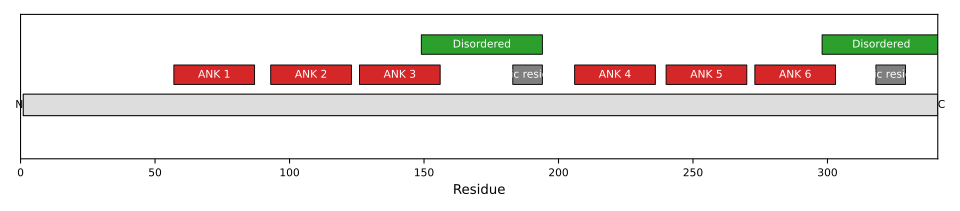
1: Inhibits NF-kappa-B by complexing with and trapping it in the cytoplasm. However, the unphosphorylated form resynthesized after cell stimulation is able to bind NF-kappa-B allowing its transport to the nucleus and protecting it to further NFKBIA-dependent inactivation. Association with inhibitor kappa B-interacting NKIRAS1 and NKIRAS2 prevent its phosphorylation rendering it more resistant to degradation, explaining its slower degradation