Adiponectin (30 kDa adipocyte complement-related protein) (Adipocyte complement-related 30 kDa protein) (ACRP30) (Adipocyte, C1q and collagen domain-containing protein) (Adipose most abundant gene transcript 1 protein) (apM-1) (Gelatin-binding protein)
1_MLLLG 6_ AVLLL 11_ LALPG 16_ HDQET 21_ TTQGP 26_ GVLLP 31_ LPKGA 36_ CTGWM 41_ AGIPG 46_ HPGHN 51_ GAPGR 56_ DGRDG 61_ TPGEK 66_ GEKGD 71_ PGLIG 76_ PKGDI 81_ GETGV 86_ PGAEG 91_ PRGFP 96_ GIQGR 101_ KGEPG 106_ EGAYV 111_ YRSAF 116_ SVGLE 121_ TYVTI 126_ PNMPI 131_ RFTKI 136_ FYNQQ 141_ NHYDG 146_ STGKF 151_ HCNIP 156_ GLYYF 161_ AYHIT 166_ VYMKD 171_ VKVSL 176_ FKKDK 181_ AMLFT 186_ YDQYQ 191_ ENNVD 196_ QASGS 201_ VLLHL 206_ EVGDQ 211_ VWLQV 216_ YGEGE 221_ RNGLY 226_ ADNDN 231_ DSTFT 236_GFLLY
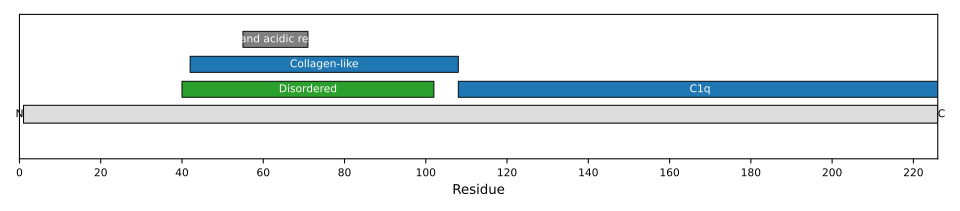
1: Important adipokine involved in the control of fat metabolism and insulin sensitivity, with direct anti-diabetic, anti-atherogenic and anti-inflammatory activities. Stimulates AMPK phosphorylation and activation in the liver and the skeletal muscle, enhancing glucose utilization and fatty-acid combustion. Antagonizes TNF-alpha by negatively regulating its expression in various tissues such as liver and macrophages, and also by counteracting its effects. Inhibits endothelial NF-kappa-B signaling through a cAMP-dependent pathway. May play a role in cell growth, angiogenesis and tissue remodeling by binding and sequestering various growth factors with distinct binding affinities, depending on the type of complex, LMW, MMW or HMW