Acid-sensing ion channel 2 (ASIC2) (Amiloride-sensitive brain sodium channel) (Amiloride-sensitive cation channel 1, neuronal) (Amiloride-sensitive cation channel neuronal 1) (Brain sodium channel 1) (BNC1) (BNaC1) (Mammalian degenerin homolog) (MDEG)
1_MDLKE 6_ SPSEG 11_ SLQPS 16_ SIQIF 21_ ANTST 26_ LHGIR 31_ HIFVY 36_ GPLTI 41_ RRVLW 46_ AVAFV 51_ GSLGL 56_ LLVES 61_ SERVS 66_ YYFSY 71_ QHVTK 76_ VDEVV 81_ AQSLV 86_ FPAVT 91_ LCNLN 96_ GFRFS 101_ RLTTN 106_ DLYHA 111_ GELLA 116_ LLDVN 121_ LQIPD 126_ PHLAD 131_ PSVLE 136_ ALRQK 141_ ANFKH 146_ YKPKQ 151_ FSMLE 156_ FLHRV 161_ GHDLK 166_ DMMLY 171_ CKFKG 176_ QECGH 181_ QDFTT 186_ VFTKY 191_ GKCYM 196_ FNSGE 201_ DGKPL 206_ LTTVK 211_ GGTGN 216_ GLEIM 221_ LDIQQ 226_ DEYLP 231_ IWGET 236_ EETTF 241_ EAGVK 246_ VQIHS 251_ QSEPP 256_ FIQEL 261_ GFGVA 266_ PGFQT 271_ FVATQ 276_ EQRLT 281_ YLPPP 286_ WGECR 291_ SSEMG 296_ LDFFP 301_ VYSIT 306_ ACRID 311_ CETRY 316_ IVENC 321_ NCRMV 326_ HMPGD 331_ APFCT 336_ PEQHK 341_ ECAEP 346_ ALGLL 351_ AEKDS 356_ NYCLC 361_ RTPCN 366_ LTRYN 371_ KELSM 376_ VKIPS 381_ KTSAK 386_ YLEKK 391_ FNKSE 396_ KYISE 401_ NILVL 406_ DIFFE 411_ ALNYE 416_ TIEQK 421_ KAYEV 426_ AALLG 431_ DIGGQ 436_ MGLFI 441_ GASIL 446_ TILEL 451_ FDYIY 456_ ELIKE 461_ KLLDL 466_ LGKEE 471_ DEGSH 476_ DENVS 481_ TCDTM 486_ PNHSE 491_ TISHT 496_ VNVPL 501_ QTTLG 506_TLEEI
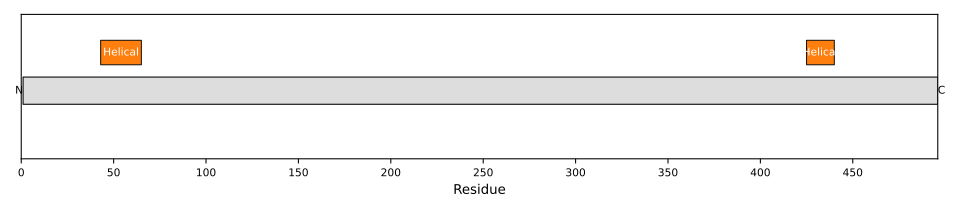
1: Forms pH-gated trimeric sodium channels that act as postsynaptic excitatory sensors in the nervous system (PubMed:10842183, PubMed:23034652, PubMed:8626462, PubMed:8631835). Upon extracellular acidification, these channels generate rapid, transient inward currents that fully desensitize (PubMed:10842183). Highly selective for sodium, they are permeable to other cations (PubMed:8626462, PubMed:8631835). By forming heterotrimeric channels with ASIC1, could contribute to synaptic plasticity, learning, and memory. Additionally, as acid sensors at nerve terminals, plays a role in mechanosensation and phototransduction (By similarity)