Lymphocyte antigen 6E (Ly-6E) (Retinoic acid-induced gene E protein) (RIG-E) (Stem cell antigen 2) (SCA-2) (Thymic shared antigen 1) (TSA-1)
1_MKIFL 6_ PVLLA 11_ ALLGV 16_ ERASS 21_ LMCFS 26_ CLNQK 31_ SNLYC 36_ LKPTI 41_ CSDQD 46_ NYCVT 51_ VSASA 56_ GIGNL 61_ VTFGH 66_ SLSKT 71_ CSPAC 76_ PIPEG 81_ VNVGV 86_ ASMGI 91_ SCCQS 96_ FLCNF 101_ SAADG 106_ GLRAS 111_ VTLLG 116_ AGLLL 121_ SLLPA 126_LLRFG
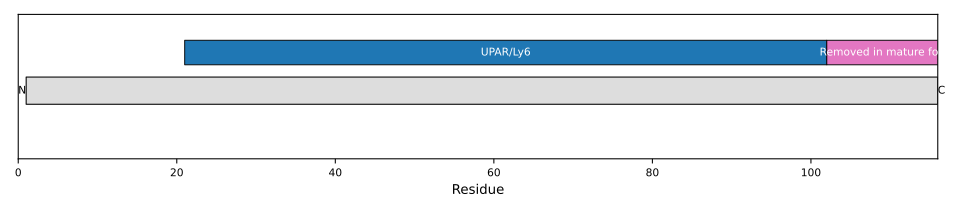
1: GPI-anchored cell surface protein that regulates T-lymphocytes proliferation, differentiation, and activation. Regulates the T-cell receptor (TCR) signaling by interacting with component CD3Z/CD247 at the plasma membrane, leading to CD3Z/CD247 phosphorylation modulation (By similarity). Restricts the entry of human coronaviruses, including SARS-CoV, MERS-CoV and SARS-CoV-2, by interfering with spike protein-mediated membrane fusion (PubMed:32641482). Also plays an essential role in placenta formation by acting as the main receptor for syncytin-A (SynA). Therefore, participates in the normal fusion of syncytiotrophoblast layer I (SynT-I) and in the proper morphogenesis of both fetal and maternal vasculatures within the placenta. May also act as a modulator of nicotinic acetylcholine receptors (nAChRs) activity (By similarity)
2: (Microbial infection) Promotes entry, likely through an enhanced virus-cell fusion process, of various viruses including HIV-1, West Nile virus, dengue virus and Zika virus (PubMed:28130445). In contrast, the paramyxovirus PIV5, which enters at the plasma membrane, does not require LY6E (PubMed:28130445, PubMed:29610346). Mechanistically, adopts a microtubule-like organization upon viral infection and enhances viral uncoating after endosomal escape (PubMed:28130445, PubMed:30190477)