CST complex subunit CTC1 (Conserved telomere maintenance component 1) (HBV DNAPTP1-transactivated protein B)
1_MAAGR 6_ AQVPS 11_ SEQAW 16_ LEDAQ 21_ VFIQK 26_ TLCPA 31_ VKEPN 36_ VQLTP 41_ LVIDC 46_ VKTVW 51_ LSQGR 56_ NQGST 61_ LPLSY 66_ SFVSV 71_ QDLKT 76_ HQRLP 81_ CCSHL 86_ SWSSS 91_ AYQAW 96_ AQEAG 101_ PNGNP 106_ LPREQ 111_ LLLLG 116_ TLTDL 121_ SADLE 126_ QECRN 131_ GSLYV 136_ RDNTG 141_ VLSCE 146_ LIDLD 151_ LSWLG 156_ HLFLF 161_ PRWSY 166_ LPPAR 171_ WNSSG 176_ EGHLE 181_ LWDAP 186_ VPVFP 191_ LTISP 196_ GPVTP 201_ IPVLY 206_ PESAS 211_ CLLRL 216_ RNKLR 221_ GVQRN 226_ LAGSL 231_ VRLSA 236_ LVKSK 241_ QKAYF 246_ ILSLG 251_ RSHPA 256_ VTHVS 261_ IIVQV 266_ PAQLV 271_ WHRAL 276_ RPGTA 281_ YVLTE 286_ LRVSK 291_ IRGQR 296_ QHVWM 301_ TSQSS 306_ RLLLL 311_ KPECV 316_ QELEL 321_ ELEGP 326_ LLEAD 331_ PKPLP 336_ MPSNS 341_ EDKKD 346_ PESLV 351_ RYSRL 356_ LSYSG 361_ AVTGV 366_ LNEPA 371_ GLYEL 376_ DGQLG 381_ LCLAY 386_ QQFRG 391_ LRRVM 396_ RPGVC 401_ LQLQD 406_ VHLLQ 411_ SVGGG 416_ TRRPV 421_ LAPCL 426_ RGAVL 431_ LQSFS 436_ RQKPG 441_ AHSSR 446_ QAYGA 451_ SLYEQ 456_ LVWER 461_ QLGLP 466_ LYLWA 471_ TKALE 476_ ELACK 481_ LCPHV 486_ LRHHQ 491_ FLQHS 496_ SPGSP 501_ SLGLQ 506_ LLAPT 511_ LDLLA 516_ PPGSP 521_ VRNAH 526_ NEILE 531_ EPHHC 536_ PLQKY 541_ TRLQT 546_ PSSFP 551_ TLATL 556_ KEEGQ 561_ RKAWA 566_ SFDPK 571_ ALLPL 576_ PEASY 581_ LPSCQ 586_ LNRRL 591_ AWSWL 596_ CLLPS 601_ AFCPA 606_ QVLLG 611_ VLVAS 616_ SHKGC 621_ LQLRD 626_ QSGSL 631_ PCLLL 636_ AKHSQ 641_ PLSDP 646_ RLIGC 651_ LVRAE 656_ RFQLI 661_ VERDV 666_ RSSFP 671_ SWKEL 676_ SMPGF 681_ IQKQQ 686_ ARVYV 691_ QFFLA 696_ DALIL 701_ PVPRP 706_ CLHSA 711_ TPSTP 716_ QTDPT 721_ GPEGP 726_ HLGQS 731_ RLFLL 736_ CHKEA 741_ LMKRN 746_ FCVPP 751_ GASPE 756_ VPKPA 761_ LSFYV 766_ LGSWL 771_ GGTQR 776_ KEGTG 781_ WGLPE 786_ PQGND 791_ DNDQK 796_ VHLIF 801_ FGSSV 806_ RWFEF 811_ LHPGQ 816_ VYRLI 821_ APGPA 826_ TPMLF 831_ EKDGS 836_ SCISR 841_ RPLEL 846_ AGCAS 851_ CLTVQ 856_ DNWTL 861_ ELESS 866_ QDIQD 871_ VLDAN 876_ KSLPE 881_ SSLTD 886_ LLSDN 891_ FTDSL 896_ VSFSA 901_ EILSR 906_ TLCEP 911_ LVASL 916_ WMKLG 921_ NTGAM 926_ RRCVK 931_ LTVAL 936_ ETAEC 941_ EFPPH 946_ LDVYI 951_ EDPHL 956_ PPSLG 961_ LLPGA 966_ RVHFS 971_ QLEKR 976_ VSRSH 981_ NVYCC 986_ FRSST 991_ YVQVL 996_ SFPPE 1001_ TTISI 1006_ PLPHI 1011_ YLAEL 1016_ LQGGQ 1021_ SPFQA 1026_ TASCH 1031_ IVSVF 1036_ SLQLF 1041_ WVCAY 1046_ CTSIC 1051_ RQGKC 1056_ TRLGS 1061_ TCPTQ 1066_ TAISQ 1071_ AIIRL 1076_ LVEDG 1081_ TAEAV 1086_ VTCRN 1091_ HHVAA 1096_ ALGLC 1101_ PREWA 1106_ SLLDF 1111_ VQVPG 1116_ RVVLQ 1121_ FAGPG 1126_ AQLES 1131_ SARVD 1136_ EPMTM 1141_ FLWTL 1146_ CTSPS 1151_ VLRPI 1156_ VLSFE 1161_ LERKP 1166_ SKIVP 1171_ LEPPR 1176_ LQRFQ 1181_ CGELP 1186_ FLTHV 1191_ NPRLR 1196_ LSCLS 1201_ IRESE 1206_ YSSSL 1211_GILAS
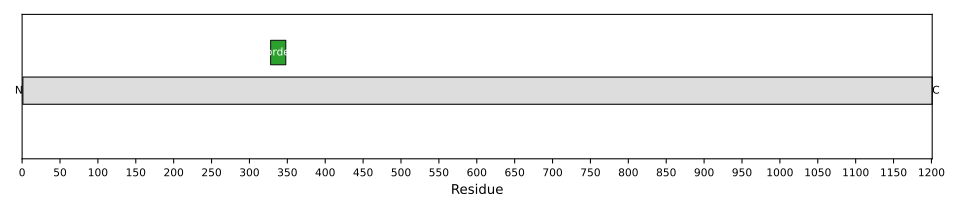
1: Component of the CST complex proposed to act as a specialized replication factor promoting DNA replication under conditions of replication stress or natural replication barriers such as the telomere duplex. The CST complex binds single-stranded DNA with high affinity in a sequence-independent manner, while isolated subunits bind DNA with low affinity by themselves. Initially the CST complex has been proposed to protect telomeres from DNA degradation (PubMed:19854130). However, the CST complex has been shown to be involved in several aspects of telomere replication. The CST complex inhibits telomerase and is involved in telomere length homeostasis; it is proposed to bind to newly telomerase-synthesized 3' overhangs and to terminate telomerase action implicating the association with the ACD:POT1 complex thus interfering with its telomerase stimulation activity. The CST complex is also proposed to be involved in fill-in synthesis of the telomeric C-strand probably implicating recruitment and activation of DNA polymerase alpha (PubMed:22763445). The CST complex facilitates recovery from many forms of exogenous DNA damage; seems to be involved in the re-initiation of DNA replication at repaired forks and/or dormant origins (PubMed:25483097). Involved in telomere maintenance (PubMed:19854131, PubMed:22863775). Involved in genome stability (PubMed:22863775). May be in involved in telomeric C-strand fill-in during late S/G2 phase (By similarity)