Sigma intracellular receptor 2 (Sigma-2 receptor) (Sigma2 receptor) (Meningioma-associated protein 30) (Transmembrane protein 97)
1_MGAPA 6_ TRRCV 11_ EWLLG 16_ LYFLS 21_ HIPIT 26_ LFMDL 31_ QAVLP 36_ RELYP 41_ VEFRN 46_ LLKWY 51_ AKEFK 56_ DPLLQ 61_ EPPAW 66_ FKSFL 71_ FCELV 76_ FQLPF 81_ FPIAT 86_ YAFLK 91_ GSCKW 96_ IRTPA 101_ IIYSV 106_ HTMTT 111_ LIPIL 116_ STFLF 121_ EDFSK 126_ ASGFK 131_ GQRPE 136_ TLHER 141_ LTLVS 146_ VYAPY 151_ LLIPF 156_ ILLIF 161_ MLRSP 166_ YYKYE 171_EKRKK
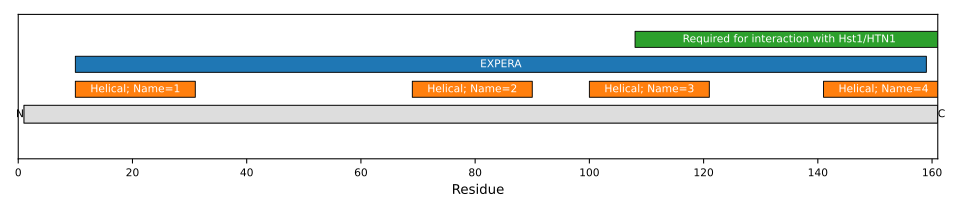
1: Sigma-2 receptor which contributes to ameliorate dysfunctional cellular processes and slow degenerative progression by regulating cell functions including cholesterol biosynthesis/trafficking, membrane trafficking, autophagy, lipid membrane-bound protein trafficking, and receptor stabilization at the cell surface (Probable) (PubMed:19583955, PubMed:23922215, PubMed:25620095, PubMed:27378690, PubMed:28559337, PubMed:30443021, PubMed:34233061, PubMed:34799735, PubMed:35970844). Forms a ternary complex with PGRMC1 receptor and low density lipoprotein receptor/LDLR at the plasma membrane, which increases LDLR-mediated LDL cholesterol internalization (PubMed:30443021). Decreases lysosomal sterol transporter NPC1 availability to the cell, probably through NPC1-binding, hence controlling lipid transport, including cholesterol and LBPA, outside of late endosome/lysosome (PubMed:19583955, PubMed:27378690). Binds regio- and stereoselective ligand 20(S)-hydroxycholesterol (20(S)-OHC) which enhances TMEM97-NPC1 interaction and decreases TMEM97-PGRMC1 and TMEM97-TSPO interactions, thereby linking OHC binding to cholesterol homeostasis (PubMed:34799735, PubMed:37047353). Also able to bind cholesterol (By similarity). Binds histatin 1 (Hst 1)/HN1 salivary peptide at the ER membrane, which is critical for increasing mitochondria-ER contacts and stimulating Hst1 wound healing properties (PubMed:34233061, PubMed:35970844). May alter the activity of some cytochrome P450 proteins (PubMed:22292588). Although shows homologies with sterol isomerases (EXPERA domain), not able to catalyze sterol isomerization (Probable) (PubMed:34880501). However, may act as sensors of these molecules (Probable) (PubMed:34880501). Acts as a quality control factor in the ER, promoting the proteolytic degradation of nonproductive and extramitochondrial precursor proteins in the ER membrane thus removing them from the ER surface (By similarity)