Free fatty acid receptor 4 (G-protein coupled receptor 120) (G-protein coupled receptor 129) (G-protein coupled receptor GT01) (G-protein coupled receptor PGR4) (Omega-3 fatty acid receptor 1)
1_MSPEC 6_ ARAAG 11_ DAPLR 16_ SLEQA 21_ NRTRF 26_ PFFSD 31_ VKGDH 36_ RLVLA 41_ AVETT 46_ VLVLI 51_ FAVSL 56_ LGNVC 61_ ALVLV 66_ ARRRR 71_ RGATA 76_ CLVLN 81_ LFCAD 86_ LLFIS 91_ AIPLV 96_ LAVRW 101_ TEAWL 106_ LGPVA 111_ CHLLF 116_ YVMTL 121_ SGSVT 126_ ILTLA 131_ AVSLE 136_ RMVCI 141_ VHLQR 146_ GVRGP 151_ GRRAR 156_ AVLLA 161_ LIWGY 166_ SAVAA 171_ LPLCV 176_ FFRVV 181_ PQRLP 186_ GADQE 191_ ISICT 196_ LIWPT 201_ IPGEI 206_ SWDVS 211_ FVTLN 216_ FLVPG 221_ LVIVI 226_ SYSKI 231_ LQITK 236_ ASRKR 241_ LTVSL 246_ AYSES 251_ HQIRV 256_ SQQDF 261_ RLFRT 266_ LFLLM 271_ VSFFI 276_ MWSPI 281_ IITIL 286_ LILIQ 291_ NFKQD 296_ LVIWP 301_ SLFFW 306_ VVAFT 311_ FANSA 316_ LNPIL 321_ YNMTL 326_ CRNEW 331_ KKIFC 336_ CFWFP 341_ EKGAI 346_ LTDTS 351_ VKRND 356_LSIIS
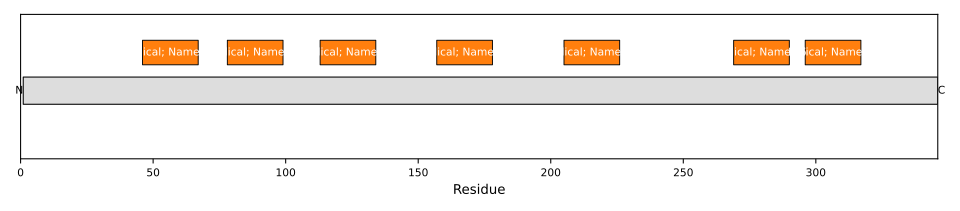
1: G-protein-coupled receptor for long-chain fatty acids (LCFAs) with a major role in adipogenesis, energy metabolism and inflammation. Signals via G-protein and beta-arrestin pathways (PubMed:22282525, PubMed:22343897, PubMed:24742677, PubMed:24817122, PubMed:27852822). LCFAs sensing initiates activation of phosphoinositidase C-linked G proteins GNAQ and GNA11 (G(q)/G(11)), inducing a variety of cellular responses via second messenger pathways such as intracellular calcium mobilization, modulation of cyclic adenosine monophosphate (cAMP) production, and mitogen-activated protein kinases (MAPKs) (PubMed:22282525, PubMed:22343897, PubMed:24742677, PubMed:27852822). After LCFAs binding, associates with beta-arrestin ARRB2 that acts as an adapter protein coupling the receptor to specific downstream signaling pathways, as well as mediating receptor endocytosis (PubMed:22282525, PubMed:24817122). In response to dietary fats, plays an important role in the regulation of adipocyte proliferation and differentiation (By similarity). Acts as a receptor for omega-3 polyunsaturated fatty acids (PUFAs) at primary cilium of perivascular preadipocytes, initiating an adipogenic program via cAMP and CTCF-dependent chromatin remodeling that ultimately results in transcriptional activation of adipogenic genes and cell cycle entry (By similarity). Induces differentiation of brown adipocytes probably via autocrine and endocrine functions of FGF21 hormone (By similarity). Activates brown adipocytes by initiating intracellular calcium signaling that leads to mitochondrial depolarization and fission, and overall increased mitochondrial respiration (By similarity). Consequently stimulates fatty acid uptake and oxidation in mitochondria together with UCP1-mediated thermogenic respiration, eventually reducing fat mass (By similarity). Regulates bi-potential differentiation of bone marrow mesenchymal stem cells toward osteoblasts or adipocytes likely by up-regulating distinct integrins (By similarity). In response to dietary fats regulates hormone secretion and appetite (By similarity). Stimulates GIP and GLP1 secretion from enteroendocrine cells as well as GCG secretion in pancreatic alpha cells, thereby playing a role in the regulation of blood glucose levels (By similarity). Negatively regulates glucose-induced SST secretion in pancreatic delta cells (By similarity). Mediates LCFAs inhibition of GHRL secretion, an appetite-controlling hormone (By similarity). In taste buds, contributes to sensing of dietary fatty acids by the gustatory system (By similarity). During the inflammatory response, promotes anti-inflammatory M2 macrophage differentiation in adipose tissue (By similarity). Mediates the anti-inflammatory effects of omega-3 PUFAs via inhibition of NLRP3 inflammasome activation (PubMed:23809162). In this pathway, interacts with adapter protein ARRB2 and inhibits the priming step triggered by Toll-like receptors (TLRs) at the level of TAK1 and TAB1 (By similarity). Further inhibits the activation step when ARRB2 directly associates with NLRP3, leading to inhibition of pro-inflammatory cytokine release (PubMed:23809162). Mediates LCFAs anti-apoptotic effects (By similarity)
2: Receptor for LCFAs decoupled from G-protein signaling. May signal through beta-arrestin pathway. After LCFAs binding, associates with beta-arrestin ARRB2 that may act as an adapter protein coupling the receptor to specific downstream signaling pathways, as well as mediating receptor endocytosis