CSC1-like protein 2 (Transmembrane protein 63B)
1_MLPFL 6_ LATLG 11_ TTALN 16_ NSNPK 21_ DYCYS 26_ ARIRS 31_ TVLQG 36_ LPFGG 41_ VPTVL 46_ ALDFM 51_ CFLAL 56_ LFLFS 61_ ILRKV 66_ AWDYG 71_ RLALV 76_ TDADR 81_ LRRQE 86_ RDRVE 91_ QEYVA 96_ SAMHG 101_ DSHDR 106_ YERLT 111_ SVSSS 116_ VDFDQ 121_ RDNGF 126_ CSWLT 131_ AIFRI 136_ KDDEI 141_ RDKCG 146_ GDAVH 151_ YLSFQ 156_ RHIIG 161_ LLVVV 166_ GVLSV 171_ GIVLP 176_ VNFSG 181_ DLLEN 186_ NAYSF 191_ GRTTI 196_ ANLKS 201_ GNNLL 206_ WLHTS 211_ FAFLY 216_ LLLTV 221_ YSMRR 226_ HTSKM 231_ RYKED 236_ DLVKR 241_ TLFIN 246_ GISKY 251_ AESEK 256_ IKKHF 261_ EEAYP 266_ NCTVL 271_ EARPC 276_ YNVAR 281_ LMFLD 286_ AERKK 291_ AERGK 296_ LYFTN 301_ LQSKE 306_ NVPTM 311_ INPKP 316_ CGHLC 321_ CCVVR 326_ GCEQV 331_ EAIEY 336_ YTKLE 341_ QKLKE 346_ DYKRE 351_ KEKVN 356_ EKPLG 361_ MAFVT 366_ FHNET 371_ ITAII 376_ LKDFN 381_ VCKCQ 386_ GCTCR 391_ GEPRP 396_ SSCSE 401_ SLHIS 406_ NWTVS 411_ YAPDP 416_ QNIYW 421_ EHLSI 426_ RGFIW 431_ WLRCL 436_ VINVV 441_ LFILL 446_ FFLTT 451_ PAIII 456_ TTMDK 461_ FNVTK 466_ PVEYL 471_ NNPII 476_ TQFFP 481_ TLLLW 486_ CFSAL 491_ LPTIV 496_ YYSAF 501_ FEAHW 506_ TRSGE 511_ NRTTM 516_ HKCYT 521_ FLIFM 526_ VLLLP 531_ SLGLS 536_ SLDLF 541_ FRWLF 546_ DKKFL 551_ AEAAI 556_ RFECV 561_ FLPDN 566_ GAFFV 571_ NYVIA 576_ SAFIG 581_ NAMDL 586_ LRIPG 591_ LLMYM 596_ IRLCL 601_ ARSAA 606_ ERRNV 611_ KRHQA 616_ YEFQF 621_ GAAYA 626_ WMMCV 631_ FTVVM 636_ TYSIT 641_ CPIIV 646_ PFGLM 651_ YMLLK 656_ HLVDR 661_ YNLYY 666_ AYLPA 671_ KLDKK 676_ IHSGA 681_ VNQVV 686_ AAPIL 691_ CLFWL 696_ LFFST 701_ MRTGF 706_ LAPTS 711_ MFTFV 716_ VLVIT 721_ IVICL 726_ CHVCF 731_ GHFKY 736_ LSAHN 741_ YKIEH 746_ TETDT 751_ VDPRS 756_ NGRPP 761_ TAAAV 766_ PKSAK 771_ YIAQV 776_ LQDSE 781_ VDGDG 786_ DGAPG 791_ SSGDE 796_ PPSSS 801_ SQDEE 806_ LLMPP 811_ DALTD 816_ TDFQS 821_ CEDSL 826_IENEI
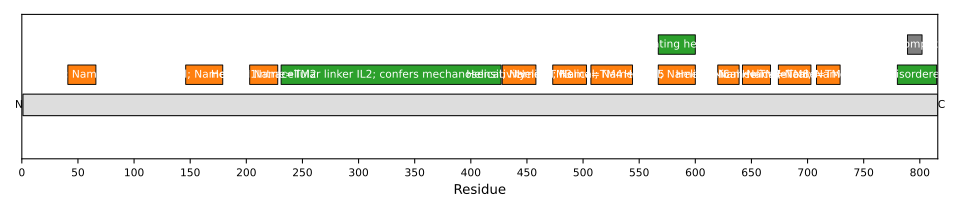
1: Mechanosensitive cation channel with low conductance and high activation threshold (PubMed:37543036, PubMed:38127458). Osmosensitive cation channel preferentially activated by hypotonic stress (PubMed:37543036, PubMed:38127458). Also acts as a phospholipid scramblase in response to changes in membrane structure: upon changes in membrane curvature and thickness, alters its conformation and translocates phospholipids, such as phosphatidylcholine and sphingomyelin, thereby controlling plasma membrane lipid distribution (PubMed:39217145, PubMed:39424995, PubMed:39716028). Forms a heterodimer with SLC19A2, which mediates phospholipid scramblase activity following Ca(2+) stimulation (By similarity). Expressed in excitatory neurons of the subfornical organ and functions as a thirst receptor that mediates neuronal response to hyperosmolality to drive thirst and drinking behavior (By similarity). Facilitates intestinal motility by promoting proliferation of intestinal stem cells (By similarity). Essential for the baby's first breath and respiration throughout life (PubMed:38127458). Upon lung inflation conducts cation currents in alveolar type 1 and 2 cells triggering lamellar body exocytosis and surfactant secretion into airspace (PubMed:38127458). Acts as an osmosensor in cochlear outer hair cells (OHCs) where it mediates calcium influx and regulatory volume decrease response (By similarity). Required for the maintenance of OHC morphology, OHC survival and normal hearing (By similarity)