Anoctamin-1 (Discovered on gastrointestinal stromal tumors protein 1) (Oral cancer overexpressed protein 2) (Transmembrane protein 16A) (Tumor-amplified and overexpressed sequence 2)
1_MRVNE 6_ KYSTL 11_ PAEDR 16_ SVHII 21_ NICAI 26_ EDIGY 31_ LPSEG 36_ TLLNS 41_ LSVDP 46_ DAECK 51_ YGLYF 56_ RDGRR 61_ KVDYI 66_ LVYHH 71_ KRPSG 76_ NRTLV 81_ RRVQH 86_ SDTPS 91_ GARSV 96_ KQDHP 101_ LPGKG 106_ ASLDA 111_ GSGEP 116_ PMDYH 121_ EDDKR 126_ FRREE 131_ YEGNL 136_ LEAGL 141_ ELERD 146_ EDTKI 151_ HGVGF 156_ VKIHA 161_ PWNVL 166_ CREAE 171_ FLKLK 176_ MPTKK 181_ MYHIN 186_ ETRGL 191_ LKKIN 196_ SVLQK 201_ ITDPI 206_ QPKVA 211_ EHRPQ 216_ TMKRL 221_ SYPFS 226_ REKQH 231_ LFDLS 236_ DKDSF 241_ FDSKT 246_ RSTIV 251_ YEILK 256_ RTTCT 261_ KAKYS 266_ MGITS 271_ LLANG 276_ VYAAA 281_ YPLHD 286_ GDYNG 291_ ENVEF 296_ NDRKL 301_ LYEEW 306_ ARYGV 311_ FYKYQ 316_ PIDLV 321_ RKYFG 326_ EKIGL 331_ YFAWL 336_ GVYTQ 341_ MLIPA 346_ SIVGI 351_ IVFLY 356_ GCATM 361_ DENIP 366_ SMEMC 371_ DQRHN 376_ ITMCP 381_ LCDKT 386_ CSYWK 391_ MSSAC 396_ ATARA 401_ SHLFD 406_ NPATV 411_ FFSVF 416_ MALWA 421_ ATFME 426_ HWKRK 431_ QMRLN 436_ YRWDL 441_ TGFEE 446_ EEEAV 451_ KDHPR 456_ AEYEA 461_ RVLEK 466_ SLKKE 471_ SRNKE 476_ KRRHI 481_ PEEST 486_ NKWKQ 491_ RVKTA 496_ MAGVK 501_ LTDKV 506_ KLTWR 511_ DRFPA 516_ YLTNL 521_ VSIIF 526_ MIAVT 531_ FAIVL 536_ GVIIY 541_ RISMA 546_ AALAM 551_ NSSPS 556_ VRSNI 561_ RVTVT 566_ ATAVI 571_ INLVV 576_ IILLD 581_ EVYGC 586_ IARWL 591_ TKIEV 596_ PKTEK 601_ SFEER 606_ LIFKA 611_ FLLKF 616_ VNSYT 621_ PIFYV 626_ AFFKG 631_ RFVGR 636_ PGDYV 641_ YIFRS 646_ FRMEE 651_ CAPGG 656_ CLMEL 661_ CIQLS 666_ IIMLG 671_ KQLIQ 676_ NNLFE 681_ IGIPK 686_ MKKLI 691_ RYLKL 696_ KQQSP 701_ PDHEE 706_ CVKRK 711_ QRYEV 716_ DYNLE 721_ PFAGL 726_ TPEYM 731_ EMIIQ 736_ FGFVT 741_ LFVAS 746_ FPLAP 751_ LFALL 756_ NNIIE 761_ IRLDA 766_ KKFVT 771_ ELRRP 776_ VAVRA 781_ KDIGI 786_ WYNIL 791_ RGIGK 796_ LAVII 801_ NAFVI 806_ SFTSD 811_ FIPRL 816_ VYLYM 821_ YSKNG 826_ TMHGF 831_ VNHTL 836_ SSFNV 841_ SDFQN 846_ GTAPN 851_ DPLDL 856_ GYEVQ 861_ ICRYK 866_ DYREP 871_ PWSEN 876_ KYDIS 881_ KDFWA 886_ VLAAR 891_ LAFVI 896_ VFQNL 901_ VMFMS 906_ DFVDW 911_ VIPDI 916_ PKDIS 921_ QQIHK 926_ EKVLM 931_ VELFM 936_ REEQD 941_ KQQLL 946_ ETWME 951_ KERQK 956_ DEPPC 961_ NHHNT 966_ KACPD 971_ SLGSP 976_ APSHA 981_YHGGV
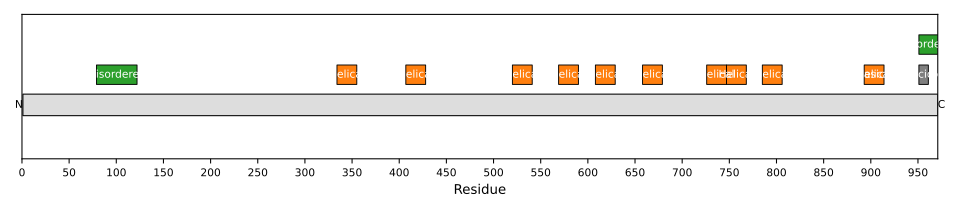
1: Calcium-activated chloride channel (CaCC) (PubMed:20056604, PubMed:22178883, PubMed:22946059, PubMed:32487539). Plays a role in transepithelial anion transport and smooth muscle contraction. Required for the normal functioning of the interstitial cells of Cajal (ICCs) which generate electrical pacemaker activity in gastrointestinal smooth muscles. Acts as a major contributor to basal and stimulated chloride conductance in airway epithelial cells and plays an important role in tracheal cartilage development. Required for CFTR activation by enhancing endoplasmic reticulum Ca(2+) store release and is also required for CFTR membrane expression (PubMed:28963502). Required for basal and ATP-dependent mucus secretion in airways and intestine, probably by controlling exocytosis of mucus-filled granules by providing Ca(2+) to an apical signaling compartment (By similarity). Contributes to airway mucus expression induced by interleukins IL3 and IL8 and by the asthma-associated protein CLCA1 and is required for expression of mucin MUC5AC (PubMed:33026825). However, was shown in another study not to be required for MUC5AC expression (PubMed:31732694). Plays a role in the propagation of Ca(2+) waves in Kolliker's organ in the cochlea and contributes to the refinement of auditory brainstem circuitries prior to hearing onset (By similarity). In vomeronasal sensory neurons, modulates spontaneous firing patterns in the absence of stimuli as well as the firing pattern of pheromone-evoked activity (By similarity). Responsible for calcium-activated chloride channel activity in type I taste cells of the vallate papillae (By similarity). Acts as a heat sensor in nociceptive neurons (By similarity). In dorsal root ganglion neurons, plays a role in mediating non-histaminergic Mas-related G-protein coupled receptor (MRGPR)-dependent itching, acting as a downstream effector of MRGPRs (By similarity). In the developing brain, required for the Ca(2+)-dependent process extension of radial glial cells (By similarity)
2: Calcium-activated chloride channel (CaCC). Contributes to calcium-activated chloride secretion in human sweat gland epithelial cells. Shows increased basal chloride permeability and decreased Ca(2+)-induced chloride permeability
3: Calcium-activated chloride channel (CaCC). Shows increased sensitivity to intracellular Ca(2+)