BTB/POZ domain-containing protein KCTD11 (KCASH1 protein) (Potassium channel tetramerization domain-containing protein 11) (RING-type E3 ubiquitin transferase subunit KCTD11)
1_MLGAM 6_ FRAGT 11_ PMPPN 16_ LNSQG 21_ GGHYF 26_ IDRDG 31_ KAFRH 36_ ILNFL 41_ RLGRL 46_ DLPRG 51_ YGETA 56_ LLRAE 61_ ADFYQ 66_ IRPLL 71_ DALRE 76_ LEASQ 81_ GTPAP 86_ TAALL 91_ HADVD 96_ VSPRL 101_ VHFSA 106_ RRGPH 111_ HYELS 116_ SVQVD 121_ TFRAN 126_ LFCTD 131_ SECLG 136_ ALRAR 141_ FGVAS 146_ GDRAE 151_ GSPHF 156_ HLEWA 161_ PRPVE 166_ LPEVE 171_ YGRLG 176_ LQPLW 181_ TGGPG 186_ ERREV 191_ VGTPS 196_ FLEEV 201_ LRVAL 206_ EHGFR 211_ LDSVF 216_ PDPED 221_ LLNSR 226_SLRFV
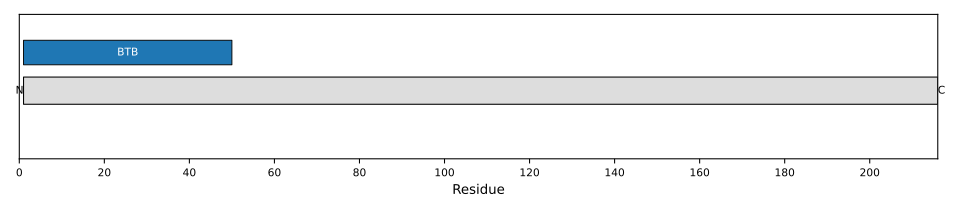
1: Plays a role as a marker and a regulator of neuronal differentiation; Up-regulated by a variety of neurogenic signals, such as retinoic acid, epidermal growth factor/EGF and NGFB/nerve growth factor. Induces apoptosis, growth arrest and the expression of cyclin-dependent kinase inhibitor CDKN1B. Plays a role as a tumor repressor and inhibits cell growth and tumorigenicity of medulloblastoma (MDB). Acts as a probable substrate-specific adapter for a BCR (BTB-CUL3-RBX1) E3 ubiquitin-protein ligase complex towards HDAC1. Functions as antagonist of the Hedgehog pathway on cell proliferation and differentiation by affecting the nuclear transfer of transcription factor GLI1, thus maintaining cerebellar granule cells in undifferentiated state, this effect probably occurs via HDAC1 down-regulation, keeping GLI1 acetylated and inactive. When knock-down, Hedgehog antagonism is impaired and proliferation of granule cells is sustained. Activates the caspase cascade