E3 ubiquitin-protein transferase MAEA (EC 2.3.2.27) (Cell proliferation-inducing gene 5 protein) (Erythroblast macrophage protein) (Human lung cancer oncogene 10 protein) (HLC-10) (Macrophage erythroblast attacher) (P44EMLP)
1_MAVQE 6_ SAAQL 11_ SMTLK 16_ VQEYP 21_ TLKVP 26_ YETLN 31_ KRFRA 36_ AQKNI 41_ DRETS 46_ HVTMV 51_ VAELE 56_ KTLSG 61_ CPAVD 66_ SVVSL 71_ LDGVV 76_ EKLSV 81_ LKRKA 86_ VESIQ 91_ AEDES 96_ AKLCK 101_ RRIEH 106_ LKEHS 111_ SDQPA 116_ AASVW 121_ KRKRM 126_ DRMMV 131_ EHLLR 136_ CGYYN 141_ TAVKL 146_ ARQSG 151_ IEDLV 156_ NIEMF 161_ LTAKE 166_ VEESL 171_ ERRET 176_ ATCLA 181_ WCHDN 186_ KSRLR 191_ KMKSC 196_ LEFSL 201_ RIQEF 206_ IELIR 211_ QNKRL 216_ DAVRH 221_ ARKHF 226_ SQAEG 231_ SQLDE 236_ VRQAM 241_ GMLAF 246_ PPDTH 251_ ISPYK 256_ DLLDP 261_ ARWRM 266_ LIQQF 271_ RYDNY 276_ RLHQL 281_ GNNSV 286_ FTLTL 291_ QAGLS 296_ AIKTP 301_ QCYKE 306_ DGSSK 311_ SPDCP 316_ VCSRS 321_ LNKLA 326_ QPLPM 331_ AHCAN 336_ SRLVC 341_ KISGD 346_ VMNEN 351_ NPPMM 356_ LPNGY 361_ VYGYN 366_ SLLSI 371_ RQDDK 376_ VVCPR 381_ TKEVF 386_ HFSQA 391_EKVYI
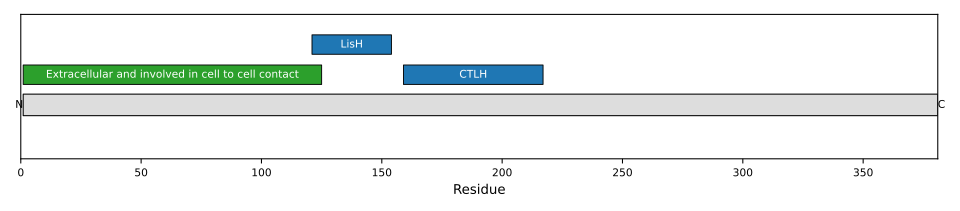
1: Core component of the CTLH E3 ubiquitin-protein ligase complex that selectively accepts ubiquitin from UBE2H and mediates ubiquitination and subsequent proteasomal degradation of the transcription factor HBP1. MAEA and RMND5A are both required for catalytic activity of the CTLH E3 ubiquitin-protein ligase complex (PubMed:29911972). MAEA is required for normal cell proliferation (PubMed:29911972). The CTLH E3 ubiquitin-protein ligase complex is not required for the degradation of enzymes involved in gluconeogenesis, such as FBP1 (PubMed:29911972). Plays a role in erythroblast enucleation during erythrocyte maturation and in the development of mature macrophages (By similarity). Mediates the attachment of erythroid cell to mature macrophages; this MAEA-mediated contact inhibits erythroid cell apoptosis (PubMed:9763581). Participates in erythroblastic island formation, which is the functional unit of definitive erythropoiesis. Associates with F-actin to regulate actin distribution in erythroblasts and macrophages (By similarity). May contribute to nuclear architecture and cells division events (Probable)