Transient receptor potential cation channel subfamily M member 8 (Long transient receptor potential channel 6) (LTrpC-6) (LTrpC6) (Transient receptor potential p8) (Trp-p8)
1_MSFRA 6_ ARLSM 11_ RNRRN 16_ DTLDS 21_ TRTLY 26_ SSASR 31_ STDLS 36_ YSESD 41_ LVNFI 46_ QANFK 51_ KRECV 56_ FFTKD 61_ SKATE 66_ NVCKC 71_ GYAQS 76_ QHMEG 81_ TQINQ 86_ SEKWN 91_ YKKHT 96_ KEFPT 101_ DAFGD 106_ IQFET 111_ LGKKG 116_ KYIRL 121_ SCDTD 126_ AEILY 131_ ELLTQ 136_ HWHLK 141_ TPNLV 146_ ISVTG 151_ GAKNF 156_ ALKPR 161_ MRKIF 166_ SRLIY 171_ IAQSK 176_ GAWIL 181_ TGGTH 186_ YGLMK 191_ YIGEV 196_ VRDNT 201_ ISRSS 206_ EENIV 211_ AIGIA 216_ AWGMV 221_ SNRDT 226_ LIRNC 231_ DAEGY 236_ FLAQY 241_ LMDDF 246_ TRDPL 251_ YILDN 256_ NHTHL 261_ LLVDN 266_ GCHGH 271_ PTVEA 276_ KLRNQ 281_ LEKYI 286_ SERTI 291_ QDSNY 296_ GGKIP 301_ IVCFA 306_ QGGGK 311_ ETLKA 316_ INTSI 321_ KNKIP 326_ CVVVE 331_ GSGQI 336_ ADVIA 341_ SLVEV 346_ EDALT 351_ SSAVK 356_ EKLVR 361_ FLPRT 366_ VSRLP 371_ EEETE 376_ SWIKW 381_ LKEIL 386_ ECSHL 391_ LTVIK 396_ MEEAG 401_ DEIVS 406_ NAISY 411_ ALYKA 416_ FSTSE 421_ QDKDN 426_ WNGQL 431_ KLLLE 436_ WNQLD 441_ LANDE 446_ IFTND 451_ RRWES 456_ ADLQE 461_ VMFTA 466_ LIKDR 471_ PKFVR 476_ LFLEN 481_ GLNLR 486_ KFLTH 491_ DVLTE 496_ LFSNH 501_ FSTLV 506_ YRNLQ 511_ IAKNS 516_ YNDAL 521_ LTFVW 526_ KLVAN 531_ FRRGF 536_ RKEDR 541_ NGRDE 546_ MDIEL 551_ HDVSP 556_ ITRHP 561_ LQALF 566_ IWAIL 571_ QNKKE 576_ LSKVI 581_ WEQTR 586_ GCTLA 591_ ALGAS 596_ KLLKT 601_ LAKVK 606_ NDINA 611_ AGESE 616_ ELANE 621_ YETRA 626_ VELFT 631_ ECYSS 636_ DEDLA 641_ EQLLV 646_ YSCEA 651_ WGGSN 656_ CLELA 661_ VEATD 666_ QHFIA 671_ QPGVQ 676_ NFLSK 681_ QWYGE 686_ ISRDT 691_ KNWKI 696_ ILCLF 701_ IIPLV 706_ GCGFV 711_ SFRKK 716_ PVDKH 721_ KKLLW 726_ YYVAF 731_ FTSPF 736_ VVFSW 741_ NVVFY 746_ IAFLL 751_ LFAYV 756_ LLMDF 761_ HSVPH 766_ PPELV 771_ LYSLV 776_ FVLFC 781_ DEVRQ 786_ WYVNG 791_ VNYFT 796_ DLWNV 801_ MDTLG 806_ LFYFI 811_ AGIVF 816_ RLHSS 821_ NKSSL 826_ YSGRV 831_ IFCLD 836_ YIIFT 841_ LRLIH 846_ IFTVS 851_ RNLGP 856_ KIIML 861_ QRMLI 866_ DVFFF 871_ LFLFA 876_ VWMVA 881_ FGVAR 886_ QGILR 891_ QNEQR 896_ WRWIF 901_ RSVIY 906_ EPYLA 911_ MFGQV 916_ PSDVD 921_ GTTYD 926_ FAHCT 931_ FTGNE 936_ SKPLC 941_ VELDE 946_ HNLPR 951_ FPEWI 956_ TIPLV 961_ CIYML 966_ STNIL 971_ LVNLL 976_ VAMFG 981_ YTVGT 986_ VQENN 991_ DQVWK 996_ FQRYF 1001_ LVQEY 1006_ CSRLN 1011_ IPFPF 1016_ IVFAY 1021_ FYMVV 1026_ KKCFK 1031_ CCCKE 1036_ KNMES 1041_ SVCCF 1046_ KNEDN 1051_ ETLAW 1056_ EGVMK 1061_ ENYLV 1066_ KINTK 1071_ ANDTS 1076_ EEMRH 1081_ RFRQL 1086_ DTKLN 1091_ DLKGL 1096_LKEIA
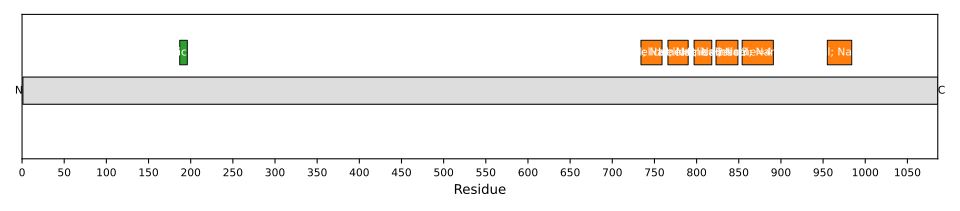
1: Non-selective ion channel permeable to monovalent and divalent cations, including Na(+), K(+), and Ca(2+), with higher permeability for Ca(2+). Activated by multiple factors, such as temperature, voltage, pressure, and changes in osmolality. Activated by cool temperatures (<23-28 degrees Celsius) and by chemical ligands evoking a sensation of coolness, such as menthol and icilin therefore plays a central role in the detection of environmental cold temperatures (PubMed:15306801, PubMed:15852009, PubMed:16174775, PubMed:25559186, PubMed:37857704). TRPM8 is a voltage-dependent channel; its activation by cold or chemical ligands shifts its voltage thresholds towards physiological membrane potentials, leading to the opening of the channel (PubMed:15306801). In addition to its critical role in temperature sensing, regulates basal tear secretion by sensing evaporation-induced cooling and changes in osmolality (By similarity). May plays a role in prostate cancer cell migration (PubMed:16174775, PubMed:25559186)
2: Negatively regulates menthol- and cold-induced channel activity by stabilizing the closed state of the channel
3: Negatively regulates menthol- and cold-induced channel activity by stabilizing the closed state of the channel