E3 ubiquitin-protein ligase RNF144B (EC 2.3.2.31) (IBR domain-containing protein 2) (RING finger protein 144B) (p53-inducible RING finger protein)
1_MGSAG 6_ RLHYL 11_ AMTAE 16_ NPTPG 21_ DLAPA 26_ PLITC 31_ KLCLC 36_ EQSLD 41_ KMTTL 46_ QECQC 51_ IFCTA 56_ CLKQY 61_ MQLAI 66_ REGCG 71_ SPITC 76_ PDMVC 81_ LNHGT 86_ LQEAE 91_ IACLV 96_ PVDQF 101_ QLYQR 106_ LKFER 111_ EVHLD 116_ PYRTW 121_ CPVAD 126_ CQTVC 131_ PVASS 136_ DPGQP 141_ VLVEC 146_ PSCHL 151_ KFCSC 156_ CKDAW 161_ HAEVS 166_ CRDSQ 171_ PIVLP 176_ TEHRA 181_ LFGTD 186_ AEAPI 191_ KQCPV 196_ CRVYI 201_ ERNEG 206_ CAQMM 211_ CKNCK 216_ HTFCW 221_ YCLQN 226_ LDNDI 231_ FLRHY 236_ DKGPC 241_ RNKLG 246_ HSRAS 251_ VMWNR 256_ TQVVG 261_ ILVGL 266_ GIIAL 271_ VTSPL 276_ LLLAS 281_ PCIIC 286_ CVCKS 291_ CRGKK 296_KKHDP
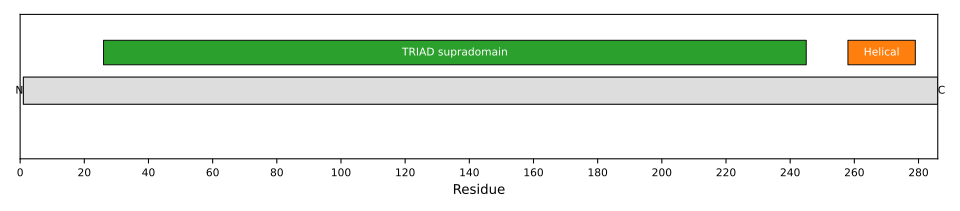
1: E3 ubiquitin-protein ligase which accepts ubiquitin from E2 ubiquitin-conjugating enzymes UBE2L3 and UBE2L6 in the form of a thioester and then directly transfers the ubiquitin to targeted substrates such as LCMT2, thereby promoting their degradation. Induces apoptosis via a p53/TP53-dependent but caspase-independent mechanism. Plays a crucial role in maintaining the genomic stability by controlling the degradation of multiple proteins involved in mitotic progression and DNA damage (PubMed:38685100). Regulates epithelial homeostasis by mediating degradation of CDKN1A and isoform 2 of TP63 (PubMed:23128396). Plays a regulatory role in innate immunity by negatively regulating IRF3 activation and IFN-beta production. Mechanistically, inhibits TBK1 phosphorylation and 'Lys-63'-linked polyubiquitination independently of its E3 ligase activity (PubMed:31509299). Alternatively, promotes 'Lys-27' and 'Lys-33'-linked ubiquitination of IFIH1/MDA5, promoting selective autophagic degradation of IFIH1/MDA5 to inhibit antiviral response (PubMed:39285245)