E3 ubiquitin-protein ligase synoviolin (EC 2.3.2.27) (RING-type E3 ubiquitin transferase synoviolin) (Synovial apoptosis inhibitor 1)
1_MFRTA 6_ VMMAA 11_ SLALT 16_ GAVVA 21_ HAYYL 26_ KHQFY 31_ PTVVY 36_ LTKSS 41_ PSMAV 46_ LYIQA 51_ FVLVF 56_ LLGKV 61_ MGKVF 66_ FGQLR 71_ AAEME 76_ HLLER 81_ SWYAV 86_ TETCL 91_ AFTVF 96_ RDDFS 101_ PRFVA 106_ LFTLL 111_ LFLKC 116_ FHWLA 121_ EDRVD 126_ FMERS 131_ PNISW 136_ LFHCR 141_ IVSLM 146_ FLLGI 151_ LDFLF 156_ VSHAY 161_ HSILT 166_ RGASV 171_ QLVFG 176_ FEYAI 181_ LMTMV 186_ LTIFI 191_ KYVLH 196_ SVDLQ 201_ SENPW 206_ DNKAV 211_ YMLYT 216_ ELFTG 221_ FIKVL 226_ LYMAF 231_ MTIMI 236_ KVHTF 241_ PLFAI 246_ RPMYL 251_ AMRQF 256_ KKAVT 261_ DAIMS 266_ RRAIR 271_ NMNTL 276_ YPDAT 281_ PEELQ 286_ AMDNV 291_ CIICR 296_ EEMVT 301_ GAKRL 306_ PCNHI 311_ FHTSC 316_ LRSWF 321_ QRQQT 326_ CPTCR 331_ MDVLR 336_ ASLPA 341_ QSPPP 346_ PEPAD 351_ QGPPP 356_ APHPP 361_ PLLPQ 366_ PPNFP 371_ QGLLP 376_ PFPPG 381_ MFPLW 386_ PPMGP 391_ FPPVP 396_ PPPSS 401_ GEAVA 406_ PPSTS 411_ AAALS 416_ RPSGA 421_ ATTTA 426_ AGTSA 431_ TAASA 436_ TASGP 441_ GSGSA 446_ PEAGP 451_ APGFP 456_ FPPPW 461_ MGMPL 466_ PPPFA 471_ FPPMP 476_ VPPAG 481_ FAGLT 486_ PEELR 491_ ALEGH 496_ ERQHL 501_ EARLQ 506_ SLRNI 511_ HTLLD 516_ AAMLQ 521_ INQYL 526_ TVLAS 531_ LGPPR 536_ PATSV 541_ NSTEE 546_ TATTV 551_ VAAAS 556_ STSIP 561_ SSEAT 566_ TPTPG 571_ ASPPA 576_ PEMER 581_ PPAPE 586_ SVGTE 591_ EMPED 596_ GEPDA 601_ AELRR 606_ RRLQK 611_LESPV
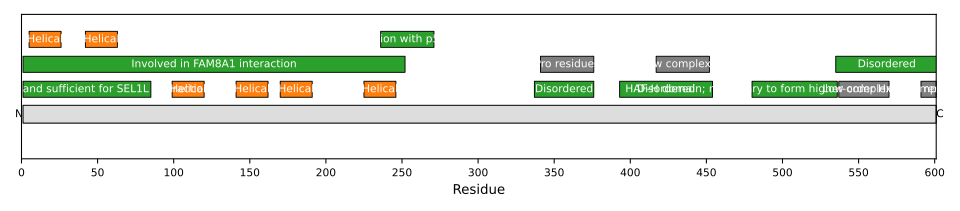
1: E3 ubiquitin-protein ligase which accepts ubiquitin specifically from endoplasmic reticulum-associated UBC7 E2 ligase and transfers it to substrates, promoting their degradation (PubMed:12459480, PubMed:12646171, PubMed:12975321, PubMed:14593114, PubMed:16289116, PubMed:16847254, PubMed:17059562, PubMed:17141218, PubMed:17170702, PubMed:22607976, PubMed:27827840, PubMed:26471130, PubMed:28827405). Component of the endoplasmic reticulum quality control (ERQC) system also called ER-associated degradation (ERAD) involved in ubiquitin-dependent degradation of misfolded endoplasmic reticulum proteins (PubMed:12459480, PubMed:12646171, PubMed:12975321, PubMed:14593114, PubMed:16289116, PubMed:16847254, PubMed:17059562, PubMed:17141218, PubMed:17170702, PubMed:22607976, PubMed:26471130, PubMed:28842558). Also promotes the degradation of normal but naturally short-lived proteins such as SGK. Protects cells from ER stress-induced apoptosis. Protects neurons from apoptosis induced by polyglutamine-expanded huntingtin (HTT) or unfolded GPR37 by promoting their degradation (PubMed:17141218). Sequesters p53/TP53 in the cytoplasm and promotes its degradation, thereby negatively regulating its biological function in transcription, cell cycle regulation and apoptosis (PubMed:17170702). Mediates the ubiquitination and subsequent degradation of cytoplasmic NFE2L1 (By similarity). During the early stage of B cell development, required for degradation of the pre-B cell receptor (pre-BCR) complex, hence supporting further differentiation into mature B cells (By similarity)