Serine/threonine-protein kinase pim-3 (EC 2.7.11.1)
1_MLLSK 6_ FGSLA 11_ HLCGP 16_ GGVDH 21_ LPVKI 26_ LQPAK 31_ ADKES 36_ FEKAY 41_ QVGAV 46_ LGSGG 51_ FGTVY 56_ AGSRI 61_ ADGLP 66_ VAVKH 71_ VVKER 76_ VTEWG 81_ SLGGA 86_ TVPLE 91_ VVLLR 96_ KVGAA 101_ GGARG 106_ VIRLL 111_ DWFER 116_ PDGFL 121_ LVLER 126_ PEPAQ 131_ DLFDF 136_ ITERG 141_ ALDEP 146_ LARRF 151_ FAQVL 156_ AAVRH 161_ CHSCG 166_ VVHRD 171_ IKDEN 176_ LLVDL 181_ RSGEL 186_ KLIDF 191_ GSGAL 196_ LKDTV 201_ YTDFD 206_ GTRVY 211_ SPPEW 216_ IRYHR 221_ YHGRS 226_ ATVWS 231_ LGVLL 236_ YDMVC 241_ GDIPF 246_ EQDEE 251_ ILRGR 256_ LLFRR 261_ RVSPE 266_ CQQLI 271_ RWCLS 276_ LRPSE 281_ RPSLD 286_ QIAAH 291_ PWMLG 296_ ADGGV 301_ PESCD 306_ LRLCT 311_ LDPDD 316_ VASTT 321_SSSES
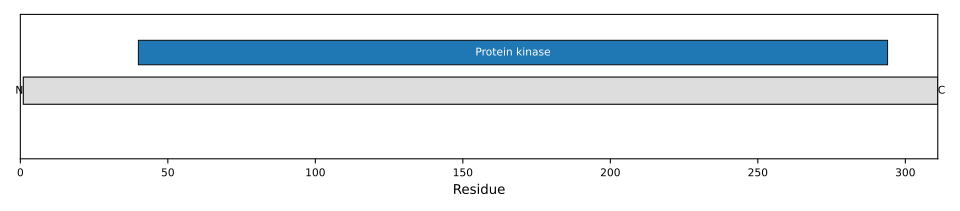
1: Proto-oncogene with serine/threonine kinase activity that can prevent apoptosis, promote cell survival and protein translation. May contribute to tumorigenesis through: the delivery of survival signaling through phosphorylation of BAD which induces release of the anti-apoptotic protein Bcl-X(L), the regulation of cell cycle progression, protein synthesis and by regulation of MYC transcriptional activity. Additionally to this role on tumorigenesis, can also negatively regulate insulin secretion by inhibiting the activation of MAPK1/3 (ERK1/2), through SOCS6. Involved also in the control of energy metabolism and regulation of AMPK activity in modulating MYC and PPARGC1A protein levels and cell growth