Psychosine receptor (G-protein coupled receptor 65) (T-cell death-associated gene 8 protein)
1_MNSTC 6_ IEEQH 11_ DLDHY 16_ LFPIV 21_ YIFVI 26_ IVSIP 31_ ANIGS 36_ LCVSF 41_ LQAKK 46_ ESELG 51_ IYLFS 56_ LSLSD 61_ LLYAL 66_ TLPLW 71_ IDYTW 76_ NKDNW 81_ TFSPA 86_ LCKGS 91_ AFLMY 96_ MNFYS 101_ STAFL 106_ TCIAV 111_ DRYLA 116_ VVYPL 121_ KFFFL 126_ RTRRF 131_ ALMVS 136_ LSIWI 141_ LETIF 146_ NAVML 151_ WEDET 156_ VVEYC 161_ DAEKS 166_ NFTLC 171_ YDKYP 176_ LEKWQ 181_ INLNL 186_ FRTCT 191_ GYAIP 196_ LVTIL 201_ ICNRK 206_ VYQAV 211_ RHNKA 216_ TENKE 221_ KKRII 226_ KLLVS 231_ ITVTF 236_ VLCFT 241_ PFHVM 246_ LLIRC 251_ ILEHA 256_ VNFED 261_ HSNSG 266_ KRTYT 271_ MYRIT 276_ VALTS 281_ LNCVA 286_ DPILY 291_ CFVTE 296_ TGRYD 301_ MWNIL 306_ KFCTG 311_ RCNTS 316_ QRQRK 321_ RILSV 326_ STKDT 331_MELEV
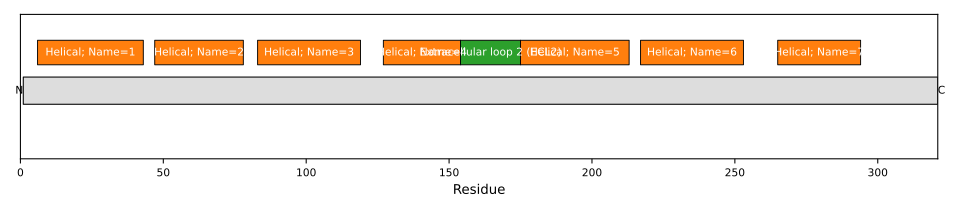
1: Proton-sensing G-protein coupled receptor activated by extracellular pH, which is required to monitor pH changes and generate adaptive reactions (PubMed:15326175, PubMed:15618224, PubMed:20855608, PubMed:33478938, PubMed:37722051, PubMed:39753132). Activated by an optimal pH of 7.4 (PubMed:39753132). Ligand binding causes a conformation change that triggers signaling via guanine nucleotide-binding proteins (G proteins) and modulates the activity of downstream effectors, such as adenylate cyclase (PubMed:15326175, PubMed:15618224, PubMed:37722051, PubMed:39753132). GPR65 is mainly coupled to G(s) G proteins and mediates activation of adenylate cyclase activity (PubMed:15618224, PubMed:37722051, PubMed:39753132). May also act as a receptor for the glycosphingolipid psychosine (PSY) and several related glycosphingolipids (PubMed:11309421, PubMed:15326175). Plays a role in immune response by maintaining lysosome function and regulating T-cell metabolism (PubMed:27287411). Acts as a regulator of inflammation by mediating pH-sensing of extracellular acidification which takes place in inflamed tissues: activation regulates endo-lysosomal function of immune cells and T-cell metabolism (By similarity). Constitutively active in endosomes and stimulates adenylate cyclase production from endosomes independently from extracellular pH changes (PubMed:39753132)