E3 ubiquitin-protein ligase RNF169 (EC 2.3.2.27) (RING finger protein 169) (RING-type E3 ubiquitin transferase RNF169)
1_MAAAG 6_ PSTRA 11_ SSAAA 16_ AAALS 21_ RRGRR 26_ GRCDE 31_ TAAAK 36_ TGAPG 41_ PASGP 46_ SLLVL 51_ SPPLL 56_ QPPLP 61_ PRPEE 66_ SGCAG 71_ CLEPP 76_ GEAAA 81_ LPCGH 86_ SLCRG 91_ CAQRA 96_ ADAAG 101_ PGCPR 106_ CRARG 111_ PGWAR 116_ RRARD 121_ DGQAD 126_ SEVLG 131_ ECARR 136_ SQPER 141_ CRPRR 146_ DGGAA 151_ AAGPR 156_ PEQEP 161_ RAAPA 166_ EPDFI 171_ FRAPI 176_ KLSKP 181_ GELRE 186_ EYESL 191_ RKLRE 196_ EKLQE 201_ EKPSE 206_ DQIHK 211_ LLPED 216_ TETGK 221_ RKMDE 226_ QKKRD 231_ EPLVL 236_ KTNLE 241_ RCPAR 246_ LSDSE 251_ NEEPS 256_ RGQMT 261_ QTHRS 266_ AFVSK 271_ NNSYS 276_ LAFLA 281_ GKLNS 286_ KVERS 291_ QSCSD 296_ TAQER 301_ AKSRV 306_ RAVPG 311_ NKAKV 316_ TTMTP 321_ ASNPI 326_ IGVLL 331_ STQNN 336_ RCVSA 341_ PDLTI 346_ EKRLP 351_ FSSLS 356_ SLASL 361_ HKPER 366_ SVSPE 371_ SNDSI 376_ SEELN 381_ HFKPI 386_ VCSPC 391_ TPPKR 396_ LPDGR 401_ VLSPL 406_ IIKST 411_ PRNLN 416_ RSLQK 421_ QTSYE 426_ ASPRI 431_ LKKWE 436_ QIFQE 441_ RQIKK 446_ TLSKA 451_ TLTSL 456_ APEMG 461_ EELLG 466_ SEGIH 471_ SSKEK 476_ PLVAV 481_ NTRLS 486_ GGQVL 491_ SEYTG 496_ PTSAD 501_ LDHFP 506_ SVSQT 511_ KAEQD 516_ SDNKS 521_ STEIP 526_ LETCC 531_ SSELK 536_ GGGSG 541_ TSLER 546_ EQFEG 551_ LGSTP 556_ DAKLD 561_ KTCIS 566_ RAMKI 571_ TTVNS 576_ VLPQN 581_ SVLGG 586_ VLKTK 591_ QQLKT 596_ LNHFD 601_ LTNGV 606_ LVESL 611_ SEEPL 616_ PSLRR 621_ GRKRH 626_ CKTKH 631_ LEQNG 636_ SLKKL 641_ RQTSG 646_ EVGLA 651_ PTDPV 656_ LREME 661_ QKLQQ 666_ EEEDR 671_ QLALQ 676_ LQRMF 681_ DNERR 686_ TVSRR 691_ KGSVD 696_ QYLLR 701_SSNMA
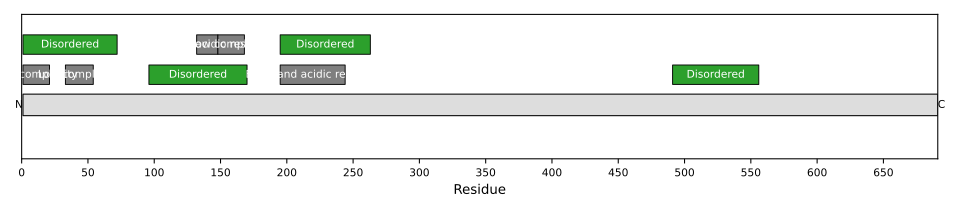
1: Probable E3 ubiquitin-protein ligase that acts as a regulator of double-strand breaks (DSBs) repair following DNA damage. Functions in a non-canonical fashion to harness RNF168-mediated protein recruitment to DSB-containing chromatin, thereby contributing to regulation of DSB repair pathway utilization (PubMed:22492721, PubMed:30773093). Once recruited to DSB repair sites by recognizing and binding ubiquitin catalyzed by RNF168, competes with TP53BP1 and BRCA1 for association with RNF168-modified chromatin, thereby favouring homologous recombination repair (HRR) and single-strand annealing (SSA) instead of non-homologous end joining (NHEJ) mediated by TP53BP1 (PubMed:30104380, PubMed:30773093). E3 ubiquitin-protein ligase activity is not required for regulation of DSBs repair